Inferno
£22.00Inferno is a gripping history of the world wars told through twelve battles that shaped the fate of the 20th century.

Showing all 12 resultsSorted by latest

Inferno is a gripping history of the world wars told through twelve battles that shaped the fate of the 20th century.

For millennia, women’s raised voices have been heard as unruly, uncivilized, dangerous. Women singing were cast as sirens: mythical creatures who lured sailors to their death. In ‘Vocal Break’, Lauren Elkin seamlessly blends memoir, feminist manifesto and cultural history to explore a plurality of female singing voices – and how women have used them to defy convention, genre, capitalism, racism and sexism.
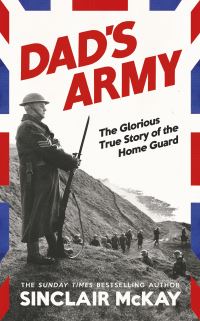
With the threat of invasion from Hitler’s forces looming large in 1940, British men of all ages and backgrounds assembled under the banner of the Home Guard. At its height, this voluntary force, much later nicknamed ‘Dad’s Army’, was made up of almost two million volunteers prepared to defend every corner of the kingdom. Numerous notable figures were involved including George Orwell, A.A. Milne, and C.S. Lewis; many women took part too, including in the Women’s Home Defence Force, which was formed in 1941. Sunday Times bestselling author Sinclair McKay tells the remarkable story of these courageous, highly trained and often pioneering men and women through original archival research, vivid storytelling and insights into the beloved television comedy that has shaped the national memory of the Home Guard.
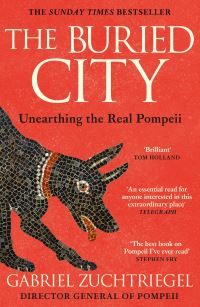
Pompeii is a world frozen in time. There are unmade beds, dishes left drying, tools abandoned by workmen, bodies embracing with love and fear. And alongside the remnants of everyday life, there are captivating works of art: lifelike portraits, exquisite frescos and mosaics, and the extraordinary sculpture of a sleeping boy, curled up under a blanket that’s too small. ‘The Buried City’ reconstructs the catastrophe that destroyed Pompeii on 24 August 79 CE, and offers a behind-the-scenes tour of the city as it was before: who lived here, what mattered to them, and what happened in their final hours. It gives us a vivid sense of Pompeii’s continuing relevance, and proves that ancient history is much closer to us than we think.
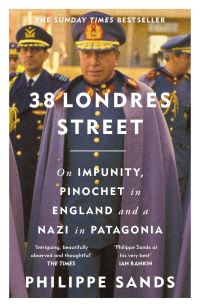
In the heart of Santiago, the infamous 38 Londres Street becomes the haunting backdrop for a riveting tale that intertwines the arrest of Augusto Pinochet in London, the post-war life of senior SS officer Walther Rauff in Chilean Patagonia and the sinister connections between the two men. Rauff, responsible for the wartime horrors of mobile gas vans, flees justice after the war and finds an unlikely refuge in Chile. Settling in Punta Arenas, he manages a king crab cannery, seemingly far removed from his dark past. But as rumours swirl about Rauff’s involvement with Pinochet’s secret intelligence services and the disappearances that plagued Chile, a chilling narrative unfolds.
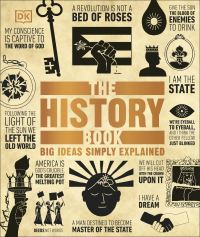
Discover the most significant moments in the history of the world, from the origins of Homo Sapiens to the arrival of the internet, and from the French Revolution to the Space Race. And come face to face with the world’s most influential leaders, thinkers, and political figures, from Julius Caesar to Barack Obama – a truly accessible and comprehensive route into a fascinating and essential subject.
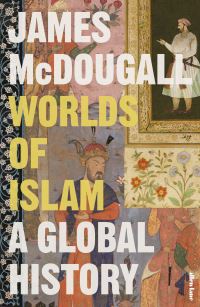
From its emergence in seventh century Arabia, Islam has been a faith on the move.Over the span of a thousand years, armies, missionaries, and merchants carried it to the edges of Europe, the coasts of Southeast Asia and the remote interior of China. From the Arab caliphate to the Mongol empire, from West Africa to the Philippines, Islam was a world-shaping force. By the nineteenth century, Muslims lived everywhere from South Africa to North America. In the age of European empires, through two World Wars and a Cold War, and into the globalised and fractured 21st century, Muslims lived through global conflicts and everyday struggles for adaptation and survival. Historian James McDougall charts the epic global story of Islam’s origins and transformations, as Muslims adapted to their changing times from late antiquity to the digital age, constantly remaking their own worlds as the wider world around them changed.

When Pamela Churchill Harriman died in 1997, the obituaries that followed were scathing – and often downright sexist. Written off as a social climber, her glamorous social life and infamous erotic adventures overshadowed her true legacy. Much of what she did behind the scenes to shape the twentieth century, on both sides of the Atlantic, remained invisible. That is, until now: with a wealth of fresh research, Sonia Purnell unveils for the first time the full, spectacular story of how Harriman left an indelible mark on the world today. There is practically no-one in twentieth-century politics, culture and fashion whose lives she did not touch.
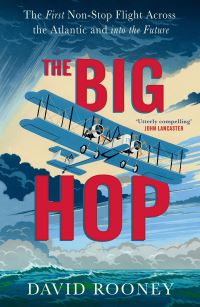
Newfoundland, 1919. Buffeted by winds, an unwieldy aircraft – made mainly from wood and stiff linen – struggled to take off from the North American island’s rocky slopes. Cramped side by side in its open cockpit were two men, freezing cold and barely able to move but resolute. They had a dream: to be the first in human history to fly, non-stop, across the Atlantic Ocean. But there were three other teams competing against them, and as the waves raged a few miles below, memories of wartime crashes resurfaced. Mining letters, diaries and evocative unpublished photographs, David Rooney’s deeply researched account of the audacious contest shows how it was the airmen’s thrilling wartime experiences that ultimately led them to the ‘Big Hop’, and brought old friends together for one more daring adventure.
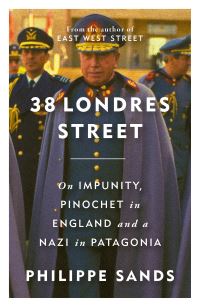
In the heart of Santiago, the infamous 38 Londres Street becomes the haunting backdrop for a riveting tale that intertwines the arrest of Augusto Pinochet in London, the post-war life of senior SS officer Walther Rauff in Chilean Patagonia and the sinister connections between the two men. Rauff, responsible for the wartime horrors of mobile gas vans, flees justice after the war and finds an unlikely refuge in Chile. Settling in Punta Arenas, he manages a king crab cannery, seemingly far removed from his dark past. But as rumours swirl about Rauff’s involvement with Pinochet’s secret intelligence services and the disappearances that plagued Chile, a chilling narrative unfolds.
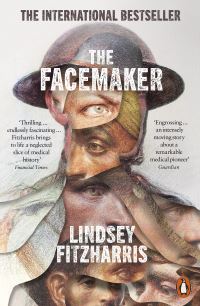
From the moment the first machine gun rang out over the Western Front, one thing was clear: mankind’s military technology had wildly surpassed its medical capabilities. The war caused carnage on an industrial scale, and the nature of trench warfare meant that thousands sustained facial injuries. In ‘The Facemaker’, award-winning historian Lindsey Fitzharris tells the true story of the pioneering plastic surgeon Harold Gillies, who dedicated himself to restoring the faces of a brutalized generation.
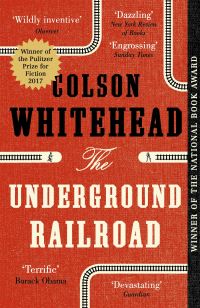
Cora is a slave on a cotton plantation in Georgia. All the slaves lead a hellish existence, but Cora has it worse than most; she is an outcast even among her fellow Africans and she is approaching womanhood, where it is clear even greater pain awaits. When Caesar, a slave recently arrived from Virginia, tells her about the Underground Railroad, they take the perilous decision to escape to the North. In Whitehead’s razor-sharp imagining of the antebellum South, the Underground Railroad has assumed a physical form: a dilapidated box car pulled along subterranean tracks by a steam locomotive, picking up fugitives wherever it can.
No products in the basket.