Showing 37–48 of 62 resultsSorted by latest
-
£10.99
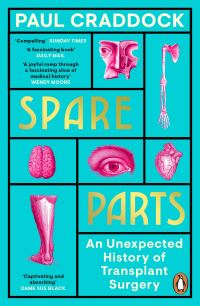
How did an architect help pioneer blood transfusion in the 1660s? Why did eighteenth-century dentists buy the live teeth of poor children? And what role did a sausage skin and an enamel bath play in making kidney transplants a reality? We think of transplant surgery as one of the medical wonders of the modern world but transplant surgery is as ancient as the pyramids, with a history more surprising than we might expect. Paul Craddock takes us on a journey – from sixteenth-century skin grafting to contemporary stem cell transplants – uncovering stories of operations performed by unexpected people in unexpected places.
-
£10.99
For over fifty years, ‘From Our Own Correspondent’ has been one of BBC Radio 4’s flagship programmes. Every week BBC foreign correspondents, journalists and writers reflect on current headlines, often bringing a personal perspective to them. There are few countries and subjects which have not featured on the programme – places as diverse as the Faroes, Moldova in Eastern Europe, the Himalayan kingdom of Bhutan and one of Africa’s smallest countries – Sao Tome and Principe. So many of the outlets that correspondents work for demand little more than writing to television pictures or covering the day’s events in one report of perhaps only a minute’s duration.
-
£20.00
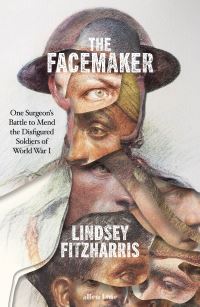
From the moment the first machine gun rang out over the Western Front, one thing was clear: mankind’s military technology had wildly surpassed its medical capabilities. The war caused carnage on an industrial scale, and the nature of trench warfare meant that thousands sustained facial injuries. In ‘The Facemaker’, award-winning historian Lindsey Fitzharris tells the true story of the pioneering plastic surgeon Harold Gillies, who dedicated himself to restoring the faces of a brutalized generation.
-
£25.00
In 2011, a 43-foot-high tsunami crashed into a nuclear power plant in Fukushima, Japan. In the following days, explosions would rip buildings apart, three reactors would go into nuclear meltdown, and the surrounding area would be swamped in radioactive water. It is now considered one of the costliest nuclear disasters ever. But Fukushima was not the first, and it was not the worst. In ‘Atoms and Ashes’, acclaimed historian Serhii Plokhy tells the tale of the six nuclear disasters that shook the world – Bikini Atoll, Kyshtym, Windscale, Three Mile Island, Chernobyl, and Fukushima.
-
£17.99
What do dogs really think of us? What do dogs know and understand of the world? Do their emotions feel like our own? Do they love like we do? ‘Wonderdog’ is a historical account of how we came to know what dogs are capable of.
-
£14.99
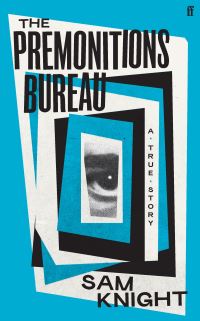
Premonitions are impossible. But they come true all the time. Most are innocent. You think of a forgotten friend. Out of the blue, they call. But what if you knew that something terrible was going to happen? A sudden flash, the words CHARING CROSS. Four days later, a packed express train comes off the rails outside the station. What if you could share your vision, and stop that train? Could these forebodings help the world to prevent disasters? In 1966, John Barker, a dynamic psychiatrist working in an outdated British mental hospital, established the Premonitions Bureau to investigate these questions. He would find a network of hundreds of correspondents, from bank clerks to ballet teachers. Among them were two unnervingly gifted ‘percipients’. Together, the pair predicted plane crashes, assassinations and international incidents, with uncanny accuracy.
-
£18.99
The Enlightenment is one of the formative periods of Western history, yet more than 300 years after it began, it remains controversial. It is often seen as the fountainhead of modern values such as human rights, religious toleration, freedom of thought, scientific thought as an exemplary form of reasoning, and rationality and evidence-based argument. Others accuse the Enlightenment of putting forward a scientific rationality which ignores the complexity and variety of human beings, propagates shallow atheism, and aims to subjugate nature to so-called technical progress. Ritchie Robertson engages with all these views to show that the Enlightenment sought above all to increase human happiness in this world by promoting scientific inquiry and reasoned argument and by challenging the authority traditionally assumed by the Churches.
-
£10.99
In very recent times humanity has learnt a vast amount about the universe, the past, and itself. But through our remarkable successes in acquiring knowledge we have learned how much we have yet to learn: the science we have, for example, addresses just 5% of the universe; pre-history is still being revealed, with thousands of historical sites yet to be explored; and the new neurosciences of mind and brain are just beginning. Bestselling polymath and philosopher A.C. Grayling seeks to answer them in three crucial areas at the frontiers of knowledge: science, history, and psychology. In each area he illustrates how each field has advanced to where it is now, from the rise of technology to quantum theory, from the dawn of humanity to debates around national histories, from ancient ideas of the brain to modern theories of the mind.
-
£25.00
We are told that modern science was invented in Europe, the product of great minds like Nicolaus Copernicus, Isaac Newton, Charles Darwin and Albert Einstein. But this is wrong. Science is not, and has never been, a uniquely European endeavour. Copernicus relied on mathematical techniques borrowed from Arabic and Persian texts. When Newton set out the laws of motion, he relied on astronomical observations made in Asia and Africa. When Darwin was writing On the Origin of Species, he consulted a sixteenth-century Chinese encyclopaedia. And when Einstein was studying quantum mechanics, he was inspired by the Bengali physicist, Satyendra Nath Bose. ‘Horizons’ pushes beyond Europe, exploring the ways in which scientists from Africa, America, Asia and the Pacific fit into the history of science, and arguing that it is best understood as a story of global cultural exchange.
-
£9.99
From the city sundials of ancient Rome to the era of the smartwatch, clocks have been used throughout history to wield power, make money, govern citizens and keep control. Sometimes, also with clocks, we have fought back. In this book, time expert David Rooney tells the story of timekeeping, and how it continues to shape our modern world. In twelve chapters, demarcated like the hours of time, we meet the greatest inventions in horological history, from medieval water clocks to monumental sundials, and from coastal time signals to satellites in Earth’s orbit.
-
£20.00
Slime is an ambiguous thing. It exists somewhere between a solid and liquid. It inspires revulsion even while it compels our fascination. It is a both a vehicle for pathogens and the strongest weapon in our immune system. Most of us know little about it and yet it is the substance on which our world turns. Slime exists at the interfaces of all things: between the different organs and layers in our bodies, and between the earth, water, and air in the environment. It is often produced in the fatal encounter between predator and prey, and it is a vital presence in the reproductive embrace between female and male. In this ground-breaking and fascinating book, Susanne Wedlich leads us on a scientific journey through the 3 billion year history of slime, from the part it played in the evolution of life on this planet to the way it might feature in the post-human future.
-
£18.99
Twelve thousand years ago, we humans fell into a trap. This volume tells the story of how wheat took over the world; how an unlikely marriage between a god and a bureaucrat created the first empires; and how war, famine, disease, and inequality became a part of the human condition.