Showing 13–24 of 62 resultsSorted by latest
-
£18.99
Last Word is the popular BBC Radio 4 series broadcast weekly, featuring the lives of several famous people who have recently died. More than standard obituaries, the lives are summarised with narration and include interviews with some of those who knew them. This compelling anthology brings together accounts of the remarkable lives of a selection of women who were particularly illuminating, inspiring or moving.
-
£12.99
In 2011, a 43-foot-high tsunami crashed into a nuclear power plant in Fukushima, Japan. In the following days, explosions would rip buildings apart, three reactors would go into nuclear meltdown, and the surrounding area would be swamped in radioactive water. It is now considered one of the costliest nuclear disasters ever. But Fukushima was not the first, and it was not the worst. In ‘Atoms and Ashes’, acclaimed historian Serhii Plokhy tells the tale of the six nuclear disasters that shook the world – Bikini Atoll, Kyshtym, Windscale, Three Mile Island, Chernobyl, and Fukushima.
-
£20.00
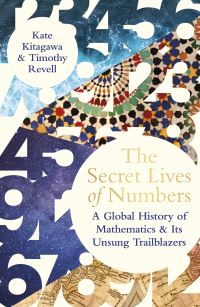
From building rockets to the handheld technology that governs our day-to-day lives, we are all in debt to the mathematical geniuses of the past. But the history of mathematics is warped; it looks like a sixteenth-century map that enlarges Europe at the expense of Africa, Asia and the Americas. This book introduces readers to a new group of mathematical boundary-smashers, those who have been erased by history because of their race, gender or nationality. Kitagawa and Revell bring to vivid life the stories and struggles of mathematicians from every continent: from the brilliant Arabic scholars of the ninth century ‘House of Wisdom’; to the pioneering African-American mathematicians of the twentieth century; the first female mathematics professor (from Russia); and the ‘lady computers’ around the world who revolutionised our knowledge of the night sky.
-
£12.99
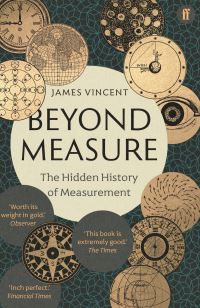
We measure rainfall and radiation, the depths of space and the emptiness of atoms, calories and steps, happiness and fear. If we could not measure then we could not observe the world around us; we could not experiment, learn, and co-operate. But why did this urge to measure flourish? And when did measurement become ubiquitous? It is an incredible story that spans hunter-gatherer societies to ancient Egyptians, the French Revolution to the relentless quantification of the 21st century self. It is a tale that tracks humanity’s search for dependable truths in a chaotic universe. Full of mavericks and visionaries, adventure and breakthroughs, ‘Beyond Measure’ shows that measurement has not only made the world we live in, it has made us too.
-
£10.99
From the moment the first machine gun rang out over the Western Front, one thing was clear: mankind’s military technology had wildly surpassed its medical capabilities. The war caused carnage on an industrial scale, and the nature of trench warfare meant that thousands sustained facial injuries. In ‘The Facemaker’, award-winning historian Lindsey Fitzharris tells the true story of the pioneering plastic surgeon Harold Gillies, who dedicated himself to restoring the faces of a brutalized generation.
-
£22.00
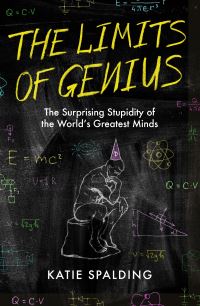
Here is a hilarious look at how the line between ‘genius’ and ‘extremely lucky idiot’ is finer than we’d like to admit. The more you delve into the stories behind history’s greatest names, the more you realise they have something in common – a mystifying lack of common sense. Take Marie Curie, famous for both discovering radioactivity and having absolutely zero lab safety protocols. Or Lord Byron, who literally took a bear with him to university. Or James Glaisher, a hot-air balloon pioneer who nearly ended up as the world’s first human satellite. From Nikola Tesla falling in love with a pigeon to non-swimmer Albert Einstein’s near-fatal love of sailing holidays, ‘The Limits of Genius’ is filled with examples of the so-called brightest and best of humanity doing, to put it bluntly, some really dumb shit.
-
£20.00
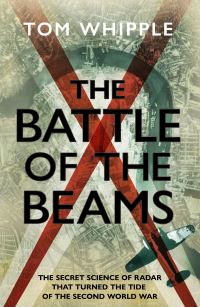
Summer 1939. War is coming. The British believe that, through ingenuity and scientific prowess, they alone have a war-winning weapon: radar. They are wrong. The Germans have it too. They believe that their unique maritime history means their pilots have no need of navigational aids. Flying above the clouds they, like the seafarers of old, had the stars to guide them, and that is all that is required. They are wrong. Most of the bombs the RAF will drop in the first years of the war land miles from their target. They also believe that the Germans, without the same naval tradition, will never be able to find targets at night. They are, again, wrong. In 1939 the Germans don’t just have radar to spot planes entering their airspace, they have radio beams to guide their own planes into enemy airspace. War is coming, and it is to be a different kind of war.
-
£25.00
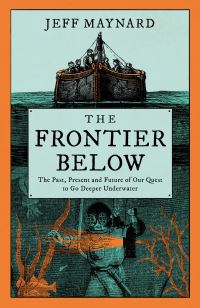
A journey through time and water, to the bottom of the ocean and the future of our planet.
-
£9.99
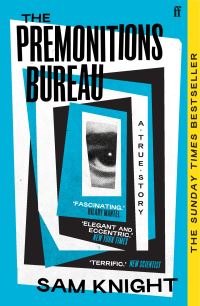
Premonitions are impossible. But they come true all the time. Most are innocent. You think of a forgotten friend. Out of the blue, they call. But what if you knew that something terrible was going to happen? A sudden flash, the words CHARING CROSS. Four days later, a packed express train comes off the rails outside the station. What if you could share your vision, and stop that train? Could these forebodings help the world to prevent disasters? In 1966, John Barker, a dynamic psychiatrist working in an outdated British mental hospital, established the Premonitions Bureau to investigate these questions. He would find a network of hundreds of correspondents, from bank clerks to ballet teachers. Among them were two unnervingly gifted ‘percipients’. Together, the pair predicted plane crashes, assassinations and international incidents, with uncanny accuracy.
-
£10.99
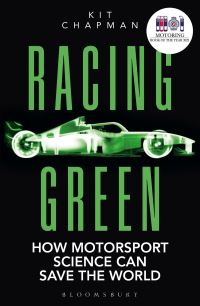
‘Racing Green’ is the story of how motorsport science has become smarter and more environmentally friendly, and how these developments on the track are changing the world.
-
£9.99
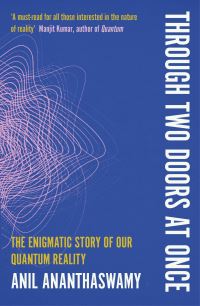
The clearest, most accessible explanation yet of the amazing world of quantum mechanics: a Duckworth contemporary classic, beautifully repackaged for our 125th anniversary
-
£25.00
Science and religion have always been at each other’s throats, right?