Counting
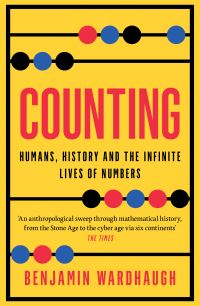
£12.99WHAT DOES IT MEAN TO COUNT? WHY ARE HUMANS THE ONLY SPECIES ON EARTH THAT CAN DO IT? WHERE DID COUNTING COME FROM? HOW HAS IT SHAPED SOCIETIES ALONG THE WAY? AND WHY DOES IT MATTER?
We recently launched our new website and are facing a few teething issues. If you see any problems please contact us.

 The favourites
Available on backorder (5-7 days)
Standing by the Wall
Available on backorder (5-7 days)
The Thank You Book
Available on backorder (5-7 days)
A Spoonful of Frogs
Available on backorder (5-7 days)
Hacked!
Available on backorder (5-7 days)
Soul Fuel for Young Explorers
Available on backorder (5-7 days)
Before I Go To Sleep
Available on backorder (5-7 days)
The Spiritual Path
Available on backorder (5-7 days)
The English landscape garden
Available on backorder (5-7 days)
Navigating Biodiversity
Available on backorder (5-7 days)
Duel Duet
Available on backorder (5-7 days)
Gordon the Meanest Goose on Earth Wins It All
Available on backorder (5-7 days)
Subtotal: £157.89
We recently launched our new website and are facing a few teething issues. If you see any problems please contact us.
Showing 1–12 of 14 resultsSorted by latest
WHAT DOES IT MEAN TO COUNT? WHY ARE HUMANS THE ONLY SPECIES ON EARTH THAT CAN DO IT? WHERE DID COUNTING COME FROM? HOW HAS IT SHAPED SOCIETIES ALONG THE WAY? AND WHY DOES IT MATTER?
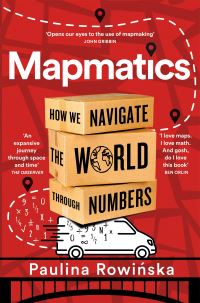
A gripping exploration of how cartography shapes our world and the impact of maps on our everyday lives.
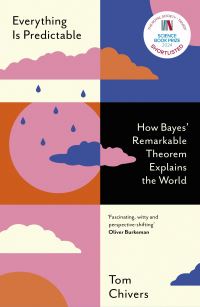
Thomas Bayes was an eighteenth-century Presbyterian minister and amateur mathematician whose obscure life belied the profound impact of his work. Like most research into probability at the time, his theorem was mainly seen as relevant to games of chance, like dice and cards. But its implications soon became clear, affecting fields as diverse as medicine, law and artificial intelligence. Bayes’ theorem helps explain why highly accurate screening tests can lead to false positives, causing unnecessary anxiety for patients. A failure to account for it in court has put innocent people in jail. But its influence goes far beyond practical applications. Fusing biography, razor-sharp science communication and intellectual history, ‘Everything Is Predictable’ is a captivating tour of Bayes’ theorem and its impact on modern life.
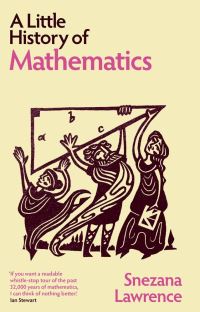
Mathematics is fundamental to our daily lives. Science, computing, economics – all aspects of modern life rely on some kind of maths. But how did our ancestors think about numbers? How did they use mathematics to explain and understand the world around them? Where do numbers even come from? In this book, Snezana Lawrence traces the fascinating history of mathematics, from the Egyptians and Babylonians to Renaissance masters and enigma codebreakers.
Carlo Rovelli restores Anaximander to his place in the history of science by carefully reconstructing his theories from what is known to us and examining them in their historical and philosophical contexts.
WHAT DOES IT MEAN TO COUNT? WHY ARE HUMANS THE ONLY SPECIES ON EARTH THAT CAN DO IT? WHERE DID COUNTING COME FROM? HOW HAS IT SHAPED SOCIETIES ALONG THE WAY? AND WHY DOES IT MATTER?
A gripping exploration of how cartography shapes the world we see and the role of mathematics in completing the picture.
From building rockets to the handheld technology that governs our day-to-day lives, we are all in debt to the mathematical geniuses of the past. But the history of mathematics is warped; it looks like a sixteenth-century map that enlarges Europe at the expense of Africa, Asia and the Americas. This book introduces readers to a new group of mathematical boundary-smashers, those who have been erased by history because of their race, gender or nationality. Kitagawa and Revell bring to vivid life the stories and struggles of mathematicians from every continent: from the brilliant Arabic scholars of the ninth century ‘House of Wisdom’; to the pioneering African-American mathematicians of the twentieth century; the first female mathematics professor (from Russia); and the ‘lady computers’ around the world who revolutionised our knowledge of the night sky.
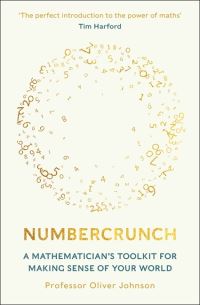
In our hyper-modern world, we are bombarded with more facts, stats and information than ever before. So, what can we grasp hold of to make sense of it all? Oliver Johnson reveals how mathematical thinking can help us understand the myriad data all around us.
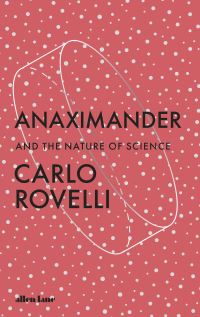
Carlo Rovelli restores Anaximander to his place in the history of science by carefully reconstructing his theories from what is known to us and examining them in their historical and philosophical contexts.
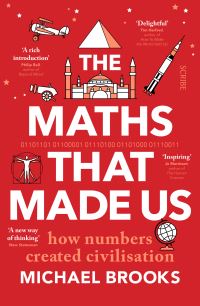
Quadratic equations, Pythagoras’ theorem, imaginary numbers, and pi – you may remember studying these at school, but did anyone ever explain why? Never fear – bestselling science writer, and your new favourite maths teacher, Michael Brooks, is here to help. In ‘The Maths That Made Us’, Brooks reminds us of the wonders of numbers: how they enabled explorers to travel far across the seas and astronomers to map the heavens; how they won wars and halted the HIV epidemic; how they are responsible for the design of your home and almost everything in it, down to the smartphone in your pocket. His clear explanations of the maths that built our world, along with stories about where it came from and how it shaped human history, will engage and delight.
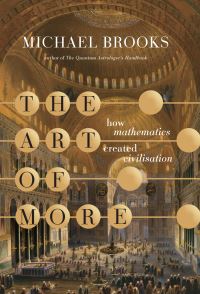
Bestselling science writer Michael Brooks takes us on a fascinating journey through the history of civilisation, as he explains why maths is fundamental to our understanding of the world. The untrained brain isn’t wired for maths; beyond the number 3, it just sees ‘more’. So why bother learning it at all? You might remember studying geometry, calculus, and algebra at school, but you probably didn’t realise – or weren’t taught – that these are the roots of art, architecture, government, and almost every other aspect of our civilisation. The mathematics of triangles enabled explorers to travel far across the seas and astronomers to map the heavens. Calculus won the Allies the Second World War and halted the HIV epidemic. And imaginary numbers, it turns out, are essential to the realities of 21st-century life.
The favourites
Available on backorder (5-7 days)
Standing by the Wall
Available on backorder (5-7 days)
The Thank You Book
Available on backorder (5-7 days)
A Spoonful of Frogs
Available on backorder (5-7 days)
Hacked!
Available on backorder (5-7 days)
Soul Fuel for Young Explorers
Available on backorder (5-7 days)
Before I Go To Sleep
Available on backorder (5-7 days)
The Spiritual Path
Available on backorder (5-7 days)
The English landscape garden
Available on backorder (5-7 days)
Navigating Biodiversity
Available on backorder (5-7 days)
Duel Duet
Available on backorder (5-7 days)
Gordon the Meanest Goose on Earth Wins It All
Available on backorder (5-7 days)
Subtotal: £157.89
Notifications