Showing 37–48 of 64 resultsSorted by latest
-
£10.99
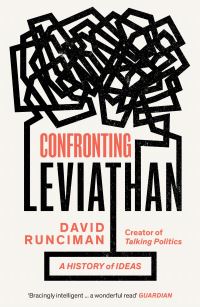
Based on the ‘History Of Ideas’ podcast series by Talking Politics host David Runciman, this book explores some of the most important thinkers and prominent ideas lying behind modern politics – from Hobbes to Gandhi, from democracy to patriarchy, and from revolution to lock down. While explaining the most important and often-cited ideas of thinkers such as Constant, De Tocqueville, Marx and Engels, Hayek, MacKinnon and Fukuyama, David Runciman shows how crises – revolutions, wars, depressions, pandemics – generated these new ways of political thinking. This is a history of ideas to help make sense of what’s happening today.
-
£14.99
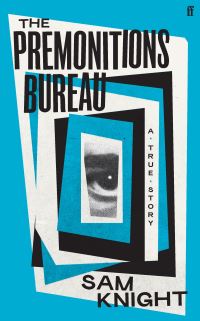
Premonitions are impossible. But they come true all the time. Most are innocent. You think of a forgotten friend. Out of the blue, they call. But what if you knew that something terrible was going to happen? A sudden flash, the words CHARING CROSS. Four days later, a packed express train comes off the rails outside the station. What if you could share your vision, and stop that train? Could these forebodings help the world to prevent disasters? In 1966, John Barker, a dynamic psychiatrist working in an outdated British mental hospital, established the Premonitions Bureau to investigate these questions. He would find a network of hundreds of correspondents, from bank clerks to ballet teachers. Among them were two unnervingly gifted ‘percipients’. Together, the pair predicted plane crashes, assassinations and international incidents, with uncanny accuracy.
-
£9.99
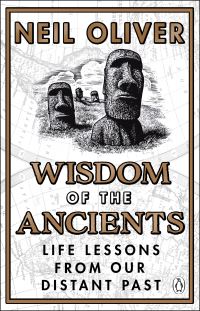
In all of recorded history this is the best time to be alive. We have increased life expectancy, better living conditions, the boundless potential of technology. Yet for all we have gained in the modern world, simple peace of mind is hard to find. In a time that is increasingly fraught with complexity and conflict, we are told that our wellbeing relies on remaining as present as possible. But what if the key to being present lies in the past? Neil Oliver takes us back in time, to grab hold of the ideas buried in forgotten cultures and early civilisations. From Laetoli footprints in Tanzania to Keralan rituals, stone circles and cave paintings, Oliver takes us on a global journey through antiquity.
-
£9.99
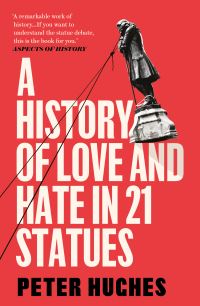
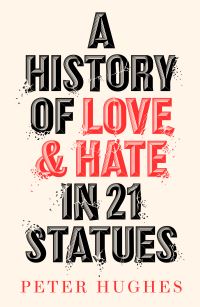
Why is it easy to hate and difficult to love? When societies fracture into warring tribes, we demonise those who oppose us. We tear down our statues, forgetting that what begins with the destruction of statues, often leads to the killing of people. Blending history, philosophy and psychology, A History of Love and Hate in 21 Statues is a compelling exploration of identity and power. This remarkable book spans every continent, religion and era, through the creation and destruction of 21 statues from Hatshepsut and the Buddhas of Bamiyan to Mendelssohn, Edward Colston and Frederick Douglass.
-
£9.99
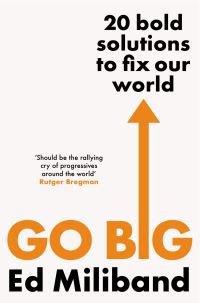
Ed Miliband has captured imaginations with his award-winning hit podcast ‘Reasons to be Cheerful’, which discovers brilliant people all around the world who are successfully fixing problems, transforming communities and pioneering global movements. From a citizens’ assembly in Mongolia to the UK’s largest walking and cycling network in Greater Manchester, from flexible working in Finland to the campaign for the first halal Nando’s in Cardiff, ‘Go Big’ draws on the most imaginative and ambitious of these ideas to provide a vision for how to remake society.
-
£10.99
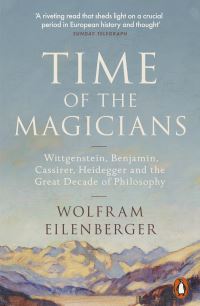
A gripping narrative of the intertwined lives of the four philosophers whose ideas reshaped the 20th century.
-
£18.99
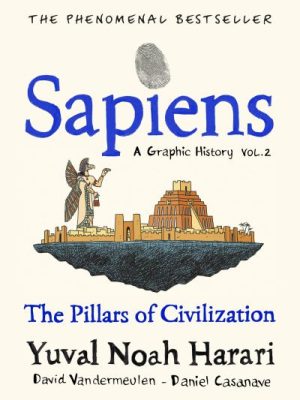
Twelve thousand years ago, we humans fell into a trap. This volume tells the story of how wheat took over the world; how an unlikely marriage between a god and a bureaucrat created the first empires; and how war, famine, disease, and inequality became a part of the human condition.
-
£18.99
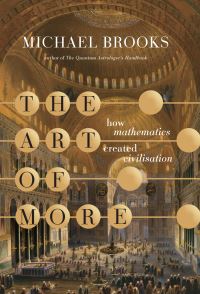
Bestselling science writer Michael Brooks takes us on a fascinating journey through the history of civilisation, as he explains why maths is fundamental to our understanding of the world. The untrained brain isn’t wired for maths; beyond the number 3, it just sees ‘more’. So why bother learning it at all? You might remember studying geometry, calculus, and algebra at school, but you probably didn’t realise – or weren’t taught – that these are the roots of art, architecture, government, and almost every other aspect of our civilisation. The mathematics of triangles enabled explorers to travel far across the seas and astronomers to map the heavens. Calculus won the Allies the Second World War and halted the HIV epidemic. And imaginary numbers, it turns out, are essential to the realities of 21st-century life.
-
£20.00
Why is it easy to hate and difficult to love? When societies fracture into warring tribes, we demonise those who oppose us. We tear down our statues, forgetting that what begins with the destruction of statues, often leads to the killing of people. Blending history, philosophy and psychology, A History of Love and Hate in 21 Statues is a compelling exploration of identity and power. This remarkable book spans every continent, religion and era, through the creation and destruction of 21 statues from Hatshepsut and the Buddhas of Bamiyan to Mendelssohn, Edward Colston and Frederick Douglass.
-
£20.00
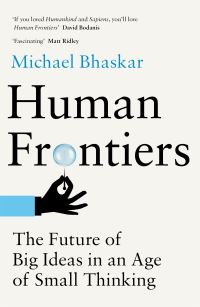
It’s easy to assume that the story of modern society is one of consistent, radical progress, but this is no longer true: more academics are researching than ever before but their work leads to fewer breakthroughs; innovation is incremental, limited to the digital sphere; the much-vaunted cure for cancer remains elusive; space travel has stalled since the heady era of the moonshot; politics is stuck in a rut, and the creative industries seem trapped in an ongoing cycle of rehashing genres and classics. The most ambitious ideas now struggle. Our great-great-great grandparents saw a series of transformative ideas revolutionise almost everything in just a few decades. Today, in contrast, short termism, risk aversion, and fractious decision making leaves the landscape timid and unimaginative. In this book, Michael Bhaskar draws a vividly entertaining and expansive portrait of humanity’s relationship with big ideas.
-
£10.99
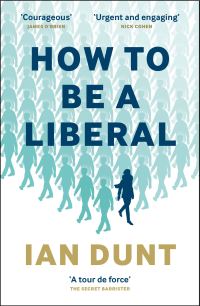
‘A tour de force.’ – THE SECRET BARRISTER
‘Urgent and engaging.’ – NICK COHEN, OBSERVER COLUMNIST
‘Courageous.’ – JAMES O’BRIEN, LBC
In a soaring narrative that stretches from the English Civil War to the 2008 financial crash and the rise of new nationalism, British political journalist Ian Dunt tells the epic story of personal freedom.Â
-
£10.99
Uncertainty pervades the big decisions we all make in our lives. How much should we pay into our pensions each month? Should we take regular exercise? Expand the business? Change our strategy? Enter a trade agreement? Take an expensive holiday? We do not know what the future will hold. But we must make decisions anyway. So we crave certainties which cannot exist and invent knowledge we cannot have. But humans are successful because they have adapted to an environment that they understand only imperfectly. Throughout history we have developed a variety of ways of coping with the radical uncertainty that defines our lives. This incisive and eye-opening book draws on biography, history, mathematics, economics, and philosophy to highlight the most successful – and most short-sighted – methods of dealing with an unknowable future.