Showing 25–36 of 64 resultsSorted by latest
-
£25.00
The year is 1933. Hannah Arendt escapes Berlin, seeking refuge among the stateless gathering in Paris. Simone de Beauvoir reimagines the dance between consciousness and the world outside in a Rouen café. Ayn Rand labours in Hollywood exile on the novel she believes destined to reignite the flame of liberty in her adoptive nation. Simone Weil, disenchanted with the revolution’s course in Russia, devotes her entire being to the plight of the oppressed. ‘The Visionaries’ follows in its protagonists’ footsteps from Leningrad to New York, Spain at civil war to France under occupation, as each is uprooted by totalitarianism’s ascendence.
-
£25.00
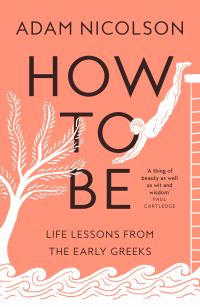
What is the nature of things? Must I think my own way through the world? What is justice? How can I be me? How should we treat each other?
-
£20.00
Over the last three centuries, the West rose to dominate the planet. Then, suddenly, around the turn of the millennium, history reversed. Faced with economic stagnation and internal political division, the West has found itself in rapid decline. But this is not the first time the global order has witnessed such a dramatic rise and fall. The Roman Empire followed a similar arc from dizzying power to disintegration – a fact that is more than a strange historical coincidence. In ‘Why Empires Fall’, Peter Heather and John Rapley use this Roman past to think anew about the contemporary West, its state of crisis, and what paths we could take out of it.
-
£14.99
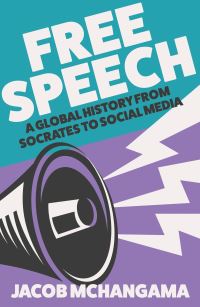
A global history of free speech, from the ancient world to today. Hailed as the ‘first freedom,’ free speech is the bedrock of democracy. But it is a challenging principle, subject to erosion in times of upheaval. Today, in democracies and authoritarian states around the world, it is on the retreat. In ‘Free Speech’, Jacob Mchangama traces the riveting legal, political, and cultural history of this idea. Through captivating stories of free speech’s many defenders – from the ancient Athenian orator Demosthenes and the ninth-century freethinker al-Razi, to Mary Wollstonecraft, Mahatma Gandhi, Nelson Mandela and modern-day digital activists – Mchangama demonstrates how the free exchange of ideas underlies all intellectual achievement and has enabled the advancement of both freedom and equality worldwide.
-
£9.99
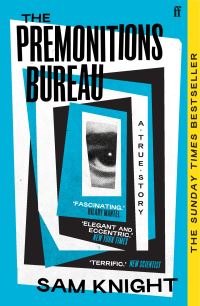
Premonitions are impossible. But they come true all the time. Most are innocent. You think of a forgotten friend. Out of the blue, they call. But what if you knew that something terrible was going to happen? A sudden flash, the words CHARING CROSS. Four days later, a packed express train comes off the rails outside the station. What if you could share your vision, and stop that train? Could these forebodings help the world to prevent disasters? In 1966, John Barker, a dynamic psychiatrist working in an outdated British mental hospital, established the Premonitions Bureau to investigate these questions. He would find a network of hundreds of correspondents, from bank clerks to ballet teachers. Among them were two unnervingly gifted ‘percipients’. Together, the pair predicted plane crashes, assassinations and international incidents, with uncanny accuracy.
-
£22.00
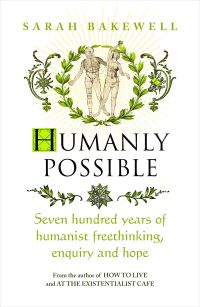
The bestselling, prizewinning author of ‘How to Live’ and ‘At the Existentialist Café’ explores 700 years of writers, thinkers, scientists and artists, all trying to understand what it means to be truly human. It takes us on an irresistible journey, and joyfully celebrates open-mindedness, optimism, freedom and the power of the here and now – humanist values which have helped steer us through dark times in the past, and which are just as urgently needed in our world today.
-
£20.00
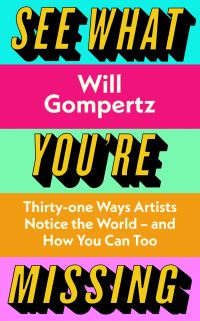
Will Gompertz takes us into the minds of artists – from contemporary stars to old masters, the well-known to the lesser-so, and from around the world – to show us how to look and experience the world with their heightened awareness.
-
£25.00
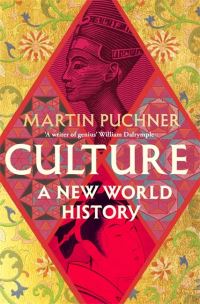
Can anyone really own a culture? This magnificent account argues that the story of global civilisations is one of mixing, sharing, and borrowing. It shows how art forms have crisscrossed continents over centuries to produce masterpieces. From Nefertiti’s lost city and the Islamic Golden Age to twentieth century Nigerian theatre and Modernist poetry, Martin Puchner explores how contact between different peoples has driven artistic innovation in every era – whilst cultural policing and purism have more often undermined the very societies they tried to protect.
-
£16.99
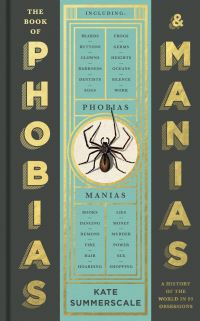
Do you recoil in arachnophobic horror at the sight of a spider – or twitch with nomophobia when you misplace your mobile phone? Do your book-buying habits verge on bibliomania? Perhaps you find yourself mired in indecision and uncertainty? (Would it be reassuring to give this a name: aboulomania?) Our phobias and manias are contradictory and multiple: deeply intimate, yet forged by the times we live in – the commonest form of anxiety disorder, but rarely given a formal diagnosis. Plunge into this rich, surprising and fascinating A-Z compendium to discover how our fixations have taken shape, from pre-history to the present day, as award-winning author Kate Summerscale deftly traces the threads between the past and present, the psychological and social, the personal and the political.
-
£30.00
Throughout history, the concept of command – as both a way to achieve objectives and as an assertion of authority – has been essential to military action and leadership. But, as Sir Lawrence Freedman shows, it is also deeply political. Military command has been reconstructed and revolutionized since the Second World War by nuclear warfare, small-scale guerrilla land operations and cyber interference. Freedman takes a global perspective, systematically investigating its practice and politics since 1945 through a wide range of conflicts from the French Colonial Wars, the Cuban Missile Crisis and the Bangladesh Liberation War to North Vietnam’s Easter Offensive of 1972, the Falklands War, the Iraq War and Russia’s wars in Chechnya and Ukraine.
-
£9.99
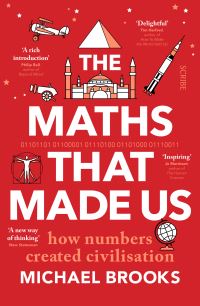
Quadratic equations, Pythagoras’ theorem, imaginary numbers, and pi – you may remember studying these at school, but did anyone ever explain why? Never fear – bestselling science writer, and your new favourite maths teacher, Michael Brooks, is here to help. In ‘The Maths That Made Us’, Brooks reminds us of the wonders of numbers: how they enabled explorers to travel far across the seas and astronomers to map the heavens; how they won wars and halted the HIV epidemic; how they are responsible for the design of your home and almost everything in it, down to the smartphone in your pocket. His clear explanations of the maths that built our world, along with stories about where it came from and how it shaped human history, will engage and delight.
-
£10.99
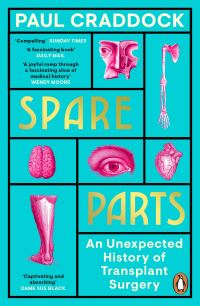
How did an architect help pioneer blood transfusion in the 1660s? Why did eighteenth-century dentists buy the live teeth of poor children? And what role did a sausage skin and an enamel bath play in making kidney transplants a reality? We think of transplant surgery as one of the medical wonders of the modern world but transplant surgery is as ancient as the pyramids, with a history more surprising than we might expect. Paul Craddock takes us on a journey – from sixteenth-century skin grafting to contemporary stem cell transplants – uncovering stories of operations performed by unexpected people in unexpected places.