Showing 13–24 of 64 resultsSorted by latest
-
£10.99
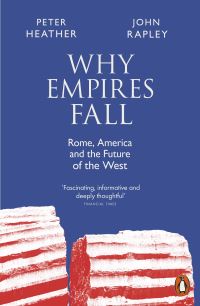
Over the last three centuries, the West rose to dominate the planet. Then, suddenly, around the turn of the millennium, history reversed. Faced with economic stagnation and internal political division, the West has found itself in rapid decline. But this is not the first time the global order has witnessed such a dramatic rise and fall. The Roman Empire followed a similar arc from dizzying power to disintegration – a fact that is more than a strange historical coincidence. In ‘Why Empires Fall’, Peter Heather and John Rapley use this Roman past to think anew about the contemporary West, its state of crisis, and what paths we could take out of it.
-
£25.00
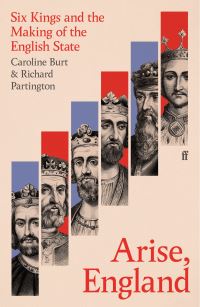
Between 1199 and 1399, English politics was high drama. These two centuries witnessed savage political blood-letting – including civil war, deposition, the murder of kings and the ruthless execution of rebel lords – as well as international warfare, devastating national pandemic, economic crisis and the first major peasant uprising in English history. Arise, England uses the six Plantagenet kings who ruled during these two centuries to explore England’s emergent statehood. Drawing on original accounts and arresting new research, it draws resonances between government, international relations, and the abilities, egos and ambitions of political actors, then and now. Colourful and complicated, and by turns impressive and hateful, the six kings stride through the story; but arguably the greatest character is the emerging English state itself.
-
£10.99
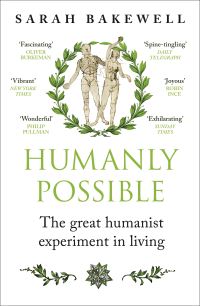
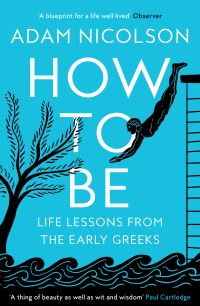
The bestselling, prizewinning author of ‘How to Live’ and ‘At the Existentialist Café’ explores 700 years of writers, thinkers, scientists and artists, all trying to understand what it means to be truly human. It takes us on an irresistible journey, and joyfully celebrates open-mindedness, optimism, freedom and the power of the here and now – humanist values which have helped steer us through dark times in the past, and which are just as urgently needed in our world today.
-
£16.99
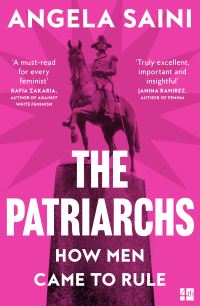
HOW RACE, CLASS, AND POLITICS INFLUENCE THE WAY WE MOVE
-
£10.99
SHORTLISTED FOR THE ORWELL PRIZE FOR POLITICAL WRITING 2023
A WATERSTONES BOOK OF YEAR FOR POLITICS 2023
-
£20.00
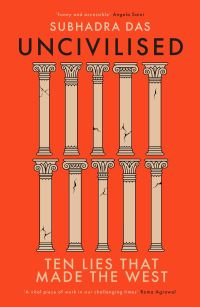
Taking cues from Greek philosophy and honed in the Enlightenment, certain notions about humanity and human society grew into the tenets we live by, and we haven’t questioned them a great deal since. But isn’t it time we asked who really benefits from the values at the core of our society? How much truth lies in a science that conjured up ‘race’? Who do laws and nations really protect? Why does it feel like time is money? What even is ‘art’? And the real question – is the West really as ‘civilised’ as it thinks it is? This book will put everything back on the table and ask listeners to reconsider what they thought they knew about civilisation. Taking 10 core values of Western Civilisation in turn, it will examine the root of the idea, how it developed, and how it’s impacted the way we live.
-
£12.99
Can anyone really own a culture? This magnificent account argues that the story of global civilisations is one of mixing, sharing, and borrowing. It shows how art forms have crisscrossed continents over centuries to produce masterpieces. From Nefertiti’s lost city and the Islamic Golden Age to twentieth century Nigerian theatre and Modernist poetry, Martin Puchner explores how contact between different peoples has driven artistic innovation in every era – whilst cultural policing and purism have more often undermined the very societies they tried to protect.
-
£10.99
A TIMES BOOK OF THE YEAR
What is the nature of things? Must I think my own way through the world? What is justice? How can I be me? How should we treat each other?
-
£30.00
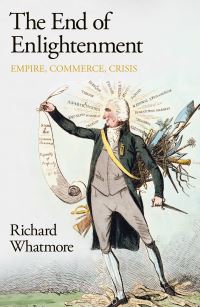
‘The End of Enlightenment’ offers a radical re-evaluation of one of the most important moments in human history. Tracing around the world the changing perspectives of economists, philosophers, politicians, and polemicists, historian Richard Whatmore argues that, for figures as diverse as David Hume, Edmund Burke, Adam Smith and Mary Wollstonecraft, the Enlightenment was a profound failure. Returning us to the tumultuous events and ideas of the eighteenth century, and digging deep into the thought of the men and women who defined their age, this book is a lucid exploration of disillusion and intellectual transformation, a brilliant meditation on our continued assumptions about the past, and a glimpse of the different ways our world might be structured.
-
£25.00
‘A GENUINELY NEW HISTORY OF OUR NATION’ DAN JONES
‘A LASTING WORK OF SOCIAL HISTORY’ THE TIMES
***** FIVE STARS FROM THE INDEPENDENT *****
-
£12.99
How to Be Perfect meets The Daily Stoic in this witty, entertaining, highly giftable compendium of quotidian wisdom
-
£16.99
Throughout history, the concept of command – as both a way to achieve objectives and as an assertion of authority – has been essential to military action and leadership. But, as Sir Lawrence Freedman shows, it is also deeply political. Military command has been reconstructed and revolutionized since the Second World War by nuclear warfare, small-scale guerrilla land operations and cyber interference. Freedman takes a global perspective, systematically investigating its practice and politics since 1945 through a wide range of conflicts from the French Colonial Wars, the Cuban Missile Crisis and the Bangladesh Liberation War to North Vietnam’s Easter Offensive of 1972, the Falklands War, the Iraq War and Russia’s wars in Chechnya and Ukraine.