Progress
£22.00‘A spirited skewering of the idea that things can only get better’ The Guardian
‘A new understanding of our past’ Danny Dorling, author of Inequality and the 1%
________________________________

Showing 1–12 of 64 resultsSorted by latest
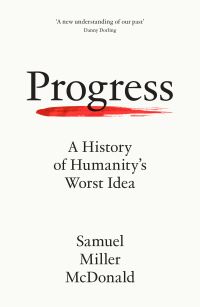
‘A spirited skewering of the idea that things can only get better’ The Guardian
‘A new understanding of our past’ Danny Dorling, author of Inequality and the 1%
________________________________
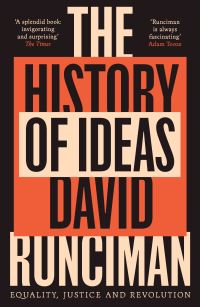
In this bold follow-up to ‘Confronting Leviathan’, David Runciman unmasks modern politics and reveals the great men and women of ideas behind it. What can Samuel Butler’s ideas teach us about the oddity of how we choose to organise our societies? How did Frederick Douglass not only expose the horrors of slavery, but champion a new approach to abolishing it? Why should we tolerate snobbery, betrayal and hypocrisy, as Judith Shklar suggested? And what does Friedrich Nietzsche predict for our future? From Rousseau to Rawls, fascism to feminism and pleasure to anarchy, this is a mind-bending tour through the history of ideas which will forever change your view of politics today.
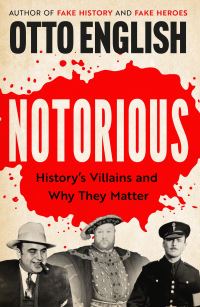
Across the entire span of human civilisation, certain people and groups have been identified as being responsible for the ills of the world, and have remained hated for it. In his continuing desire to separate out the facts from the fiction of history, Otto English looks at how these legacies were constructed and who told us that they were evil. From how Bloody Mary became the figurehead of uppity women and how Judas’s betrayal became a template for religious tensions for centuries to what the Peasants Revolt and the Illuminati shows us about power struggles throughout the ages, English exposes the agendas behind the ‘truths’ we’ve been told to believe. And in looking at how xenophobia was weaponised during the ‘Spanish’ Flu, he reveals how our past sometimes bleeds into the present day.
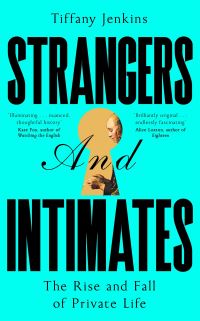
A brilliantly original history of privacy with a simple and urgent argument: private life is a precious and sustaining resource that must be defended.
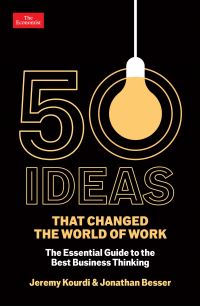
The world of work is full of ideas. Some are useful, shaping what we do and the way we do it – but it can often be hard to sort the wheat from the chaff. When ideas really do break new ground and change our approach, they can help all of us to be better, happier and more productive. The trick is to know which ones offer the most reliable guide, and how they can be used to best effect. By summarising and explaining the best of this thinking, ’50 Ideas that Changed the World of Work’ is both digest and route map, an invaluable guide to navigating the world of work today.
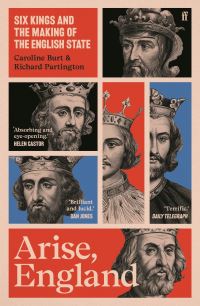
Between 1199 and 1399, English politics was high drama. These two centuries witnessed savage political blood-letting – including civil war, deposition, the murder of kings and the ruthless execution of rebel lords – as well as international warfare, devastating national pandemic, economic crisis and the first major peasant uprising in English history. Arise, England uses the six Plantagenet kings who ruled during these two centuries to explore England’s emergent statehood. Drawing on original accounts and arresting new research, it draws resonances between government, international relations, and the abilities, egos and ambitions of political actors, then and now. Colourful and complicated, and by turns impressive and hateful, the six kings stride through the story; but arguably the greatest character is the emerging English state itself.
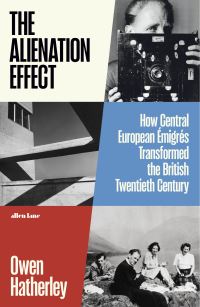
As the horrors of fascism ran riot through Europe in the 1930s, tens of thousands of central Europeans, most of them Jewish and many of them artists, fled their countries seeking sanctuary in an imperial island at the edge of the continent. The world they found when they reached these shores Рdamp, grey and parochial Рwas a far cry from the modernity and dynamism of Weimar Berlin, Red Vienna or modernist Prague, but it was safe, and it became home. Yet the ̩migr̩s had not arrived alone: they brought with them new and radical ideas, and as they began to rebuild their lives and livelihoods, they transformed the face of Britain forever. In this book, historian Owen Hatherley leads us into the technicolour world of this exiled generation of artists and intellects, from celebrated figures like Erno Goldfinger to forgotten luminaries like Ruth Glass.
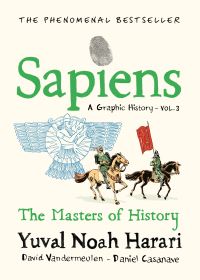
Sometimes history seems like a laundry list of malevolent monarchs, pompous presidents and dastardly dictators. But are they really the ones in the driving seat? This volume takes us on an immersive and hilarious ride through the human past to discover the forces that change our world, bring us together, and – just as often – tear us apart. Grab a front-row seat to the greatest show on earth and explore the rise of money, religion and empire. Join our fabulous host Heroda Tush, as she wonders: which historical superhero will display the power to make civilisations rise and fall?
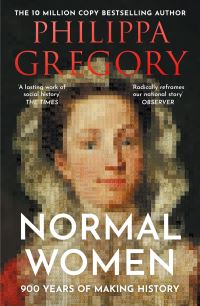
A NEW STATESMEN BOOK OF THE YEAR 2023
?’A lasting work of social history’ THE TIMES
‘A genuinely new history of our nation’ DAN JONES
‘This celebration of women is a triumph of popular history’ SPECTATOR
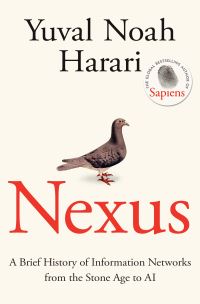
For the last 100,000 years, humans have accumulated enormous power. But despite all our discoveries, inventions and conquests, we now find ourselves in an existential crisis. The world is on the verge of ecological collapse. Misinformation abounds. And we are rushing headlong into the age of AI – a new information network that threatens to annihilate us. If we are so wise, why are we so self-destructive? ‘Nexus’ considers how the flow of information has shaped us, and our world. Taking us from the Stone Age through the Bible, early modern witch-hunts, Stalinism, Nazism and the resurgence of populism today, Yuval Noah Harari asks us to consider the complex relationship between information and truth, bureaucracy and mythology, wisdom and power. He explores how different societies and political systems have wielded information to achieve their goals, for good and ill.
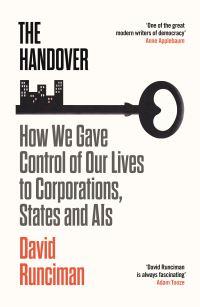
‘The Singularity’ is what Silicon Valley calls the idea that, eventually, we will be overrun by machines that are able to take decisions and act for themselves. What no one says is that it happened before. A few hundred years ago, humans started building the robots that now rule our world. They are called states and corporations: immensely powerful artificial entities, with capacities that go far beyond what any individual can do, and which, unlike us, need never die. They have made us richer, safer and healthier than would have seemed possible even a few generations ago – and they may yet destroy us. ‘The Handover’ distils over 300 years of thinking about how to live with artificial agency.
No products in the basket.
Notifications