Showing 1–12 of 44 resultsSorted by latest
-
£9.99
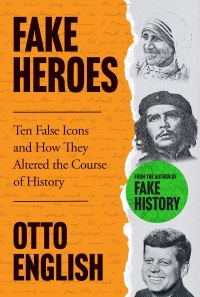
Otto English dives into the hidden lives of some of history’s biggest names. Separating the myth-builders from the fraudsters and celebrating some of the genuine unsung heroes from our history, Fake Heroes exposes the truth of the past and helps us understand why that matters today.
-
£30.00
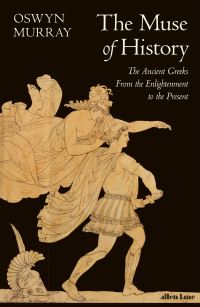
The study of ancient Greek history has been central to the western conception of history since the Renaissance. ‘The Muse of History’ traces the shifting patterns of this preoccupation in the last three centuries, in which each generation has reinterpreted the Greeks in the light of their contemporary world, through times of revolution, conflicting ideologies and warfare. It aims to offer a new history of Greek historiography from the Enlightenment to the present, and to acknowledge the continuing spiritual importance of the ancient Greeks for European culture in the twentieth century under totalitarian persecutions.
-
£10.99
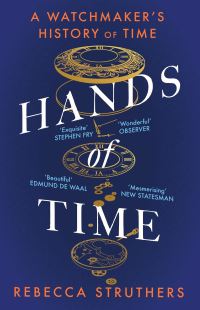
An intricate and personal history of watches and time, told by an extraordinary watchmaker and historian.
-
£30.00
When did Hannibal cross the Alps? What caused the war of Jenkins’ Ear? Who was Rosa Parks? How did the Arab Spring unfold? Discover history’s most decisive moments as and when they happened. Taking a chronological approach, ‘History Year by Year’ invites you to explore momentous discoveries, ingenious inventions, and important events from around the world in the context of their time. Along the way you’ll meet charismatic leaders, brutal dictators, influential thinkers, and innovative scientists from every corner of the globe.
-
£12.99
Can anyone really own a culture? This magnificent account argues that the story of global civilisations is one of mixing, sharing, and borrowing. It shows how art forms have crisscrossed continents over centuries to produce masterpieces. From Nefertiti’s lost city and the Islamic Golden Age to twentieth century Nigerian theatre and Modernist poetry, Martin Puchner explores how contact between different peoples has driven artistic innovation in every era – whilst cultural policing and purism have more often undermined the very societies they tried to protect.
-
£25.00
Their names still echo down the ages: The Great Pyramid at Giza. The Hanging Gardens of Babylon. The Temple of Artemis. The statue of Zeus at Olympia. The mausoleum of Halikarnassos. The Colossus at Rhodes. The Lighthouse of Alexandria. The Seven Wonders of the World were staggeringly audacious impositions on our planet. They were also brilliant adventures of the mind, test cases of the reaches of human imagination. Now only the pyramid remains, yet the scale and majesty of these seven wonders still enthral us today. In a thrilling, colourful narrative enriched with the latest archaeological discoveries, bestselling historian Bettany Hughes walks through the landscapes of both ancient and modern time; on a journey whose purpose is to ask why we wonder, why we create, why we choose to remember the wonder of others.
-
£11.99
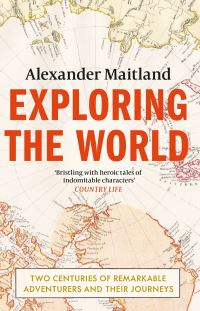
Explorers and travellers have always been attracted by the lure of the unknown. By traversing and mapping our planet, they have played a vital role in mankind’s development. For almost two hundred years, the Royal Geographical Society has recognised their achievements by awarding its prestigious gold medals to those who have contributed most to our knowledge of the world. Taking us on a journey across mountains and deserts, oceans and seas, this book tells the stories of more than eighty of these extraordinary men and women. Some, such as David Livingstone, Scott of the Antarctic and Jacques-Yves Cousteau, are well known; whilst others, such as William Chandless and Ney Elias, are today less familiar. Some dreamed of being the first to sight a lake or a river; others sighted some of the world’s greatest natural features by chance.
-
£16.99
Have you ever wondered who the third man on the moon was? Did you know that Dick Whittington really was the medieval Mayor of London? Why was a pigeon a hero to the American army? What’s the difference between a dolmen and a barrow? Who were the Wu, Wei and Shu Han? Was Napoleon really small? Who said ‘Pardon me, sir, I didn’t mean to’ just before they were executed? When was the oldest known shark attack?The answers to all these questions and so much more are contained within this wonderful miscellany of historical facts, figures and fascinating finds which will enthral, entertain and inform everyone who loves history and wants to know more about more.
-
£25.00
Beginning with the oldest, Professor Michael J. Benton takes us through the ‘big five’ die-outs: the Late Ordovician, which set the evolution of the first animals on an entirely new course; the late Devonian, apparently brought on by global warming; the cataclysmic End-Permian, also known as the Great Dying, which wiped out over 90% of all life on Earth; and, book-ending the age of the dinosaurs, the newly discovered Carnian Pluvial Event and the End-Cretaceous asteroid. He examines how global warming, acid rain, ocean acidification, erupting volcanoes and meteorite impact have affected conditions on Earth, the drastic consequences for global ecology, and how life in turn survived, adapted and evolved. New research allows us to link long-ago upheavals to crises in our current age, the Anthropocene, with important consequences for us all.
-
£25.00
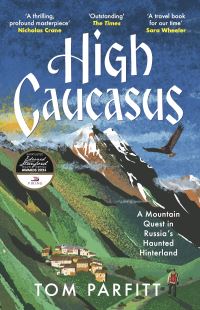
On the 1 September 2004, at the Beslan siege in Russia when Chechen terrorists took more than 1,000 people captive at celebrations held to mark the first day of the school year. Lasting three days, the siege reached a bloody climax when two bombs exploded inside the school and Russian troops stormed the building, sparking a fire in the gymnasium where the captives were held. In the chaos, 334 hostages, more than half of them children, died. Never a war correspondent, Tom was emotionally pulverised, and his solution was to turn back to his lifelong love of walking, to a nature cure of sorts. Having long loved the Caucasus, he also wanted to understand why the mountain peoples there, people like the Chechens, were so angry at Russia. That was how Tom came to walk 1,000 miles across the North Caucasus.
-
£25.00
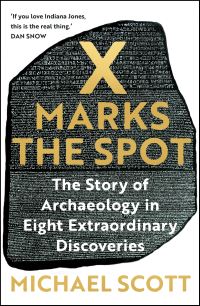
Uncovering the physical remains of our past is a quintessential human itch; the pursuit of every society from the ancients through to today. But the stories behind archaeological exploration and discovery – what we look for when, what we end up finding, and what we then do with it – tell us as much about ourselves today as they do about the past. Through eight sensational stories of discovery, Professor Michael Scott traces the evolution of modern archaeology from colonial expeditions to today’s cutting-edge digs, unearthing traps, curses and buried treasure along the way.
-
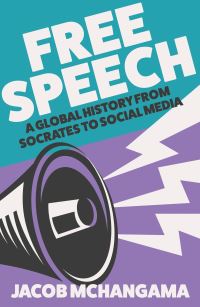
£14.99
A global history of free speech, from the ancient world to today. Hailed as the ‘first freedom,’ free speech is the bedrock of democracy. But it is a challenging principle, subject to erosion in times of upheaval. Today, in democracies and authoritarian states around the world, it is on the retreat. In ‘Free Speech’, Jacob Mchangama traces the riveting legal, political, and cultural history of this idea. Through captivating stories of free speech’s many defenders – from the ancient Athenian orator Demosthenes and the ninth-century freethinker al-Razi, to Mary Wollstonecraft, Mahatma Gandhi, Nelson Mandela and modern-day digital activists – Mchangama demonstrates how the free exchange of ideas underlies all intellectual achievement and has enabled the advancement of both freedom and equality worldwide.