Nature’s memory
£25.00A behind-the-scenes tour through the world’s greatest natural history museums, revealing how their hidden secrets can help us in the fight against climate change.

Showing 1–12 of 13 resultsSorted by latest
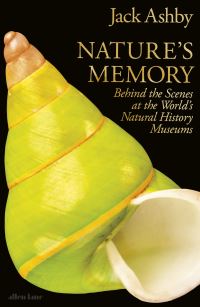
A behind-the-scenes tour through the world’s greatest natural history museums, revealing how their hidden secrets can help us in the fight against climate change.
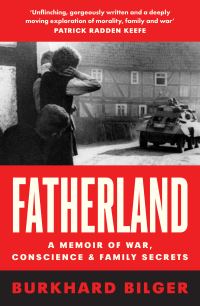
‘The book we need right now’ Atul Gawande, author of Being Mortal
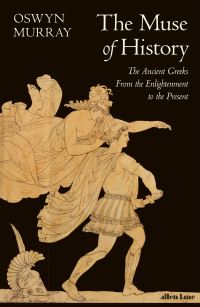
The study of ancient Greek history has been central to the western conception of history since the Renaissance. ‘The Muse of History’ traces the shifting patterns of this preoccupation in the last three centuries, in which each generation has reinterpreted the Greeks in the light of their contemporary world, through times of revolution, conflicting ideologies and warfare. It aims to offer a new history of Greek historiography from the Enlightenment to the present, and to acknowledge the continuing spiritual importance of the ancient Greeks for European culture in the twentieth century under totalitarian persecutions.
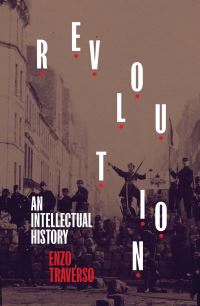
A cultural and intellectual balance-sheet of the twentieth century’s age of revolutions
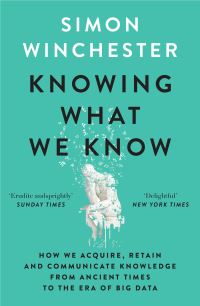
‘A delightful compendium of the kind of facts you immediately want to share with anyone you encounter’ New York Times
‘An ebullient, irrepressible spirit invests this book. It is erudite and sprightly’Sunday Times
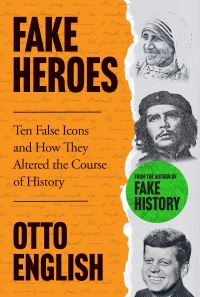
Otto English dives into the hidden lives of some of history’s biggest names. Separating the myth-builders from the fraudsters and celebrating some of the genuine unsung heroes from our history, Fake Heroes exposes the truth of the past and helps us understand why that matters today.
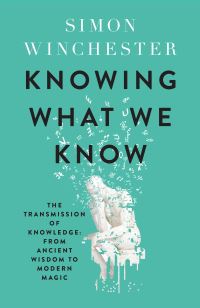
‘A delightful compendium of the kind of facts you immediately want to share with anyone you encounter’ New York Times
‘An ebullient, irrepressible spirit invests this book. It is erudite and sprightly’Sunday Times
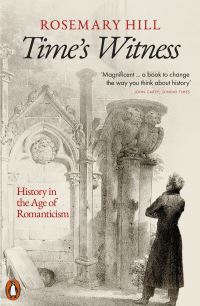
From the fall of the Bastille in 1789 to the opening of the Great Exhibition in 1851, history changed. The grand narratives of the Enlightenment, concerned with kings and statesmen, gave way to a new interest in the lives of ordinary people. Oral history, costume history, the history of food and furniture, of Gothic architecture, theatre and much else were explored as never before. Antiquarianism, the study of the material remains of the past, was not new, but now hundreds of men – and some women – became antiquaries and set about rediscovering their national history, in Britain, France and Germany. The Romantic age valued facts, but it also valued imagination and it brought both to the study of history. From scholars to imposters the dozen or so antiquaries at the heart of this book show us history in the making.
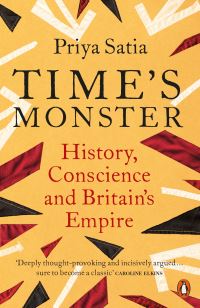
For generations, British thinkers told the history of an empire whose story was still very much in the making. While they wrote of conquest, imperial rule in India, the Middle East, Africa, and the Caribbean was consolidated. While they described the development of imperial governance, rebellions were brutally crushed. As they reimagined empire during the two World Wars, decolonization was compromised. Priya Satia shows how these historians not only interpreted the major political events of their time but also shaped the future that followed.
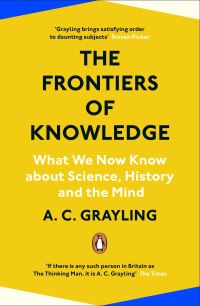
In very recent times humanity has learnt a vast amount about the universe, the past, and itself. But through our remarkable successes in acquiring knowledge we have learned how much we have yet to learn: the science we have, for example, addresses just 5% of the universe; pre-history is still being revealed, with thousands of historical sites yet to be explored; and the new neurosciences of mind and brain are just beginning. Bestselling polymath and philosopher A.C. Grayling seeks to answer them in three crucial areas at the frontiers of knowledge: science, history, and psychology. In each area he illustrates how each field has advanced to where it is now, from the rise of technology to quantum theory, from the dawn of humanity to debates around national histories, from ancient ideas of the brain to modern theories of the mind.
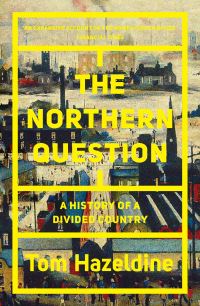
Britain has scarcely begun to come to terms with its recent upheavals, from the crisis over Brexit to the collapse of Labour’s ‘red wall’. What can explain such momentous shifts? In this work, the author excavates the history of a divided country: North and South, industry versus finance, Whitehall and the left-behind.
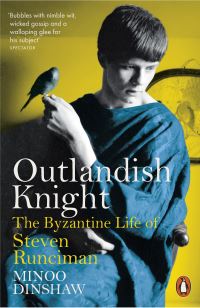
In his enormously long life (he was born in 1903 and died in 2000), Steven Runciman managed not just to be a great historian of the Crusades and Byzantium, but Grand Orator of the Orthodox Church, a member of the Order of Whirling Dervishes, Greek Astronomer Royal and Laird of Eigg. His friendships, curiosities and plottings entangled him in a huge array of different artistic movements, civil wars, Cold War betrayals and, above all, the rediscovery of the history of the Eastern Mediterranean. He was as happy living in a remote part of the Inner Hebrides as in the heart of Istanbul. He was obsessed with historical truth, but also with tarot, second sight, ghosts and the uncanny. ‘Outlandish Knight’ is a dazzling debut by a writer who has prodigious gifts, but who also has had the ability to spot one of the great biographical subjects.
No products in the basket.
Notifications