Rebel Island
£12.99An essential guide to Taiwan’s past and present, providing invaluable context at a time of escalating tension over its future.

Showing 1–12 of 30 resultsSorted by latest
An essential guide to Taiwan’s past and present, providing invaluable context at a time of escalating tension over its future.
Treasure makes respectable people do dishonourable things?
SHORTLISTED FOR THE WAINWRIGHT PRIZE
A FINANCIAL TIMES BOOK OF THE YEAR
‘The bothy embrace is addictive’ ADAM NICOLSON
‘Will have you reaching for your boots’ CAL FLYN
???????????????????????..
People have been drawing lines on maps for as long as there have been maps to draw on. Sometimes rooted in physical geography, sometimes entirely arbitrary, these lines might often have looked very different if a war or treaty or the decisions of a handful of tired Europeans had gone a different way. By telling the stories of these borders, we can learn a lot about how political identities are shaped, why the world looks the way it does – and about human folly. From the Roman attempts to define the boundaries of civilisation, to the secret British-French agreement to carve up the Ottoman Empire during the First World War, to the reason why landlocked Bolivia still maintains a navy, this is a fascinating, witty and surprising look at the history of the world told through its borders.
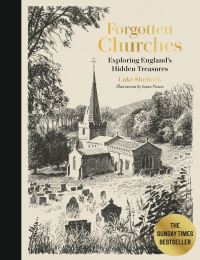
A journey across some of the quietly spectacular rural churches of England, telling their stories and significance, and building a picture of how they trace the history of the nation. Written by Luke Sherlock (@EnglishPilgrim) and illustrated throughout by Ioana Pioaru (@IoanaPioaru).
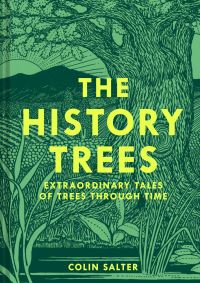
Uncover remarkable trees from around the world, many of which have borne witness to key moments in history or reached a scale and age that have allowed them to become a part of history themselves.
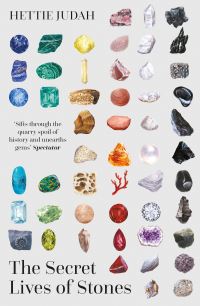
From the hematite used in cave paintings to the moldavite that became a TikTok sensation; from the stolen sandstone of Scone to the unexpected acoustics of Stonehenge; from crystal balls to compasses, rocks and minerals have always been central to our story. 3,000 years ago Babylonians constructed lapidaries – books that tried to pin down the magical secrets of rocks. In this book, renowned art critic Hettie Judah explores the unexpected stories behind sixty stones that have shaped and inspired human history, from Dorset fossil-hunters to Chinese philosophers, Catherine the Great to Michelangelo.
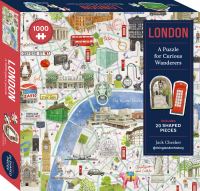
Uncover curious historical details with Pieces of London, a 1000-piece puzzle with hidden London locations across 20 specially shaped pieces.
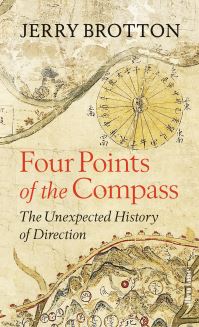
‘The Four Points of the Compass’ takes the reader on a journey of directional discovery. Jerry Brotton reveals why Hebrew culture privileges east; why the Renaissance Europeans began drawing north at the top of their maps; why the imperial Chinese revered the south; why the Aztecs used five colour-coded cardinal directions; and why no societies, primitive or modern, have ever orientated themselves westwards, the direction of darkness. He ends by reflecting on our digital age in which we, the little blue dot on the screen, have become the most important compass point. Throughout, Brotton shows that the directions reflect a human desire to create order and that they only have meaning, literally and metaphorically, depending on where you stand.
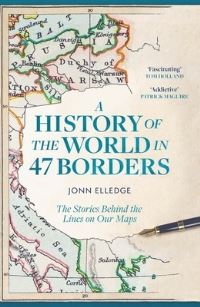
People have been drawing lines on maps for as long as there have been maps to draw on. Sometimes rooted in physical geography, sometimes entirely arbitrary, these lines might often have looked very different if a war or treaty or the decisions of a handful of tired Europeans had gone a different way. By telling the stories of these borders, we can learn a lot about how political identities are shaped, why the world looks the way it does – and about human folly. From the Roman attempts to define the boundaries of civilisation, to the secret British-French agreement to carve up the Ottoman Empire during the First World War, to the reason why landlocked Bolivia still maintains a navy, this is a fascinating, witty and surprising look at the history of the world told through its borders.
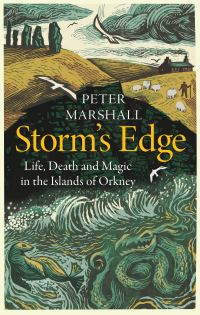
From Peter Marshall, winner of the Wolfson Prize 2018, Storm’s Edge is a new history of the Orkney Islands that dives deep into island politics, the evolution of folklore, and community memory on the geographical edge of Britain.
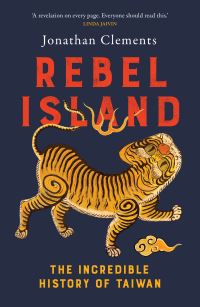
The gripping story of Taiwan, from the flood myths of ancient legend to its ‘Asian Tiger’ economic miracle ? and the looming threat of invasion by China. Once dismissed by the Kangxi Emperor as nothing but a ‘ball of mud’, Taiwan has a modern GDP larger than that of Sweden, in a land area smaller than Indiana. It is the last surviving enclave of the Republic of China, a lost colony of Japan, and claimed by Beijing as a rogue province ? merely the latest chapters in its long history as a refuge for pirates, rebels, settlers, and outcasts. In Rebel Island, Jonathan Clements offers a concise and vivid telling of Taiwan’s complex island story, beginning with the unique conditions of its archaeology before examining its indigenous history and its days as a Dutch and Spanish trading post. He delves into its periods as an independent kingdom, Chinese province, and short-lived republic, and the transformations wrought by 50 years
No products in the basket.
Notifications