Progress
£22.00‘A spirited skewering of the idea that things can only get better’ The Guardian
‘A new understanding of our past’ Danny Dorling, author of Inequality and the 1%
________________________________

Showing 1–12 of 17 resultsSorted by latest
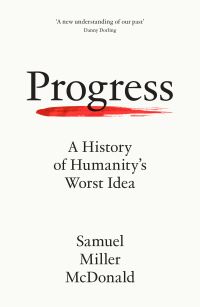
‘A spirited skewering of the idea that things can only get better’ The Guardian
‘A new understanding of our past’ Danny Dorling, author of Inequality and the 1%
________________________________
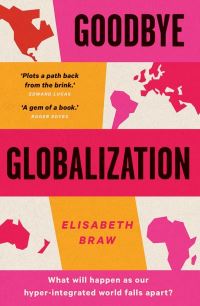
After the Cold War, globalization accelerated at breakneck speed. Manufacturing, transport, and consumption defied national borders, companies made more money, and consumers had access to an ever-increasing range of goods. But in recent years, a profound shift has begun to take place. Business executives and politicians alike are realising that globalization is no longer working. Supply chains are imperilled, Russia has been expelled from the global economy after its invasion of Ukraine, and China is using these fissures to leverage a strategic advantage. Given these pressures, what will the future of our world economy look like? In this groundbreaking account, Elisabeth Braw explores the collapse of globalization and the profound challenges it will bring to the West.
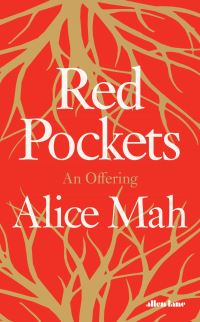
A haunting blend of memoir, cultural history and environmental exploration, ‘Red Pockets’ confronts the hungry ghosts of our neglected ancestors, while searching for an acceptable offering. What do we owe to past and future generations? What do we owe to the places that we inhabit?
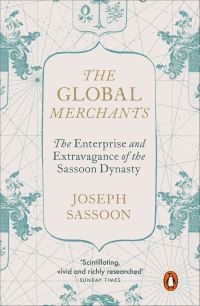
The Sassoons were one of the great commercial dynasties of the 19th century, as eminent as traders as the Rothschilds were as bankers. In his rich and nuanced portrait of the family, Joseph Sassoon uncovers the secrets behind their phenomenal success – how a handful of Jewish refugees exiled from Ottoman Baghdad forged a mercantile juggernaut trading cotton and opium, the role of their vast network of agents, informants and politicians in extending their reach beyond their new home in India, bridging East and West. Through the lives these ambitious figures built for themselves in Bombay, London and Shanghai, the reader is drawn into a captivating world of politics, business, society and empire – for their meteoric rise was facilitated by their ties to the British imperial project, and its waning coincided with their own.
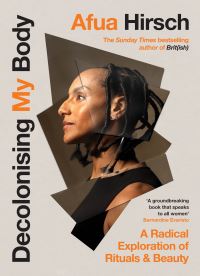
Upon getting her first tattoo at 40 years old, award-winning journalist Afua Hirsch embarked on a journey to reclaim her body from the colonial ideas of purity, adornment and ageing she – and many of us – absorbed while growing up. Informed by research from around the world, Afua examines at how individual and collective notions of what is beautiful are constructed or stripped away from us. Through personal anecdotes, interviews from beauty experts, practitioners and service users, she explores the global history of skin, hair and body modification rituals and how it has affected how we see ourselves. These insights and discoveries will empower readers to reconnect with their cultures of origin, better understand the link between beauty and politics, and liberate themselves from mainstream beauty standards that aren’t serving them.
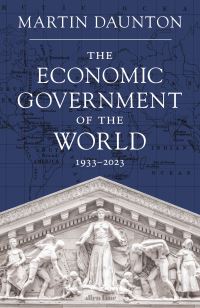
This is the history of the institutions and individuals who have managed the global economy, from the World Monetary and Economic Conference in the wake of the Great Depression to the present, as leading nations tackle the fall-out from Covid-19 and the threats of inflation, food security, and climate change. Since the Second World War, organizations created at Bretton Woods – the International Monetary Fund and the International Bank of Reconstruction and Development – and afterwards – the General Agreement on Trade and Tariffs and the Organization for Economic Co-operation and Development – have left an indelible mark on our contemporary world. Martin Daunton examines the swings of the pendulum over ninety years between the forces of democracy, national self-determination and globalization.
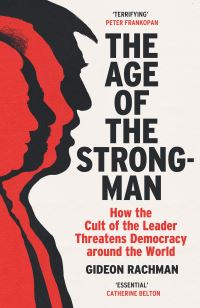
In ‘The Age of the Strongman,’ Gideon Rachman finds global coherence in the chaos of the new nationalism, leadership cults and hostility to liberal democracy. We are in a new era: authoritarian leaders have become a central feature of global politics. Since 2000, self-styled strongmen have risen to power in capitals as diverse as Moscow, Beijing, Delhi, Brasilia, Budapest, Ankara, Riyadh and Washington. These leaders are nationalists and social conservatives, with little tolerance for minorities, dissent or the interests of foreigners. At home, they claim to be standing up for ordinary people against globalist elites; abroad, they posture as the embodiments of their nations. And everywhere they go, they encourage a cult of personality. What’s more, these leaders are not just operating in authoritarian political systems but have begun to emerge in the heartlands of liberal democracy.
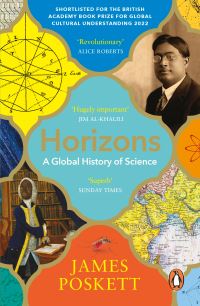
We are told that modern science was invented in Europe, the product of great minds like Nicolaus Copernicus, Isaac Newton, Charles Darwin and Albert Einstein. But this is wrong. Science is not, and has never been, a uniquely European endeavour. Copernicus relied on mathematical techniques borrowed from Arabic and Persian texts. When Newton set out the laws of motion, he relied on astronomical observations made in Asia and Africa. When Darwin was writing On the Origin of Species, he consulted a sixteenth-century Chinese encyclopaedia. And when Einstein was studying quantum mechanics, he was inspired by the Bengali physicist, Satyendra Nath Bose. ‘Horizons’ pushes beyond Europe, exploring the ways in which scientists from Africa, America, Asia and the Pacific fit into the history of science, and arguing that it is best understood as a story of global cultural exchange.
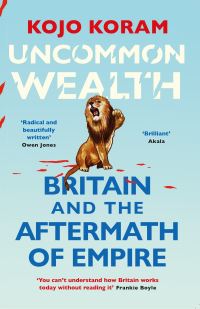
Britain didn’t just put the empire back the way it had found it. In ‘Uncommon Wealth,’ Kojo Koram traces the tale of how after the end of the British empire an interconnected group of well-heeled British intellectuals, politicians, accountants and lawyers offshored their capital, seized assets and saddled debt in former ‘dependencies’. This enabled horrific inequality across the globe as ruthless capitalists profited and ordinary people across Britain’s former territories in colonial Africa, Asia and the Caribbean were trapped in poverty. However, the reinforcement of capitalist power across the world also ricocheted back home. Now it has left many Britons wondering where their own sovereignty and prosperity has gone.
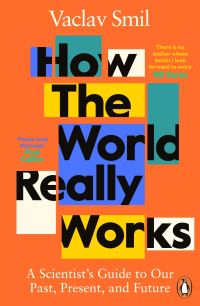
We have never had so much information at our fingertips and yet most of us don’t know how the world really works. This book explains seven of the most fundamental realities governing our survival and prosperity. From energy and food production, through our material world and its globalization, to risks, our environment and its future, ‘How the World Really Works’ offers a much-needed reality check – because before we can tackle problems effectively, we must understand the facts.

We’re three decades into a global experiment: what happens when the major nations of the world weaken their control on the size and power of corporate giants and allow unrestricted expansion? In this book, Tim Wu exposes the threats monopolies pose to economic stability and social freedom around the world. Aided by the globalisation of commerce and finance, in recent years we have seen takeovers galore that make a mockery of the ideals of competition and economic freedom. Such is the ‘curse of bigness’: stifled entrepreneurship, stalled productivity, dominant tech giants like Facebook and Google, and fewer choices for consumers. Urgent and persuasive, this bold manifesto argues that we need to rediscover the anti-monopoly traditions that brought great peace and prosperity in the past.
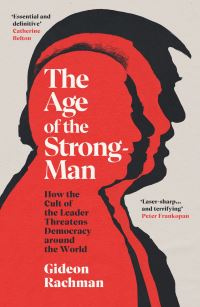
In ‘The Age of the Strongman,’ Gideon Rachman finds global coherence in the chaos of the new nationalism, leadership cults and hostility to liberal democracy. We are in a new era: authoritarian leaders have become a central feature of global politics. Since 2000, self-styled strongmen have risen to power in capitals as diverse as Moscow, Beijing, Delhi, Brasilia, Budapest, Ankara, Riyadh and Washington. These leaders are nationalists and social conservatives, with little tolerance for minorities, dissent or the interests of foreigners. At home, they claim to be standing up for ordinary people against globalist elites; abroad, they posture as the embodiments of their nations. And everywhere they go, they encourage a cult of personality. What’s more, these leaders are not just operating in authoritarian political systems but have begun to emerge in the heartlands of liberal democracy.
No products in the basket.
Notifications