Showing 61–72 of 100 resultsSorted by latest
-
£30.00
The Ottoman Empire had been one of the major facts in European history since the Middle Ages. By 1914 it had been much reduced, but still remained after Russia the largest European state. Stretching from the Adriatic to the Indian Ocean, the Empire was both a great political entity and a religious one, with the Sultan ruling over the Holy Sites and, as Caliph, the successor to Mohammed. Yet the Empire’s fateful decision to support Germany and Austria-Hungary in 1914, despite its successfully defending itself for much of the war, doomed it to disaster, breaking it up into a series of European colonies and what emerged as an independent Saudi Arabia. Ryan Gingeras explains how these epochal events came about and shows how much we still live in the shadow of decisions taken so long ago.
-
£10.99
As a politics and as a practice, abolitionism has increasingly shaped our political moment, amplified through the worldwide protests following the 2020 murder of George Floyd by a uniformed police officer. It is at the heart of the Black Lives Matter movement, in its demands for police defunding and demilitarisation, and a halt to prison construction. And it is there in the outrage which greeted the brutal treatment of women by police at the 2021 Clapham Common vigil for Sarah Everard. As this book shows, abolitionism and feminism stand shoulder-to-shoulder in fighting a common cause – the end of the carceral state, with its key role in perpetuating violence, both public and private, in prisons, in police forces, and in people’s homes.
-
£10.99
The world today rests on increasingly unstable fault lines. From the conflict in Ukraine or fresh upheavals in the Middle East to the threats posed to humanity by a global pandemic, climate change and natural disasters, the world’s danger zones once again draw their battle lines across our hyperconnected, yet fragmented, globe. Join veteran Economist journalist John Andrews as he analyses the old enmities and looming collisions that underlie conflict in the 21st century. Region by region, discover the causes, contexts, participants and likely outcomes of every globally significant struggle now underway.
-
£20.00
Offering an urgent analysis of what has gone wrong with Putin, ‘The Russia Conundrum’ maps the country’s rise and fall against Khodorkovsky’s own journey, from Soviet youth to international oil executive, powerful insider to political dissident, and now a high-profile voice seeking to reconcile East and West. With unparalleled insight, written with Martin Sixsmith, the book exposes the desires and damning truths of Putin’s Russia, and provides an answer to the West on how it must challenge the Kremlin – in order to pave the way for a better future.
-
£16.99
After the Second World War, new international rules heralded an age of human rights and self-determination. Supported by Britain, these unprecedented changes sought to end the scourge of colonialism. But how committed was Britain? In the 1960s, its colonial instinct ignited once more: a secret decision was taken to offer the US a base at Diego Garcia, one of the islands of the Chagos Archipelago in the Indian Ocean, create a new colony (the ‘British Indian Ocean Territory’) and deport the entire local population. One of those inhabitants was Liseby Elysé, twenty years old, newly married, expecting her first child. One suitcase, no pets, the British ordered, expelling her from the only home she had ever known. For four decades the government of Mauritius fought for the return of Chagos, and the past decade Philippe Sands has been intimately involved in the cases.
-
£40.00
Petroleum has always been used by humans: as an adhesive by Neanderthals, as a waterproofing agent in Noah’s Ark and as a weapon during the Crusades. Its eventual extraction from the Earth in vast quantities transformed light, heat and power. A fresh, comprehensive in-depth look at the social, economic, political and geopolitical forces involved in our transition to the modern oil age, this title tells an extraordinary origin story, from the pre-industrial history of petroleum through to large-scale production in the mid-19th century and the development of a dominant, fully-fledged oil industry by the early 20th century. In an entirely new analysis, the book shows how the British navy’s increasingly desperate dependence on vulnerable foreign sources of oil may have been a catalytic ingredient in the outbreak of WWI. The rise of oil has shaped the modern world, and this is the book to understand it.
-
£25.00
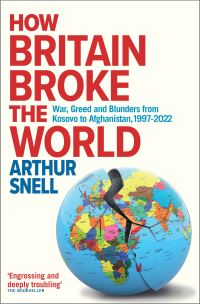
‘Engrossing and deeply troubling’ – The Bookseller. Why is the world so dangerous now? Former senior British diplomat Arthur Snell reveals the role of the United Kingdom in raising tension and creating global flashpoints around the world. He looks at British interventions from Kosovo to Iraq to Afghanistan, as well as policy on Russia, Saudi Arabia, USA, India and China.
-
£16.99
Journalist John Sweeney takes readers from the heart of Putin’s Russia to the killing fields of Chechnya, to the embattled cities of an invaded Ukraine. In a disturbing exposé of Putin’s sinister ambition, Sweeney draws on thirty years of his own reporting – from the Moscow apartment bombings to the atrocities committed by the Russian Army in Chechnya, to the annexation of Crimea and a confrontation with Putin over the shooting down of flight MH17 – to understand the true extent of Putin’s long war. Drawing on eyewitness accounts and compelling testimony from those who have suffered at Putin’s hand, we see the heroism of the Russian opposition, the bravery of the Ukrainian resistance, and the brutality with which the Kremlin responds to such acts of defiance, assassinating or locking away its critics, and stopping at nothing to achieve its imperialist aims.
-
£10.99
We thought connecting the world would bring lasting peace. Instead, it is driving us apart. In the three decades since the end of the Cold War, global leaders have been integrating the world’s economy, transport and telecommunications, breaking down borders in the hope of making war impossible. In doing so, they have unwittingly created a formidable arsenal of weapons for new kinds of conflict and the motivation to keep fighting. As a leading authority on international relations, Mark Leonard’s work has taken him into many of the rooms where our futures are being decided at every level of society. In seeking to understand the ways that globalisation has broken its fundamental promise to make our world safer and more prosperous, Leonard explores how we might wrest a more hopeful future from an age of unpeace.
-
£25.00
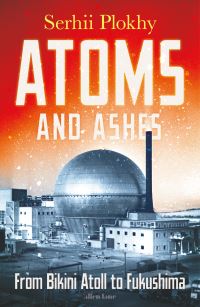
In 2011, a 43-foot-high tsunami crashed into a nuclear power plant in Fukushima, Japan. In the following days, explosions would rip buildings apart, three reactors would go into nuclear meltdown, and the surrounding area would be swamped in radioactive water. It is now considered one of the costliest nuclear disasters ever. But Fukushima was not the first, and it was not the worst. In ‘Atoms and Ashes’, acclaimed historian Serhii Plokhy tells the tale of the six nuclear disasters that shook the world – Bikini Atoll, Kyshtym, Windscale, Three Mile Island, Chernobyl, and Fukushima.
-
£10.99
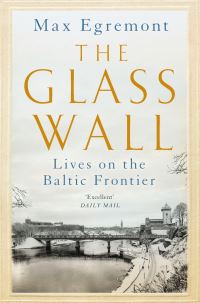
Following his acclaimed exploration of the vanished East Prussia, Forgotten Land, Max Egremont turns his attention to the Baltic, another part of the world where the ghosts of history still make their presence felt.
-
£20.00
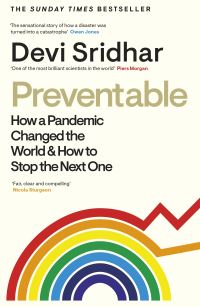
Professor Devi Sridhar has risen to prominence for her vital roles in communicating science to the public and speaking truth to power. In ‘Preventable’ she highlights lessons learned from outbreaks past and present in a narrative that traces the COVID-19 pandemic – including her personal experience as a scientist – and sets out a vision for how we can better protect ourselves from the inevitable health crises to come.