Washington Is Burning
£22.00A DEVASTATING ACCOUNT OF AMERICAN MILITARY FOLLY AND POLITICAL DYSFUNCTION BY THE WASHINGTON EDITOR OF HARPER’S MAGAZINE
We recently launched our new website and are facing a few teething issues. If you see any problems please contact us.
We recently launched our new website and are facing a few teething issues. If you see any problems please contact us.

Showing 1–12 of 99 resultsSorted by latest
A DEVASTATING ACCOUNT OF AMERICAN MILITARY FOLLY AND POLITICAL DYSFUNCTION BY THE WASHINGTON EDITOR OF HARPER’S MAGAZINE
With over 30 years’ experience in conflict zones and fragile states, Arthur Snell travels from the heat of the Sahel to the Arctic Circle to show how climate change is coinciding with a breakdown in geopolitical order, increasing conflict and economic crises.

The great majority of people alive today have come of age in a world of remarkable stability, presided over by either one or two superpowers. This is not to say the world has been peaceful; but it has to an extent been predictable. As an increasing number of Great Powers now jostle for regional supremacy our world has become more fragile, unpredictable – and combustible. To understand the threats that face us in this complex new terrain, we must look to the lessons of the late nineteenth and early twentieth century – a time when Great Powers clashed and sought regional dominance, when nationalism and populism were on the rise, and many felt that globalization had failed them: a time, in other words, that carries eerie parallels with our own. ‘The Coming Storm’ is a prescient, thoughtful and chilling examination of the current state of the world.
What has happened to the nation-state? From a prizewinning writer, After Nations offers a sweeping history of this most unquestioned of modern structures and a bold speculation about its future.
An essential guide to Taiwan’s past and present, providing invaluable context at a time of escalating tension over its future.
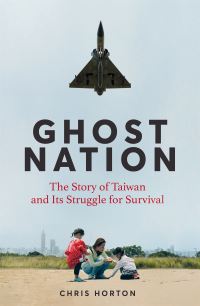
One of the most highly respected and longstanding foreign correspondents in Taiwan explores the people, politics and history of the unique nation caught in a power struggle between the USA and China.
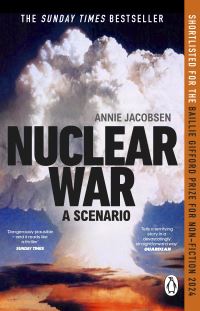
The first rule of nuclear war is that there are no rules. Up to now, no one outside of official circles has known exactly what would happen if a rogue state launched a nuclear missile at the Pentagon. Second by second and minute by minute, these are the real-life protocols that choreograph the end of civilisation as we know it. If a single nuclear missile is launched, it provokes two dozen in return. Frantic calls over secure lines work to confirm the worst as armoured helicopters are scrambled outside. Decisions over hundreds of millions of lives need to be made within six minutes, based on partial information, knowing that once launched, nothing is capable of halting the destruction. Because the plans for General Nuclear War are among the most classified secrets held by the United States government, this book takes the reader up to the razor’s edge of what can legally be known.
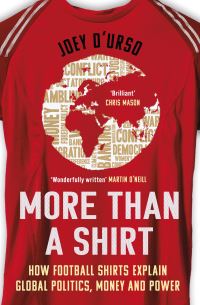
Football is the world’s most popular sport, and the shirts worn by teams and their supporters are its greatest means of cultural expression. Every year clubs launch new kits with increasingly extravagant marketing campaigns and convoluted explanations of how their designs reflect their history and local community. But football shirts are much more than just a symbol of which club we support. A seemingly innocuous combination of colours, sponsor logos and materials can all reflect the social values, financial struggles and political ideologies of the day, as geopolitical issues increasingly seep into every aspect of the game. Investigative journalist Joey D’Urso has travelled across the globe, combining on-the-ground reporting with unparalleled analysis to collate a list of the 22 football shirts that best explain the modern world.
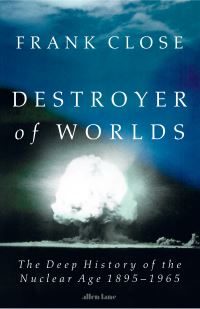
Henry Becquerel’s accidental discovery, in Paris in 1896, of a faint smudge on a photographic plate sparked a chain of discoveries which would unleash the atomic age. ‘Destroyer of Worlds’ is the story of how pursuit of this hidden source of nuclear power, which began innocently and collaboratively, was overwhelmed by the politics of the 1930s, and following devastation of Hiroshima and Nagasaki opened the way to a still more terrible possibility: a thermonuclear bomb, the so-called ‘backyard weapon’, that could destroy all life on earth – from anywhere.
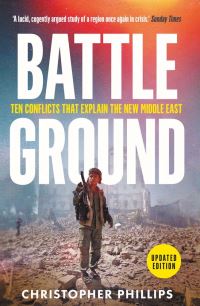
The Middle East is in crisis. The shocking events of the war in Gaza have rocked the entire region. More than a decade ago, the Arab Spring had raised hopes of a new beginning but instead ushered in a series of civil wars, coups, and even harsher autocracies. Tensions were exacerbated by the meddling of outsiders, as regional and global powers sought to further their interests. The United States, for so long the dominant actor, had stepped back, leaving a vacuum behind it to be fought over. Christopher Phillips explores geopolitical rivalries in the region, and the major external powers vying for influence: Russia, China, the EU, and the US. Moving through ten key flashpoints, from Syria to Palestine, Phillips argues that the United States’ overextension after the Cold War, and retreat in the 2010s, has imbalanced the region.
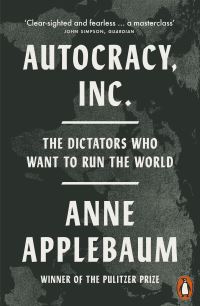
Nowadays, autocracies are run not by one bad guy, but by sophisticated networks composed of kleptocratic financial structures, security services and professional propagandists. The members of these networks are connected not only within a given country, but among many countries. The corrupt, state-controlled companies in one dictatorship do business with corrupt, state-controlled companies in another. The police in one country can arm, equip, and train the police in another. The propagandists share resources – the troll farms that promote one dictator’s propaganda can also be used to promote the propaganda of another – and themes, pounding home the same messages about the weakness of democracy and the evil of America. Unlike military or political alliances from other times and places, this group doesn’t operate like a bloc, but rather like an agglomeration of companies: Autocracy, Inc.

An intimate and perceptive biography of Zbigniew Brzezinski – one of America’s greatest and most influential geopolitical thinkers.
No products in the basket.
Notifications