Showing 25–36 of 205 resultsSorted by latest
-
£12.99
Their names still echo down the ages: The Great Pyramid at Giza. The Hanging Gardens of Babylon. The Temple of Artemis at Ephesus. The Statue of Zeus at Olympia. The Mausoleum of Halikarnassos. The Colossus of Rhodes. The Pharos Lighthouse of Alexandria. The Seven Wonders of the World were staggeringly audacious impositions on our planet. They were also brilliant adventures of the mind, test cases of the reaches of human imagination. Now only the pyramid remains, yet the scale and majesty of these seven wonders still enthral us today. In a thrilling, colourful narrative enriched with the latest archaeological discoveries, bestselling historian Bettany Hughes walks through the landscapes of both ancient and modern time; on a journey whose purpose is to ask why we wonder, why we create, why we choose to remember the wonder of others.
-
£12.99
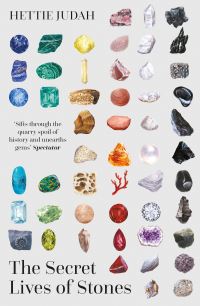
From the hematite used in cave paintings to the moldavite that became a TikTok sensation; from the stolen sandstone of Scone to the unexpected acoustics of Stonehenge; from crystal balls to compasses, rocks and minerals have always been central to our story. 3,000 years ago Babylonians constructed lapidaries – books that tried to pin down the magical secrets of rocks. In this book, renowned art critic Hettie Judah explores the unexpected stories behind sixty stones that have shaped and inspired human history, from Dorset fossil-hunters to Chinese philosophers, Catherine the Great to Michelangelo.
-
£25.00
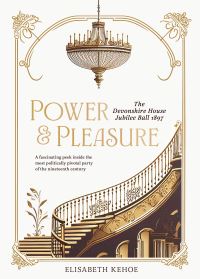
The celebration of Queen Victoria’s 60 years on the throne was carefully positioned to highlight the country’s strength. Extraordinary pageantry, parades and royal receptions served to dramatise the unparalleled significance of the event. The most important occasion, however, was the Devonshire House Ball, given at huge expense by the Hanover-born German ‘Double Duchess’ of Devonshire. The Duchess took to the task with alacrity, hosting the most famous party of the century: a fancy-dress ball with a guest list of the 700 social, cultural, political, and prominent ‘celebrities’ of the day. A specially commissioned tent – equipped with hand-painted backdrops, the most technically advanced cameras and lighting, along with realistic props – was set up in the magnificent gardens to capture the glamorous guests. Many of the exquisite costumes were preserved by photograph and are shown here, colourised for the first time.
-
£14.99
A miscellany of things too strange to be true, yet somehow are, by former BBC QI Elf turned bestselling author, Edward Brooke-Hitching.
Â
-
£16.99
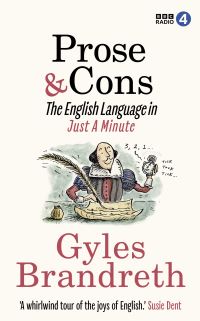
As fans of Just a Minute know, the key to the game is knowing your way around the English language: how it works, how it’s evolved, and how words connect, often in surprising ways. When it comes to the English language (and Just a Minute), Gyles Brandreth has seen it all – and now he’s ready to put you through your linguistic paces, to become a Just a Minute expert yourself. In this wildly entertaining A to Z of verbal acrobatics, Gyles takes you on a whirlwind tour of our mother tongue – from the origins of words and correct grammar and punctuation, to similes, euphemisms and record breaking tongue twisters (try getting your mouth around floccinaucinihilipification!). An idiosyncratic blend of history, word play, anecdote, and hyperbole, all in 60-second instalments, this is Gyles Brandreth at his word-perfect, Just-a-Minute best.
-
£30.00
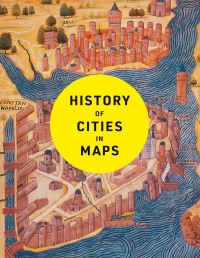
A fascinating cartographic study of urban development, perfect for map and history lovers.
-
£30.00
An awe-inspiring deep-dive into the treasures found on the sea floor and what they reveal about our past.
-
£12.99
From the first meeting of an elected English parliament on 20 January 1265 to the tabling of the Bill of Rights on 13 February 1689; from the Peterloo massacre of 16 August 1819 to Britain voting to leave the EU on 23 June 2016, there is a growing thirst for knowledge about the history of our constitutional settlement, our party system and how our parliamentary democracy has developed. Writing as an observer of political history, but also as someone with an opinion, acclaimed political broadcaster Iain Dale charts the main events of the last few hundred years, with one event per page, per day.
-
£25.00
Money. The object of our desires. The engine of our genius. Humanity’s greatest invention. Whether we like it or not, our world revolves around money, but we rarely stop to think about it. What is money, where does it come from, and can it run out? What is this substance that drives trade, revolutions and discoveries; inspires art, philosophy and science? In this illuminating, sometimes irreverent, and often surprising journey, economist David McWilliams charts the relationship between humans and money – from a tally stick in ancient Africa to coins in Republican Greece, from mathematics in the medieval Arab world to the French Revolution, and from the emergence of the US dollar right up to today’s cryptocurrency and beyond.
-
£25.00
For almost five million years, humans have been locked in a relationship with morality, inventing and reinventing the concepts of ‘Good’ and ‘Evil’, and weaving them into our cities, laws and customs. Morality is often associated with restraint and coercion; restriction and sacrifice; inquisition, confession and a guilty conscience. Joyless and claustrophobic, it is a device used to shames us into compliance. This impression is not entirely incorrect, but it is certainly incomplete. Using our past as a basis for a new understanding of our future, Hanno Sauer traces humanity’s fundamental moral transformations from our earliest ancestors through to the present day, when it seems we have never disagreed more over what it means to be good. Our current political disagreements may feel like the end of the world, but where will the evolution of morality take us next?
-
£20.00
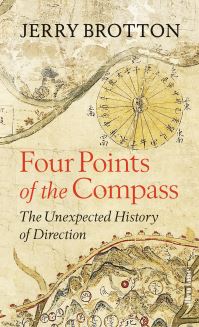
‘The Four Points of the Compass’ takes the reader on a journey of directional discovery. Jerry Brotton reveals why Hebrew culture privileges east; why the Renaissance Europeans began drawing north at the top of their maps; why the imperial Chinese revered the south; why the Aztecs used five colour-coded cardinal directions; and why no societies, primitive or modern, have ever orientated themselves westwards, the direction of darkness. He ends by reflecting on our digital age in which we, the little blue dot on the screen, have become the most important compass point. Throughout, Brotton shows that the directions reflect a human desire to create order and that they only have meaning, literally and metaphorically, depending on where you stand.
-
£25.00
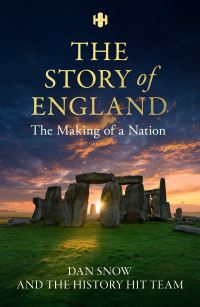
From battlefields, cathedrals and museums to castles and stately homes, from the Lancastrians, Yorkists and Roundhead Royalists to an abundance of kings called George (and Henry!), the history of our island nation unravels its rich tapestry beneath our very feet – if only you know where to look. In their story of England, Dan Snow and the History Hit team take us on a journey through thousands of years of the never-ceasing drama that unfolded as invaders and immigrants and visitors reacted with what they found here. Our ancestors overcame, co-operated, shaped this country into what it is today – our landscape, our character, our language, industries, laws, religions and settlements.

 7-Ingredient Mediterranean