Showing 145–156 of 205 resultsSorted by latest
-
£25.00
What does it mean to be a good man? To be a good father, or a good partner? A good brother, or a good friend? In this insightful analysis, social historian Ivan Jablonka offers a re-examination of the patriarchy and its impact on men. Ranging widely across cultures, from Mesopotamia to Confucianism to Christianity to the revolutions of the 18th century, Jablonka uncovers the origins of our patriarchal societies. He then offers an updated model of masculinity based on a theory of gender justice which aims for a redistribution of gender, just as social justice demands the redistribution of wealth.
-
£16.99
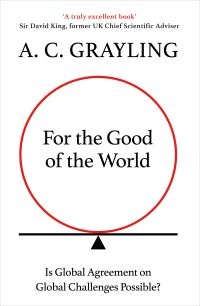
A lucid and inspiring consideration of the challenges we and our world now face, and a proposal for a way to overcome them.
-
£12.99
The Belgica set sail from Europe on a sunny day in August 1897, intent upon becoming the first scientific expedition ever to reach the South Pole. But after setbacks slowed its progress, ice closed in and ensnared the ship. Temperatures plummeted, winds howled, perpetual darkness fell. The crew were to make history for a different reason: they were to be the first adventurers to face the brutal Antarctic winter, completely cut off from the world. What began as an audacious scientific mission morphed into an epic struggle for survival. As the men battled blizzards, hunger, depression, rats and scurvy, some became inconsolable, some mad, while others were consumed by infections that turned them into living corpses. It was down to the strongest characters to step up: namely the notorious surgeon Dr Frederik Cook and the first mate, a young Norwegian adventurer Roald Amundsen.
-
£10.99
Steam power transformed our world, initiating the complex, resource-devouring industrial system the consequences of which we live with today. It revolutionised work and production, but also the ease and cost of movement over land and water. The result was to throw open vast areas of the world to the rampaging expansion of Europeans and Americans on a scale previously unimaginable. ‘Unlocking the World’ is the captivating history of the great port cities which emerged as the bridgeheads of this new steam-driven economy, reshaping not just the trade and industry of the regions around them but their culture and politics as well.
-
£20.00
Here is history’s judgement on the events surrounding the ill-fated reign of Maximilian of Mexico, the young Austrian archduke who in 1864 crossed the Atlantic to assume a faraway throne. He had been convinced to do so by a duplicitous Napoleon III. Keen to spread his own interests abroad, the French emperor promised Maximilian a hero’s welcome, which he would ensure with his own mighty military support. Instead, Maximilian walked into a bloody guerrilla war – and with a headful of impractical ideals and a penchant for pomp and butterflies, the so-called new emperor was singularly unequipped for the task. ‘The Last Emperor of Mexico’ is the vivid history of this barely known, barely believable episode – a bloody tragedy of operatic proportions, and a vital debacle, the effects of which would be felt into the twentieth century and beyond.
-
£9.99
From the bestselling author Simon Winchester, a human history of land around the world: who mapped it, owned it, stole it, cared for it, fought for it and gave it back.
-
£8.99
When Germany invaded Wilhelm Brasse’s native Poland in 1939, he was asked to swear allegiance to Hitler and join the Wehrmacht. He refused. He was deported to Auschwitz concentration camp as political prisoner number 3444. A trained portrait photographer, he was ordered by the SS to record the inner workings of the camp. He began by taking identification photographs of prisoners as they entered the camp, went on to capture the criminal medical experiments of Josef Mengele, and also recorded executions. Between 1940 and 1945, Brasse took around 50,000 photographs of the horror around him. He took them because he had no choice. Eventually, Brasse’s conscience wouldn’t allow him to hide behind his camera.
-
£16.99
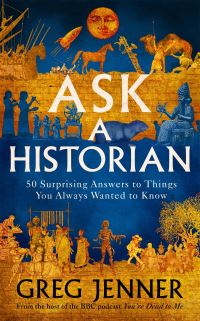
In ‘Ask a Historian’ the author, BBC podcaster, and public historian Greg Jenner provides answers to things you always wondered about, but didn’t know who to ask. Responding to 50 genuine questions from the public, Greg whisks you off on an entertaining tour through the ages, revealing the best and most surprising stories, facts, and historical characters from the past. Bouncing through a wide range of subjects – from ancient jokebooks, African empires, and bizarre tales of medicinal cannibalism, to the invention of meringues, mirrors, and menstrual pads – ‘Ask A Historian’ spans the Stone Age to the Swinging Sixties, and offers up a deliciously amusing and informative smorgasbord of historical curiosities, devoured one morsel at a time.
-
£35.00
‘Renegades’ is a candid, revealing, and entertaining dialogue between President Barack Obama and legendary musician Bruce Springsteen that explores everything from their origin stories and career-defining moments to their country’s polarized politics and the growing distance between the American Dream and the American reality. Filled with full-colour photographs and rare archival material, it is a compelling and beautifully illustrated portrait of two outsiders – one Black and one white – looking for a way to connect their unconventional searches for meaning, identity, and community with the American story itself.
-
£25.00
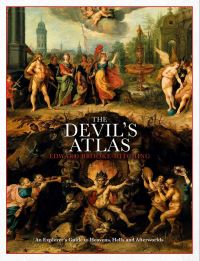
A lavishly illustrated guide to how humanity has imagined heavens, hells and the afterlife
-
£25.00
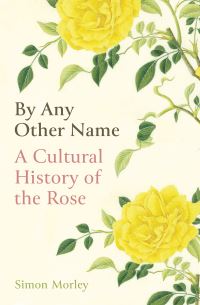
A beautifully illustrated history of the Queen of Flowers and her enduring power in our gardens, art, religion and imagination.
-
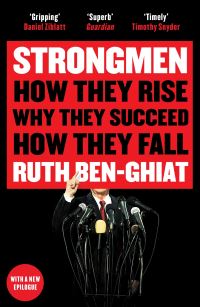
£9.99
Today, countries from Russia to India, Turkey to America are ruled by men who combine populist appeal with authoritarian policies. These leaders have reshaped their countries around them, creating cults of personality which earn the loyalty of millions. And, as historian Ruth Ben-Ghiat shows, they do so by drawing on a playbook of behaviour established by figures such as Benito Mussolini, Muammar Gaddafi and Adolf Hitler. So why – despite the evidence of history – do strongmen still hold such appeal for us? Ruth Ben-Ghiat reveals how, for a hundred years, charismatic leaders have emerged at moments of uncertainty and transition, manipulating electoral systems, brutally suppressing opposition, gaining control of the media and distorting the imaginations of the people they rule over in pursuit of absolute power.