A Vast Horizon
£20.00A Vast Horizon follows the lives of Pablo Picasso and his free-spirited friends, including Lee Miller and Man Ray, in the tumultuous years around the Second World War.
We recently launched our new website and are facing a few teething issues. If you see any problems please contact us.
We recently launched our new website and are facing a few teething issues. If you see any problems please contact us.

Showing 1–12 of 21 resultsSorted by latest

A Vast Horizon follows the lives of Pablo Picasso and his free-spirited friends, including Lee Miller and Man Ray, in the tumultuous years around the Second World War.

A razor-sharp, utterly immersive political travelogue that reveals one of the world’s most enigmatic regions

The great majority of people alive today have come of age in a world of remarkable stability, presided over by either one or two superpowers. This is not to say the world has been peaceful; but it has to an extent been predictable. As an increasing number of Great Powers now jostle for regional supremacy our world has become more fragile, unpredictable – and combustible. To understand the threats that face us in this complex new terrain, we must look to the lessons of the late nineteenth and early twentieth century – a time when Great Powers clashed and sought regional dominance, when nationalism and populism were on the rise, and many felt that globalization had failed them: a time, in other words, that carries eerie parallels with our own. ‘The Coming Storm’ is a prescient, thoughtful and chilling examination of the current state of the world.
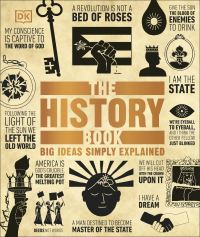
Discover the most significant moments in the history of the world, from the origins of Homo Sapiens to the arrival of the internet, and from the French Revolution to the Space Race. And come face to face with the world’s most influential leaders, thinkers, and political figures, from Julius Caesar to Barack Obama – a truly accessible and comprehensive route into a fascinating and essential subject.
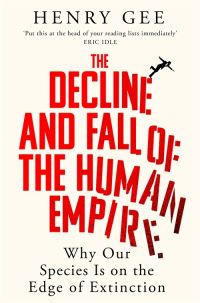
Nature editor and Science Book Prize winner Henry Gee explores the future of our species and our probable extinction, while suggesting how, through technological innovation, we might indefinitely postpone our fate.

An epic account of the decades-long battle to control the world's most critical resource – microchip technology
In 1786, France’s ancien régime was functioning as usual. Its alliance with the victorious American colonies had restored its diplomatic prestige, the economy seemed to be flourishing, and internal politics seemed quiet. But just a few short years later, the dynasty which had ruled France for over 800 years was swept away. What happened to cause such devastating change to the long-established political structure? John Hardman traces the political history of the French Revolution, from its origins to its aftermath. Hardman argues that the nature of ancien régime politics, the mismanagement of the fiscal crisis, and a new generation of young, overly confident politicians brought the Bourbon monarchy’s apparatus crashing down.
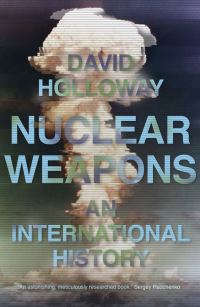
How should we deal with nuclear weapons? The discovery of nuclear fission fundamentally changed the world order. Its power was harnessed, nuclear bombs invented, and the cities of Hiroshima and Nagasaki were destroyed. In recurring international crises and calls for arms control, the threat of nuclear war has hung over humanity ever since. David Holloway traces how these weapons shaped the last century, from the US-Soviet arms race to the rivalry between India and Pakistan. Deterrence and intimidation, alliances and war plans, international treaties and organizations have all played their role. At the centre were political leaders – among them Truman, Kennedy, and Reagan, as well as Stalin, Khrushchev, and Gorbachev – who all had their fingers on the nuclear button.

In August 1940, a man walked into Leon Trotsky’s study in Mexico City and drove an ice pick into his skull. The killer? Ramon Mercader – an aristocratic Spaniard turned Soviet assassin. The mastermind? Joseph Stalin. But this was no simple hit. It was the climax of a decade-long global hunt: a story of seduction and betrayal, of fake identities and secret loyalties, of idealists and fanatics, lovers and spies. While Trotsky raged in exile – still clinging to his revolutionary dream – Stalin’s agents closed in. And at the heart of it all was Mercader: a man trained to lie, charm and ultimately to kill.
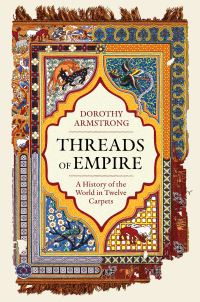
Beautiful, sensuous and enigmatic, great carpets follow power Emperors, shahs, sultans and samurai crave them as symbols of earthly domination. Shamans and priests desire them to evoke the spiritual realm. The world’s 1% hunger after them as displays of extreme status. And yet these seductive objects are made by poor and illiterate weavers, using the most basic materials and crafts; hedgerow plants for dyes, fibres from domestic animals, and the millennia-old skills of interweaving warps, wefts and knots. In this book, Dorothy Armstrong tells the histories of some of the world’s most fascinating carpets, exploring how these textiles came into being then were transformed as they moved across geography and time in the slipstream of the great.

This major new book explores how mafias dramatically affected governments, economies and cultures across the globe – it reveals a shadow history of the world.

From its emergence in seventh century Arabia, Islam has been a faith on the move.Over the span of a thousand years, armies, missionaries, and merchants carried it to the edges of Europe, the coasts of Southeast Asia and the remote interior of China. From the Arab caliphate to the Mongol empire, from West Africa to the Philippines, Islam was a world-shaping force. By the nineteenth century, Muslims lived everywhere from South Africa to North America. In the age of European empires, through two World Wars and a Cold War, and into the globalised and fractured 21st century, Muslims lived through global conflicts and everyday struggles for adaptation and survival. Historian James McDougall charts the epic global story of Islam’s origins and transformations, as Muslims adapted to their changing times from late antiquity to the digital age, constantly remaking their own worlds as the wider world around them changed.
No products in the basket.
Notifications