Black Poppies
£8.99A short, compelling history of Black Britons during the First World War, for readers aged 8 to 12
We recently launched our new website and are facing a few teething issues. If you see any problems please contact us.
We recently launched our new website and are facing a few teething issues. If you see any problems please contact us.

Showing 25–36 of 47 resultsSorted by latest
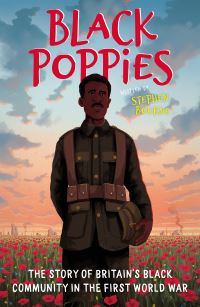
A short, compelling history of Black Britons during the First World War, for readers aged 8 to 12
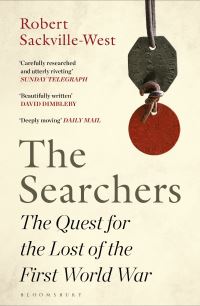
By the end of the First World War, the whereabouts of more than half a million British soldiers were unknown. Most were presumed dead, lost forever under the battlefields of northern France and Flanders. This, however, was only the beginning of a search that would span a century: from the department set up to investigate the fate of missing comrades in the war’s aftermath, to the present day, when DNA profiling continues to aid efforts to recover, identify and honour these men. As the rest of the country found ways to repair and move on, countless families were consumed by this mission, undertaking arduous, often hopeless, journeys to discover what happened to their husbands, brothers and sons. In ‘The Searchers’, Robert Sackville-West brings together the extraordinary, moving accounts of those who dedicated their lives to the search for the missing.
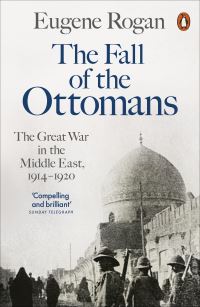
For some four centuries the Ottoman Empire had been one of the most powerful states in Europe as well as ruler of the Middle East. By 1914 it had been drastically weakened and circled by numerous predators waiting to finish it off. Following the Ottoman decision to join the First World War on the side of the Central Powers the British, French and Russians hatched a plan to finish the Ottomans off: an ambitious and unprecedented invasion of Gallipoli. Eugene Rogan recreates one of the most important but poorly understood fronts of the First World War.
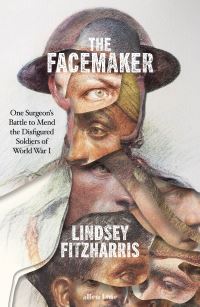
From the moment the first machine gun rang out over the Western Front, one thing was clear: mankind’s military technology had wildly surpassed its medical capabilities. The war caused carnage on an industrial scale, and the nature of trench warfare meant that thousands sustained facial injuries. In ‘The Facemaker’, award-winning historian Lindsey Fitzharris tells the true story of the pioneering plastic surgeon Harold Gillies, who dedicated himself to restoring the faces of a brutalized generation.
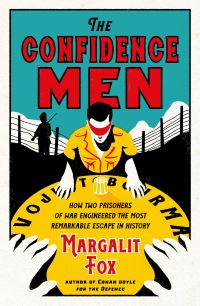
Imprisoned in a remote Turkish POW camp during the First World War, two British officers, Harry Jones and Cedric Hill, cunningly join forces. To stave off boredom, Jones makes a handmade Ouija board and holds fake sances for fellow prisoners. One day, an Ottoman official approaches him with a query: could Jones contact the spirits to find a vast treasure rumoured to be buried nearby? Jones, a lawyer, and Hill, a magician, use the Ouija board – and their keen understanding of the psychology of deception-to build a trap for their captors that will lead them to freedom. The Confidence Men is a nonfiction thriller featuring strategy, mortal danger and even high farce – and chronicles a profound but unlikely friendship.
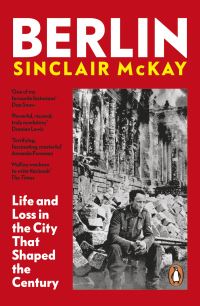
An almighty storm hit Berlin in the last days of April 1945. Enveloped by the unstoppable force of East and West, explosive shells pounded buildings while the inhabitants of a once glorious city sheltered in dark cellars – just like their Fuhrer in his bunker. The Battle of Berlin was a key moment in history; marking the end of a deathly regime, the defeated city was ripped in two by the competing superpowers of the Cold War. In this book, historian Sinclair McKay draws on never-before-seen first-person accounts to paint a picture of a city ravaged by ideology, war and grief. Yet to fully grasp the fall of Berlin, it is crucial to also explore in detail the years beforehand and to trace the city being rebuilt, as two cities, in the aftermath.
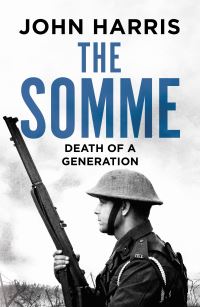
In 1916 the Great War seemed caught in a stalemate. The British were determined to break it with a huge summer push. By the time the campaign wound down in November, it proved to be the most destructive ever encounter for the Army, seeing thousands of casualties for every day of the conflict. It wasn’t meant to have been like this: the British had a massive artillery superiority, and were primed to crush their enemy. In the end, despite fierce fighting, the Germans lost far fewer men. The Somme has come to be an emblem for the horrors of war, for the pounding of shells and the hunkering down in rain-sodden trenches. What happened? How did it go so wrong for the British? Here in sharp detail, the bestselling writer John Harris tells the story of one the key battles of world history, describing in gripping terms how a series of events soon spiralled wildly, and hopelessly, out of control.
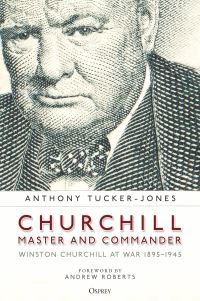
From his earliest days Winston Churchill was an extreme risk taker and he carried this into adulthood. Today, he is widely hailed as Britain’s greatest wartime leader and politician. Deep down though, he was foremost a warlord. Just like his ally Stalin, and his arch enemies Hitler and Mussolini, Churchill could not help himself and insisted on personally directing the strategic conduct of World War II. In this fascinating book, historian Anthony Tucker-Jones explores Churchill as a military commander, assessing how the military experiences of his formative years shaped him for the difficult military decisions he took in office.
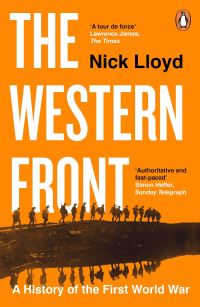
In the annals of military history, the Western Front stands as an enduring symbol of the folly and futility of war. However, this book reveals that the story is not, as so many assume, one of pointlessness and stupidity. Rather, it is an epic triumph against the odds. With a cast of hundreds and a huge canvas of places and events, Nick Lloyd tells the whole tale, revealing what happened in France and Belgium between August 1914 and November 1918 from the perspective of all the main combatants – including French, British, Belgian, US and, most importantly, German forces.
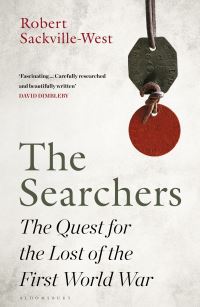
By the end of the First World War, the whereabouts of more than half a million British soldiers were unknown. Most were presumed dead, lost forever under the battlefields of northern France and Flanders. This, however, was only the beginning of a search that would span a century: from the department set up to investigate the fate of missing comrades in the war’s aftermath, to the present day, when DNA profiling continues to aid efforts to recover, identify and honour these men. As the rest of the country found ways to repair and move on, countless families were consumed by this mission, undertaking arduous, often hopeless, journeys to discover what happened to their husbands, brothers and sons. In ‘The Searchers’, Robert Sackville-West brings together the extraordinary, moving accounts of those who dedicated their lives to the search for the missing.
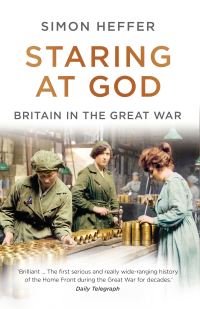
This work follows Britain’s path from the day the fatal shots were fired at Sarajevo in June 1914 to the moment the guns finally fell silent on 11th November, 1918. Simon Heffer examines the increasingly frantic conversations between Whitehall and Britain’s embassies across Europe as civil servants and ministers sought to understand and control the slide towards war. He explains how a government so keen to avoid conflict found itself not only championing it but seeking to transform the country to fight it – and how, in the process, Britain was irrevocably changed. He looks at the high politics and low skulduggery that saw the principled but passive Asquith replaced as Prime Minister by the unscrupulous but energetic Lloyd George, and he assesses the arguments between politicians and generals about how to prosecute the war that persisted until the final offensive on the Western Front.

Newcastle, 1918. It seems like the war could last forever. John’s an ordinary Tyneside lad and he’s desperate for peace. His dad is fighting in the trenches and his mam works in the town’s munitions factory, the biggest in the world. John meets a German boy, Jan, who is just like himself; they play war games in the woods beyond the town, and see the ugliness of weapons contrasting with the beauty of the world around them. John dreams of a better, more beautiful world. His dreams will speak to all of us, and his questions resonate with children of today. Is war ever really over? Why do children see the truths from which adults seem to hide? Why do we need wars at all?
No products in the basket.
Notifications