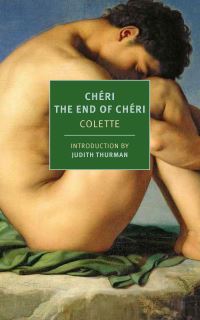
Cheri
£14.99Colette’s celebrated novels about an older courtesan and her young lover, now in a new translation and published in one volume.

Showing 109–120 of 235 resultsSorted by latest
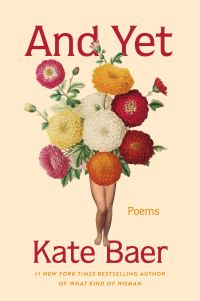
In an increasingly isolating and divisive world, Kate calls us back together, challenging us to stand up, speak up, and take up space. Her words make us feel seen at a time when women are increasingly put upon and their attentions increasingly divided. As we add even more titles – teacher, emotional bedrock, stabilizer – to the ones we are already expected to carry – mother, partner, friend – Kate’s words build resilience, community, and understanding. Her poems are both cathartic and galvanizing. And her committed following of engaged readers knows this as they continue to share her words with their tribes on social media.
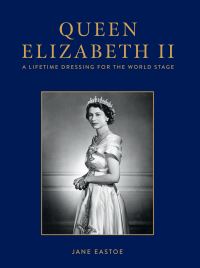
Exquisite and sumptuous, immaculately tailored, dignified and, above all, practical. The wardrobe of Queen Elizabeth II was as distinctive in style as her position in the world was unique. This remarkable book is a fond reflection of the days when her Majesty led the field in fashion, showcasing some of the world’s best designers.
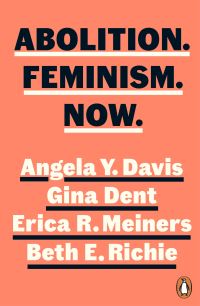
As a politics and as a practice, abolitionism has increasingly shaped our political moment, amplified through the worldwide protests following the 2020 murder of George Floyd by a uniformed police officer. It is at the heart of the Black Lives Matter movement, in its demands for police defunding and demilitarisation, and a halt to prison construction. And it is there in the outrage which greeted the brutal treatment of women by police at the 2021 Clapham Common vigil for Sarah Everard. As this book shows, abolitionism and feminism stand shoulder-to-shoulder in fighting a common cause – the end of the carceral state, with its key role in perpetuating violence, both public and private, in prisons, in police forces, and in people’s homes.
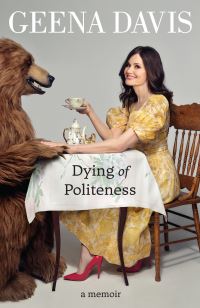
‘Something’s crossed over in me and I can’t go back,’ says Geena Davis’s Thelma to Susan Sarandon’s Louise. The path to empowerment never did run smooth ?
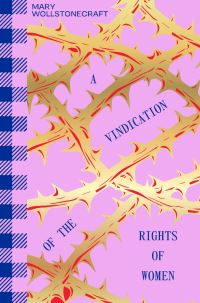
Wollstonecraft produced her declaration of female independence in 1792 – a scathing attack on the understanding of women as docile, domestic figures, and laying out the tenets for a new vision.
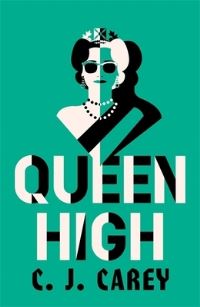
June, 1955. The Leader has been dead for two years. His assassination, on British soil, provoked violent retribution and intensified repression of British citizens, particularly women. Now, more than ever, the Protectorate is a place of surveillance and isolation – a land of spies. Every evening Rose Ransom looks in the mirror and marvels that she’s even alive. A mere woman, her role in the Leader’s death has been overlooked. She still works at the Culture Ministry, where her work now focuses on the outlawed subject of Poetry, a form of writing that transmits subversive meanings, emotions and signals that cannot be controlled. Therefore all Poetry is banned and Rose is appointed a Poet Hunter. A government propaganda drive to promote positive images of women has been announced. Queen Wallis will be spearheading the campaign, and Rose has been tasked with visiting her to explain the plan.
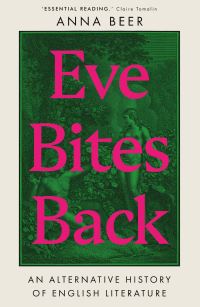
The lives and achievements of eight women writers – a startling and unconventional history of literature
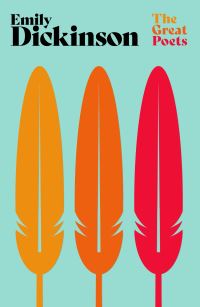
Emily Dickinson received a very good education, but chose to return home to Amherst, Massachusetts, where she spent the rest of her life, writing more than a poem a day until her death. Her refusal to compromise her highly condensed expression meant that only a tiny fraction of her work was published in her lifetime. Even today, her work feels startlingly modern.
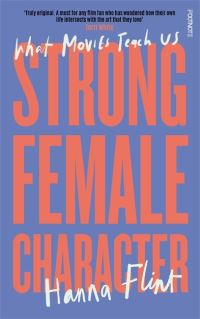
Hanna Flint speaks from the heart in ‘Strong Female Character’, a personal and incisive reflection on how cinema has been the key to understanding herself and the world we live in. A staunch feminist of mixed-race heritage, Hanna has succeeded in an industry not designed for people like her. Interweaving anecdotes from familial and personal experiences – episodes of messy sex, introspection, and that time actor Vincent D’Onofrio tweeted that Hanna Flint sounded ‘like a secret agent’ – she offers a critical eye on the screen’s representation of women and ethnic minorities, their impact on her life, body image and ambitions, with the humour and eloquence that has made her a leading film critic of her generation.
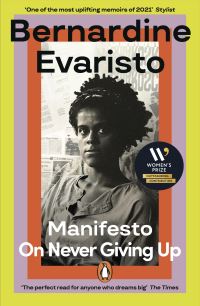
Bernardine Evaristo’s 2019 Booker win – the first by a Black woman – was a revolutionary moment both for British culture and for her. After three decades as a trailblazing writer, teacher and activist, she moved from the margins to centre stage, taking her place in the spotlight at last. Her journey was a long one, but she made it, and she made history. ‘Manifesto’ is Bernardine Evaristo’s intimate and inspirational, no-holds-barred account of how she did it, refusing to let any barriers stand in her way. She charts her creative rebellion against the mainstream and her life-long commitment to the imaginative exploration of ‘untold’ stories.
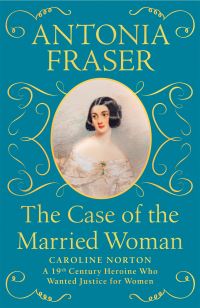
Poet, pamphleteer and beauty, Caroline Norton dazzled 19th-century society with her vivacity and intelligence. After her marriage in 1828 to the MP George Norton, she continued to attract friends and admirers to her salon in Westminster, including the widowed Prime Minister Lord Melbourne. Racked with jealousy, George Norton took the PM to court, suing him for damages on account of his ‘Criminal Conversation’ (adultery) with Caroline. Despite an acquittal, Norton legally denied Caroline access to her 3 children under 7. He also claimed her income as an author for himself, since the copyrights of a married woman belonged to her husband. Caroline channelled her energies into reform: the rights of a married woman and specifically those of a mother. Antonia Fraser portrays a woman who refused to be curbed by the personal and political constraints of her time.
No products in the basket.
Notifications