Showing 13–24 of 33 resultsSorted by latest
-
£7.99
Together these essays provide deep reflections on the nature of trust in the context of public life, agreeing that it is engendered through real encounters, not in the abstract or by force, and offer guidance on how to make those encounters real, whether they be within oneself, between people, or within institutions and the people they serve.
-
£10.99
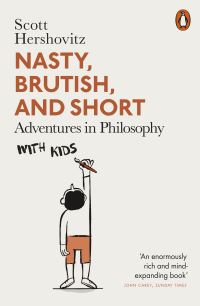
Say ‘philosopher,’ and someone grand, old and bearded might come to mind. But, as philosophy professor Scott Hershovitz shows in this debut, some of the best philosophers in the world are better described as nasty, brutish and short – that is to say, they’re children. Children make wonderful philosophers because they constantly question things that grown-ups take for granted, test theories about the people around them, and try to work out the way the world works. Following the lead of his two young sons, Rex and Hank, Hershovitz takes us on a unique tour through classical and contemporary philosophy, steered by questions like, does Hank have the right to drink Fanta? When is it okay to swear? And, does the number six exist?
-
£14.99
Emily Austin walks readers through exactly how Epicureanism might help them in daily life in practical, practicable ways: valuing friendships, giving advice, combatting imposter syndrome, pursuing life goals, and thinking about everything from dinner parties to sex, drugs, dying, and disease.
-
£20.00
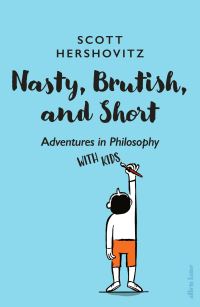
Say ‘philosopher,’ and someone grand, old and bearded might come to mind. But, as philosophy professor Scott Hershovitz shows in this debut, some of the best philosophers in the world are better described as nasty, brutish and short – that is to say, they’re children. Children make wonderful philosophers because they constantly question things that grown-ups take for granted, test theories about the people around them, and try to work out the way the world works. Following the lead of his two young sons, Rex and Hank, Hershovitz takes us on a unique tour through classical and contemporary philosophy, steered by questions like, does Hank have the right to drink Fanta? When is it okay to swear? And, does the number six exist?
-
£10.99
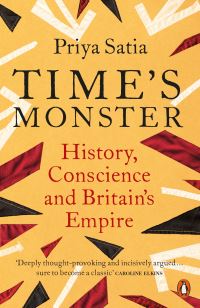
For generations, British thinkers told the history of an empire whose story was still very much in the making. While they wrote of conquest, imperial rule in India, the Middle East, Africa, and the Caribbean was consolidated. While they described the development of imperial governance, rebellions were brutally crushed. As they reimagined empire during the two World Wars, decolonization was compromised. Priya Satia shows how these historians not only interpreted the major political events of their time but also shaped the future that followed.
-
£7.99
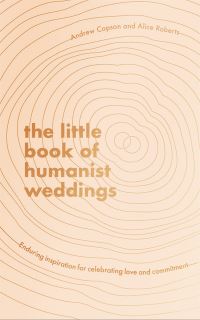
A humanist wedding ceremony allows couples the freedom to express their love in a completely personal way – but with so much choice, it can make the prospect of finding the perfect words a little daunting. In a beautiful collection of quotes, poems and meditations from humanist writers and thinkers throughout history and humanist celebrants, ‘The Little Book of Humanist Weddings’ is filled with inspiration to complement your unique celebration of love and commitment.
-
£10.99
In today’s world of cultural climate change, argues Jonathan Sacks, we have outsourced morality to the markets on the one hand, and to government on the other. Yet while the markets have brought wealth to many and the state has done much to contain the worst excesses of inequality, neither is capable of bearing the moral weight of showing us how to live. Talking to key modern influences and thinkers, and drawing inspiration from the Bible and the historical experience of the Jewish people, Sacks outlines the key factors in establishing, maintaining and passing on resilient moral values within a broad group.
-
£20.00
A forward-thinking manifesto from three Stanford professors which reveals how big tech’s obsession with optimization and efficiency has sacrificed fundamental human values and outlines steps we can take to change course, renew our democracy, and save ourselves.
-
£10.99
Artificial intelligence is rapidly dominating every aspect of our modern lives influencing the news we consume, whether we get a mortgage, and even which friends wish us happy birthday. But as algorithms make ever more decisions on our behalf, how do we ensure they do what we want? And fairly? This conundrum – dubbed ‘The Alignment Problem’ by experts – is the subject of this book. From the AI program which cheats at computer games to the sexist algorithm behind Google Translate, Brian Christian explains how, as AI develops, we rapidly approach a collision between artificial intelligence and ethics.
-
£20.00
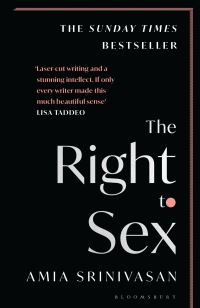
How should we talk about sex? It is a thing we have and also a thing we do; a supposedly private act laden with public meaning; a personal preference shaped by outside forces; a place where pleasure and ethics can pull wildly apart. Since `MeToo many have fixed on consent as the key framework for achieving sexual justice. Yet consent is a blunt tool. To grasp sex in all its complexity – its deep ambivalences, its relationship to gender, class, race, and power – we need to move beyond ‘yes and no’, wanted and unwanted. We need to interrogate the fraught relationships between discrimination and preference, pornography and freedom, rape and racial injustice, punishment and accountability, pleasure and power, capitalism and liberation.
-
£10.99
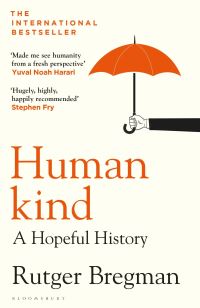
It’s a belief that unites the left and right, psychologists and philosophers, writers and historians. It drives the headlines that surround us and the laws that touch our lives. And its roots sink deep into Western thought: from Machiavelli to Hobbes, Freud to Pinker, the tacit assumption is that humans are bad. Humankind makes the case for a new argument: that it is realistic, as well as revolutionary, to assume that people are good. When we think the worst of others, it brings out the worst in our politics and economics too. In his long-awaited second book, international-bestselling author Rutger Bregman shows how believing in human kindness and altruism can be a new way to think – and act as the foundation for achieving true change in our society. It is time for a new view of human nature.
-
£10.99
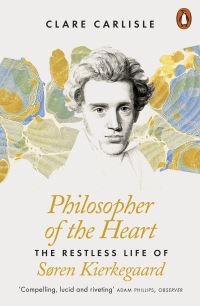
Kierkegaard is one of the most passionate and challenging of all modern philosophers, and is often regarded as the founder of existentialism. Over about a decade in the 1840s and 1850s, writings poured from his pen pursuing the question of existence – how to be a human being in the world? – while exploring the possibilities of Christianity and confronting the failures of its institutional manifestation around him. He deliberately lived in the swim of human life in Copenhagen, but alone, and died exhausted in 1855 at the age of 42, bequeathing his remarkable writings to his erstwhile fiancée. Clare Carlisle’s innovative and moving biography writes Kierkegaard’s life as far as possible from his own perspective, to convey what it was like actually being this Socrates of Christendom – as he put it, living life forwards yet only understanding it backwards.