Careless People
£10.99Shocking and darkly funny, this is the bestselling explosive inside story of a senior executive at Meta (formerly Facebook).
We recently launched our new website and are facing a few teething issues. If you see any problems please contact us.
We recently launched our new website and are facing a few teething issues. If you see any problems please contact us.
Showing 1–12 of 15 resultsSorted by latest
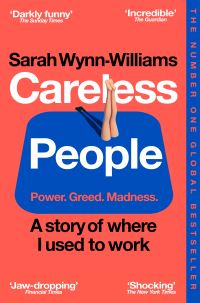
Shocking and darkly funny, this is the bestselling explosive inside story of a senior executive at Meta (formerly Facebook).
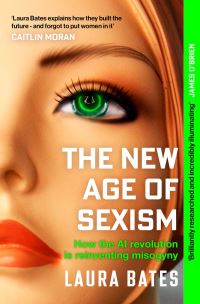
How we’re sleepwalking into a new era of misogyny: an urgent and shocking new book from bestselling author and feminist activist Laura Bates
Â
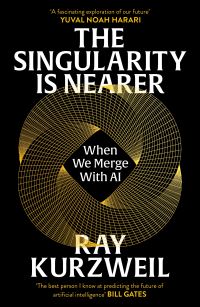
Within our lifetimes, we will be able to connect our brains directly with AI, enhancing our intelligence a millionfold and expanding our consciousness in ways we can barely imagine. This is the Singularity. Ray Kurzweil is one of the greatest inventors of our time with over 60 years’ experience in the field of Artificial Intelligence. Dozens of his long-range predictions about the rise of the internet, AI and bioengineering have been borne out. Here Kurzweil explains how the Singularity will occur and what it will mean to live free from the limits of biology: What will we choose if our bodies need no longer define us? What new realms of beauty, connection and wonder might we inhabit? Who will we become if our minds can be stored and duplicated? Drawing on a lifetime’s expertise, Kurzweil presents deeply reasoned answers to these questions.
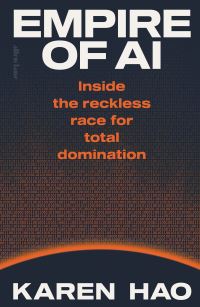
When longtime AI expert and journalist Karen Hao first began covering OpenAI in 2019, she thought they were the good guys. Founded as a nonprofit with safety enshrined as its core mission, it was meant, its leader Sam Altman told us, to act as a check against more purely market forces. But the core truth of this massively disruptive sector is that it requires an unprecedented amount of proprietary resources: the ‘compute’ power of scarce high-end chips, the sheer volume of data that needs to be amassed at scale, the humans on the ground ‘cleaning it up’ for sweatshop wages throughout the Global South, and a truly alarming spike in the need for energy and water underlying everything. In this book, Hao recounts the meteoric rise of OpenAI and shows us the sinister impact that this industry is having on society.
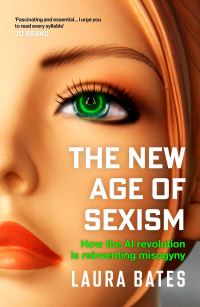
How we’re sleepwalking into a new era of misogyny: an urgent and shocking new book from bestselling author and feminist activist Laura Bates
Â
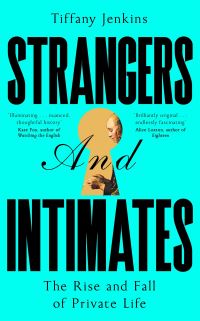
A brilliantly original history of privacy with a simple and urgent argument: private life is a precious and sustaining resource that must be defended.

Shocking and darkly funny, this is the explosive inside story of a senior executive at Meta (formerly Facebook).
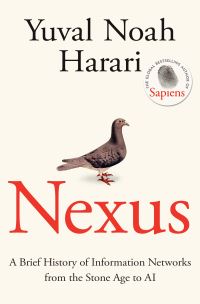
For the last 100,000 years, humans have accumulated enormous power. But despite all our discoveries, inventions and conquests, we now find ourselves in an existential crisis. The world is on the verge of ecological collapse. Misinformation abounds. And we are rushing headlong into the age of AI – a new information network that threatens to annihilate us. If we are so wise, why are we so self-destructive? ‘Nexus’ considers how the flow of information has shaped us, and our world. Taking us from the Stone Age through the Bible, early modern witch-hunts, Stalinism, Nazism and the resurgence of populism today, Yuval Noah Harari asks us to consider the complex relationship between information and truth, bureaucracy and mythology, wisdom and power. He explores how different societies and political systems have wielded information to achieve their goals, for good and ill.
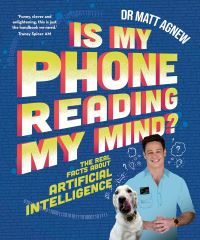
Let Dr Matt explain everything you and your kids need to know about Artificial Intelligence and why you don’t need to be afraid!
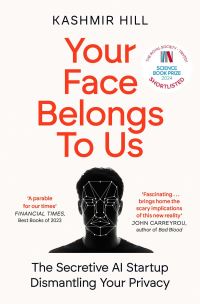
A thrilling investigation into the secret world of facial recognition technology from an award-winning journalist
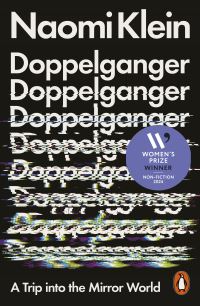
When Naomi Klein discovered that a woman who shared her first name, but had radically different, harmful views, was getting chronically mistaken for her, it seemed too ridiculous to take seriously. Then suddenly it wasn’t. She started to find herself grappling with a distorted sense of reality, becoming obsessed with reading the threats on social media, the endlessly scrolling insults from the followers of her doppelganger. Why had her shadowy other gone down such an extreme path? Why was identity – all we have to meet the world – so unstable? To find out, Klein decided to follow her double into a bizarre, uncanny mirror world: one of conspiracy theories, anti-vaxxers and demagogue hucksters, where soft-focus wellness influencers make common cause with fire-breathing far right propagandists (all in the name of protecting ‘the children’).
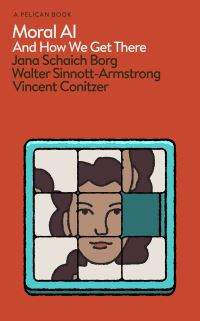
Here is a reassuring and thought-provoking guide to all the big questions about AI and ethics. Should robots ever be considered free? Will computers transcend human intelligence? And what can we do to make sure AI is safe? The artificial intelligence revolution has begun. Today, there are self-driving cars on our streets, autonomous weapons in our armies, robot surgeons in our hospitals – and AI’s presence in our lives will only increase. Some see this as the dawn of new era in innovation and ease; others are alarmed by its destructive potential. But one thing is clear: this is a technology like no other, one that raises profound questions about freedom, justice and the very definition of human agency. In ‘Moral AI’, world-renowned researchers in artificial intelligence and philosophy, Jana Schaich Borg, Walter Sinnott-Armstrong, and Vince Conitzer tackle these thorny issues head-on.
No products in the basket.
Notifications