In the Long Run We’re All Dead
£14.99A humorous and sideways look at the lives of some of the great and eccentric economic minds.

Showing 13–24 of 26 resultsSorted by latest
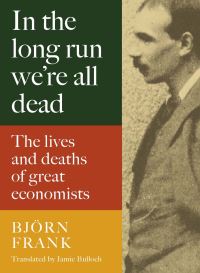
A humorous and sideways look at the lives of some of the great and eccentric economic minds.
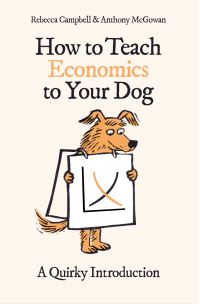
A fun take on some of the biggest questions in economics, made accessible for non-experts (and dogs)
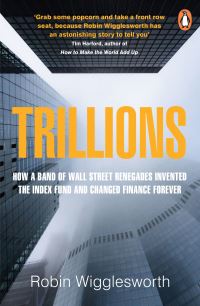
Index funds are the most widely influential investment vehicles available. They have revolutionised investing by saving millions of people billions of dollars in fees that would otherwise have gone to fund managers. It is no exaggeration to say that the rise of passive investing is probably one of the most consequential financial inventions of the past half-century, by rewiring markets and reshaping the finance industry. Yet some detractors say that index investing is an insidious disease and, with their rapid expansion and grip on the financial market, index funds may have cataclysmic consequences that we aren’t even aware of yet. Here Robin Wigglesworth reveals the untold history of the revolutionists behind the invention of index funds and investigates one of the most pressing financial uncertainties of our time.
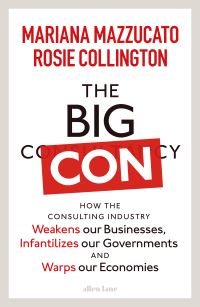
‘The Big Con’ describes the confidence trick the consulting industry performs in contracts with hollowed-out and risk-averse governments and shareholder value-maximizing firms. To make matters worse, our best and brightest graduates are often redirected away from public service into consulting. In all these ways, the Big Con weakens our businesses, infantilises our governments and warps our economies. Mazzucato and Collington expertly debunk the myth that consultancies always add value to the economy. With a wealth of original research, they argue brilliantly for investment and collective intelligence within all organisations and communities, and for a new system in which public and private sectors work innovatively for the common good. We must recalibrate the role of consultants and rebuild economies and governments that are fit for purpose.
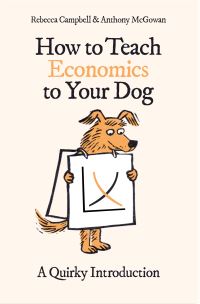
A fun take on some of the biggest questions in economics, made accessible for non-experts (and dogs)
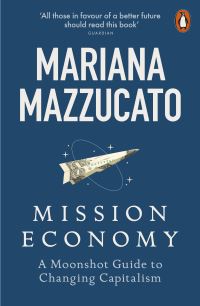
Even before the COVID-19 pandemic in 2020, capitalism was stuck. It had no answers to a host of problems, including disease, inequality, the digital divide and, perhaps most blatantly, the environmental crisis. Taking her inspiration from the ‘moonshot’ programmes which successfully co-ordinated public and private sectors on a massive scale, Mariana Mazzucato calls for the same level of boldness and experimentation to be applied to the biggest problems of our time. We must, she argues, rethink the capacities and role of government within the economy and society, and above all recover a sense of public purpose. ‘Mission Economy’, whose ideas are already being adopted around the world, offers a way out of our impasse to a more optimistic future.

What would a fair and equal society look like? Imagine it is now 2025 and that years earlier, in the wake of the world financial crisis of 2008, a new post-Capitalist society had been born. In this ingenious book, world-famous economist Yanis Varoufakis draws on the greatest thinkers in European culture from Plato to Marx to offer us a dramatic and tantalising glimpse of this brave new world, where the principles of democracy, equality and justice are truly served. But in setting out what would be needed to forge such a society, he identifies a painful but important truth: that the greatest obstacles to making such a vision a reality lie within each of us. This text offers answers to some of the most pressing questions of today. It also challenges us to consider how we might answer them in our lives.
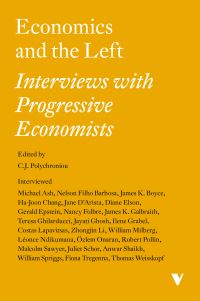
Twenty-four economists discuss how they promote their commitments to egalitarianism, democracy and ecological sanity through their research, activism and policy engagement

Where is ‘home’? For Amartya Sen home has been many places – Dhaka in modern Bangladesh where he grew up, the village of Santiniketan where he was raised by his grandparents as much as by his parents, Calcutta where he first studied economics and was active in student movements, and Trinity College, Cambridge, to which he came aged nineteen. Sen brilliantly recreates the atmosphere in each of these. Central to his formation was the intellectually liberating school in Santiniketan founded by Rabindranath Tagore (who gave him his name Amartya) and enticing conversations in the famous Coffee House on College Street in Calcutta. As an undergraduate at Cambridge, he engaged with many of the leading figures of the day. This is a book of ideas as much as of people and places.

The experience of the last decade has not been kind to the image of economists: asleep at the wheel (perhaps with the foot on the gas pedal) in the run-up to the great recession, squabbling about how to get out of it, tone-deaf in discussions of the plight of Greece or the Euro area; they seem to have lost the ability to provide reliable guidance on the great problems of the day. In this ambitious, provocative book Abhijit V. Banerjee and Esther Duflo show how traditional western-centric thinking has failed to explain what is happening to people in a newly globalised world: in short Good Economics has been done badly.
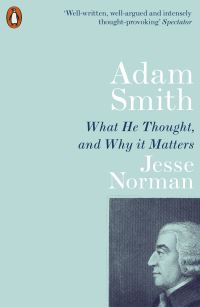
Adam Smith is now widely regarded as ‘the father of modern economics’ and the most influential economist who ever lived. But what he really thought, and what the implications of his ideas are, remain fiercely contested. Was he an eloquent advocate of capitalism and the freedom of the individual? Or a prime mover of ‘market fundamentalism’ and an apologist for inequality and human selfishness? This book dispels the myths and caricatures and gives us Smith in the round.
No products in the basket.
Notifications