Showing 13–24 of 74 resultsSorted by latest
-
£10.99
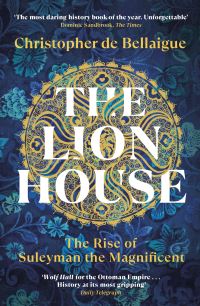
Set in Venice, 1522, this is ‘eye-witness history’ telling the story of Suleyman’s rise to power in the 16th century. Sensitive intelligence arrives from the east confirming the European powers’ greatest fear: the vastly rich Ottoman Sultan has amassed all he needs to wage total war – and his sights are set on Rome. With Christendom divided, Suleyman the Magnificent has his hand on their entrails.
-
£25.00
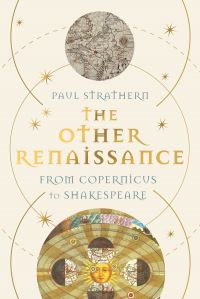
It is generally accepted that the European Renaissance began in Italy. However, a historical transformation of similar magnitude also took place in northern Europe at the same time. This ‘other Renaissance’ was initially centred on the city of Bruges in Flanders (modern Belgium), but its influence was soon being felt in France, the German states, England, and even in Italy itself. Following a sequence of major figures, including Copernicus, Gutenberg, Luther, Catherine de Medici, Rabelais, van Eyck and Shakespeare, Paul Strathern tells the fascinating story of how this ‘other Renaissance’ played as significant a role as the Italian renaissance in bringing our modern world into being.
-
£20.00
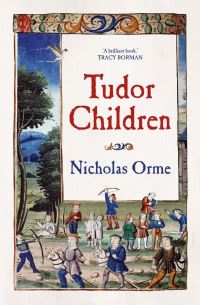
The first history of childhood in Tudor England
-
£12.99
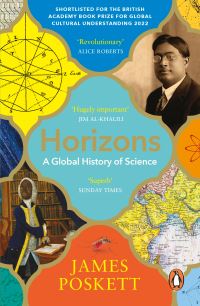
We are told that modern science was invented in Europe, the product of great minds like Nicolaus Copernicus, Isaac Newton, Charles Darwin and Albert Einstein. But this is wrong. Science is not, and has never been, a uniquely European endeavour. Copernicus relied on mathematical techniques borrowed from Arabic and Persian texts. When Newton set out the laws of motion, he relied on astronomical observations made in Asia and Africa. When Darwin was writing On the Origin of Species, he consulted a sixteenth-century Chinese encyclopaedia. And when Einstein was studying quantum mechanics, he was inspired by the Bengali physicist, Satyendra Nath Bose. ‘Horizons’ pushes beyond Europe, exploring the ways in which scientists from Africa, America, Asia and the Pacific fit into the history of science, and arguing that it is best understood as a story of global cultural exchange.
-
£25.00
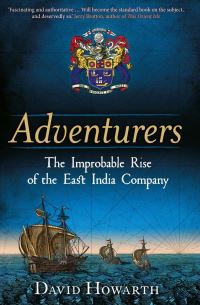
The unlikely beginnings of the East India Company-from Tudor origins and rivalry with the superior Dutch-to laying the groundwork for future British expansion
-
£14.99
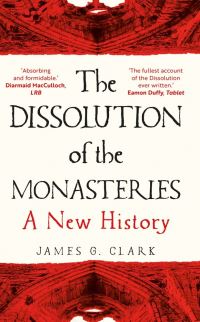
The first account of the dissolution of the monasteries for fifty years-exploring its profound impact on the people of Tudor England
-
£30.00
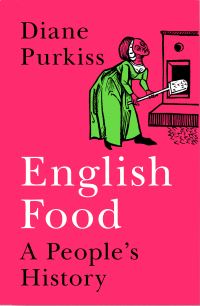
In this delicious history of Britain’s food traditions, Diane Purkiss invites readers on a unique journey through the centuries, exploring the development of recipes and rituals for mealtimes such as breakfast, lunch, and dinner, to show how food has been both a reflection of and inspiration for social continuity and change.
-
£10.99
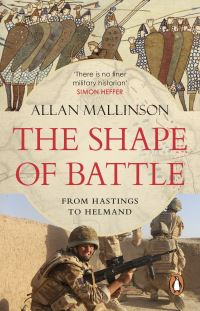
One of our most distinguished military historians tells the story of six defining battles . . .Every battle is different. Each takes place in a different context – the war, the campaign, the weapons. However, battles across the centuries, whether fought with sticks and stones or advanced technology, have much in common. Fighting is, after all, an intensely human affair; human nature doesn’t change. So why were battles fought as they were? What gave them their shape? Why did they go as they did: victory for one side, defeat for the other? In exploring six significant feats of arms – the war and campaign in which they each occurred, and the factors that determined their precise form and course – The Shape of Battle answers these fundamental questions about the waging of war.Hastings (1066) – everyone knows the date, but not, perhaps, the remarkable strategic background.Towton (1461) – the bloodiest battle to be fought on English soil. Wat
-
£12.99
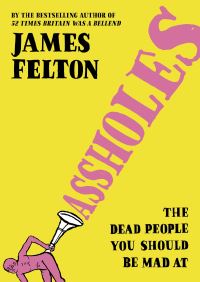
In this potted history of the human race, Twitter icon James Felton uses his inimitable brand of banter to unveil the slyest, creepiest and/or nastiest specimens who’ve ever lived. Enter the 16th century Chinese Emperor Zhegende, whose harem was so big some of the women within it died of starvation, King Charles II’s executioner who would only give you a clean beheading if you paid properly for it beforehand, and llya Ivanovich, the 19th century scientist who was a mega asshole and if you buy the book you’ll find out why. Darkly funny, highly informative and always unbelievable, these are the dead people you should be mad at.
-
£40.00
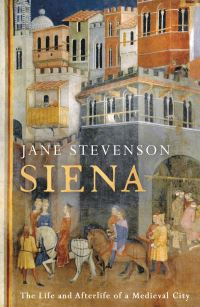
An illustrated history of Siena, one of the most-visited cities in Italy.
-
£30.00
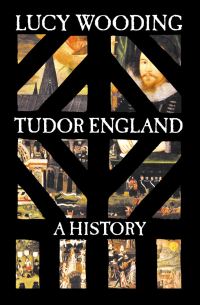
A compelling, authoritative account of the brilliant, conflicted, visionary world of Tudor England
-
£9.99
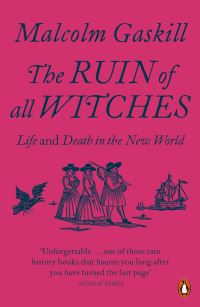
In the frontier town of Springfield in 1651, peculiar things begin to happen. Precious food spoils, livestock ails and property vanishes. People suffer fits, and are plagued by strange visions and dreams. Children sicken and die. As tensions rise, rumours spread of witches and heretics, and the community becomes tangled in a web of spite, distrust and denunciation. The finger of suspicion falls on a young couple struggling to make a home and feed their children: Hugh Parsons the prickly brickmaker and his troubled wife, Mary. It will be their downfall. ‘The Ruin of All Witches’ tells the dark, real-life folktale of witch-hunting in a remote Massachusetts plantation. These were the turbulent beginnings of colonial America, when English settlers’ dreams of love and liberty, of founding a ‘city on a hill’, gave way to paranoia and terror, enmity and rage.