Showing 1–12 of 29 resultsSorted by latest
-
£25.00
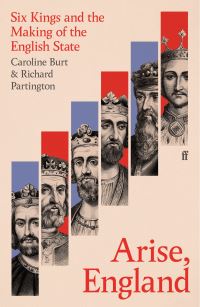
Between 1199 and 1399, English politics was high drama. These two centuries witnessed savage political blood-letting – including civil war, deposition, the murder of kings and the ruthless execution of rebel lords – as well as international warfare, devastating national pandemic, economic crisis and the first major peasant uprising in English history. Arise, England uses the six Plantagenet kings who ruled during these two centuries to explore England’s emergent statehood. Drawing on original accounts and arresting new research, it draws resonances between government, international relations, and the abilities, egos and ambitions of political actors, then and now. Colourful and complicated, and by turns impressive and hateful, the six kings stride through the story; but arguably the greatest character is the emerging English state itself.
-
£16.00
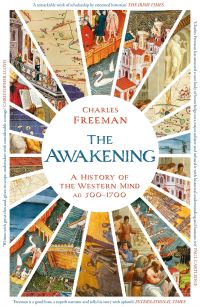
A popular telling of the story of the revival of European intellectual life after the collapse of civilisation that followed the fall of the Roman empire in the West.
-
£10.99
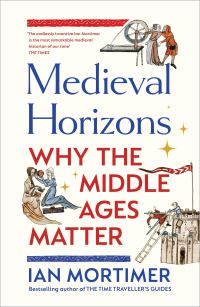
We tend to think about the Middle Ages as a dark, backward and unchanging time characterised by violence, ignorance and superstition. By contrast we believe progress is the consequence of science and technological innovation, and that it was the inventions of recent centuries which created the modern world. We couldn’t be more wrong. As Ian Mortimer shows in this fascinating introduction to the Middle Ages, people’s horizons – their knowledge, experience and understanding of the world – expanded dramatically. All aspects of life were utterly transformed between 1000 and 1600, marking the transition from a warrior-led society to that of Shakespeare.
-
£25.00
‘A GENUINELY NEW HISTORY OF OUR NATION’ DAN JONES
‘A LASTING WORK OF SOCIAL HISTORY’ THE TIMES
***** FIVE STARS FROM THE INDEPENDENT *****
-
£12.99
How did descendants of Viking marauders come to dominate Europe, the Mediterranean and the Middle East? It is a tale of ambitious adventures and fierce freebooters, of fortunes made and fortunes lost. The Normans made their influence felt across all of western Europe and the Mediterranean, from the British Isles to North Africa, and Lisbon to the Holy Land. In ‘Empires of the Normans’ we discover how they combined military might and political savvy with deeply held religious beliefs and a profound sense of their own destiny. For a century and a half, they remade Europe in their own image, and yet their heritage was quickly forgotten – until now.
-
£22.00
We tend to think about the Middle Ages as a dark, backward and unchanging time characterised by violence, ignorance and superstition. By contrast we believe progress is the consequence of science and technological innovation, and that it was the inventions of recent centuries which created the modern world. We couldn’t be more wrong. As Ian Mortimer shows in this fascinating introduction to the Middle Ages, people’s horizons – their knowledge, experience and understanding of the world – expanded dramatically. All aspects of life were utterly transformed between 1000 and 1600, marking the transition from a warrior-led society to that of Shakespeare.
-
£12.99
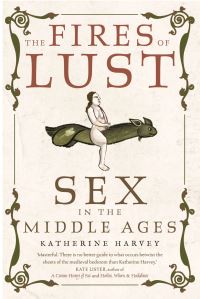
The medieval humoral system of medicine suggested that it was possible to die from having too much – or too little – sex, while the Roman Catholic Church taught that virginity was the ideal state. Holy men and women committed themselves to lifelong abstinence in the name of religion. Everyone was forced to conform to restrictive rules about who they could have sex with, in what way, how often, and even when, and could be harshly punished for getting it wrong. Like us, medieval people faced challenges in finding a suitable partner or trying to get pregnant (or trying not to). They also struggled with many of the same social issues, such as whether prostitution should be legalized. Above all, they shared our fondness for dirty jokes and erotic images. By exploring their sex lives, this book brings ordinary medieval people to life, revealing details of their most personal thoughts and experiences.
-
£30.00
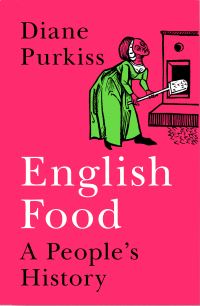
In this delicious history of Britain’s food traditions, Diane Purkiss invites readers on a unique journey through the centuries, exploring the development of recipes and rituals for mealtimes such as breakfast, lunch, and dinner, to show how food has been both a reflection of and inspiration for social continuity and change.
-
£12.99
In the year 1000, the ordinary people of the lands surrounding the North Sea are struggling to survive. Meanwhile their nobles and rulers are concerned with only one thing: power. To get power they need soldiers, to get soldiers they need silver, and to get silver there is no better way than war and plunder. This vicious cycle draws all the lands of the north into a brutal struggle for supremacy. But who will emerge victorious? The Wolf Age takes the reader on a thrilling journey through the bloody history of England and the other nations ringing the North Sea. Warfare, plotting, backstabbing and bribery abound as Tore Skeie shows us how intimately England’s early history was bound up with that of Scandinavia, bringing the world of the Vikings and Anglo-Saxons to life in splendid technicolour.
-
£10.99
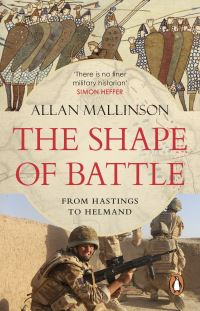
One of our most distinguished military historians tells the story of six defining battles . . .Every battle is different. Each takes place in a different context – the war, the campaign, the weapons. However, battles across the centuries, whether fought with sticks and stones or advanced technology, have much in common. Fighting is, after all, an intensely human affair; human nature doesn’t change. So why were battles fought as they were? What gave them their shape? Why did they go as they did: victory for one side, defeat for the other? In exploring six significant feats of arms – the war and campaign in which they each occurred, and the factors that determined their precise form and course – The Shape of Battle answers these fundamental questions about the waging of war.Hastings (1066) – everyone knows the date, but not, perhaps, the remarkable strategic background.Towton (1461) – the bloodiest battle to be fought on English soil. Wat
-
£12.00
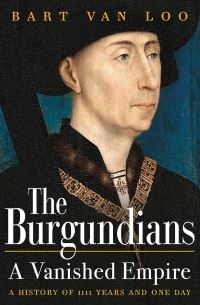
The story of the Burgundian elite and its remarkable court and culture, a medieval and early modern epic of dynastic struggle, artistic achievement and eventual extinction.
-
£9.99
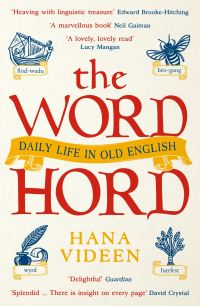
Old English is the language we think we know until we actually see it. Used in England over a thousand years ago, it is rich with words that haven’t changed (word), others that are unrecognisable (neorxnawang – paradise) and some that are curiously mystifying (gafol-fisc – tax-fish). In this beautiful little book, Hana Videen has gathered these gems together to create a glorious trove and illuminate the lives, beliefs and habits of our linguistic ancestors. We discover a world where choking on a bit of bread might prove your guilt, where fiend-ship was as likely as friend-ship, and you might grow up to be a laughter-smith. These are the magical roots of our own language: you’ll never see English in the same way again.
 Art Of War
  £10 Nomad Gift Card
  Cost Of Living
  The Year of Magical Thinking