Eclipsing the West
£12.99An incisive, data-driven look at the rise of China and India that considers how these new 'superstates' are reshaping the world order.

Showing all 9 resultsSorted by latest

An incisive, data-driven look at the rise of China and India that considers how these new 'superstates' are reshaping the world order.
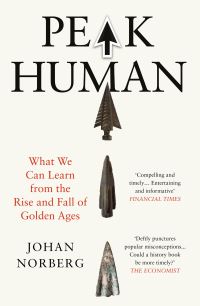
All golden ages are marked by periods of spectacular cultural flourishing, scientific exploration, technological achievement and economic growth; yet no two are the same. Their beliefs, societies and place in the wider world all vary. Despite this, all previous golden ages have ended, whether it be because of external pressures or internal fracturing; too much hubris or too little wariness. Looking at seven of humanity’s greatest civilisations – ancient Athens, the Roman Republic, Abbasid Baghdad, Song China, Renaissance Italy, the Dutch Republic and the Anglosphere – historian and commentator Johan Norberg seeks to distil their strengths and shortcomings in answering the question: how do we ensure that our current golden age doesn’t end?

After the fall of France in June 1940, only Britain stood between Hitler and total victory. Desperate for allies, Winston Churchill did everything he could to bring the United States into the conflict, drive the Soviet Union and Nazi Germany apart and persuade neutral countries to resist German domination. By 1942, after the German invasion of Russia and the Japanese attack on Pearl Harbor, the British-Soviet-American alliance was in place. Yet it was an improbable and incongruous coalition, divided by ideology and politics and riven with mistrust and deceit. Churchill, Roosevelt and Stalin were partners in the fight to defeat Hitler, yet they were also rivals who disagreed on strategy, imperialism and the future of liberated Europe. Only by looking at their points of conflict, as well as of co-operation, are we able to understand the course of the war and world that developed in its aftermath.
At a time when democracies seem paralyzed by fear and populations are turning inward, award-winning journalist John Kampfner travels to ten countries confronting our shared challenges with bravery and imagination. The countries showing true innovation are often those with their backs against the wall – not wealthy nations assuming they have all the answers. This book is an urgent reminder that solutions exist. The question is whether we have the courage to learn.
The dangerous race for self-sufficiency has begun. Be warned Nations are turning away from each other. Faith in globalisaton has been fatally undermined by the pandemic, the energy crisis, surging trade frictions and swelling great power rivalry. A new vision is vying to replace what we’ve known for many decades. This vision – ‘Exile Economics’ – entails a rejection of interdependence, a downgrading of multilateral collaboration and a striving for greater national self-sufficiency. The supporters of this new order argue it will establish genuine security, prosperity and peace. But is this promise achievable? Or a seductive delusion? Through the stories of globally traded commodities, economics journalist Ben Chu illustrates the intricate web of interdependence that has come to bind nations together – and underlines the dangers of this new push to isolationism.
A DEVASTATING ACCOUNT OF AMERICAN MILITARY FOLLY AND POLITICAL DYSFUNCTION BY THE WASHINGTON EDITOR OF HARPER’S MAGAZINE
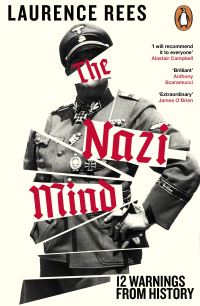
How could the Nazis have committed the crimes they did? Why did commandants of concentration and death camps willingly – often enthusiastically – oversee mass murder? How could ordinary Germans have tolerated the removal of the Jews? In this book, Laurence Rees combines history and the latest research in psychology to help answer some of the most perplexing questions surrounding the Second World War and the Holocaust. Ultimately, he delves into the darkness to explain how and why these people were capable of committing the worst crime in the history of the world. Rees traces the rise and eventual fall of the Nazis through the lens of ‘twelve warnings’ – whilst also highlighting signs to look out for in present day leaders who, for example, take control of the media, propound conspiracy theories, and talk about ‘them’ against ‘us’.
Nowadays, autocracies are run not by one bad guy, but by sophisticated networks composed of kleptocratic financial structures, security services and professional propagandists. The members of these networks are connected not only within a given country, but among many countries. The corrupt, state-controlled companies in one dictatorship do business with corrupt, state-controlled companies in another. The police in one country can arm, equip, and train the police in another. The propagandists share resources – the troll farms that promote one dictator’s propaganda can also be used to promote the propaganda of another – and themes, pounding home the same messages about the weakness of democracy and the evil of America. Unlike military or political alliances from other times and places, this group doesn’t operate like a bloc, but rather like an agglomeration of companies: Autocracy, Inc.
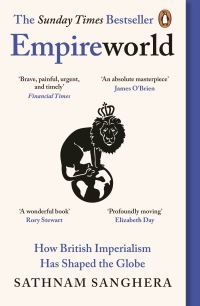
In ‘Empireworld’, award-winning author and journalist, Sathnam Sanghera extends his examination of British imperial legacies beyond Britain. Travelling the globe to trace its international legacies – from Barbados and Mauritius to India and Nigeria and beyond – Sanghera demonstrates just how deeply British imperialism is baked into our world. And why it’s time Britain was finally honest with itself about empire.
No products in the basket.