Showing 1–12 of 15 resultsSorted by latest
-
£10.99
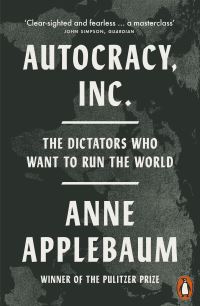
Nowadays, autocracies are run not by one bad guy, but by sophisticated networks composed of kleptocratic financial structures, security services and professional propagandists. The members of these networks are connected not only within a given country, but among many countries. The corrupt, state-controlled companies in one dictatorship do business with corrupt, state-controlled companies in another. The police in one country can arm, equip, and train the police in another. The propagandists share resources – the troll farms that promote one dictator’s propaganda can also be used to promote the propaganda of another – and themes, pounding home the same messages about the weakness of democracy and the evil of America. Unlike military or political alliances from other times and places, this group doesn’t operate like a bloc, but rather like an agglomeration of companies: Autocracy, Inc.
-
£25.00
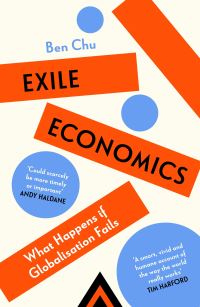
The dangerous race for self-sufficiency has begun. Be warned. Nations are turning away from each other. Faith in globalisaton has been fatally undermined by the pandemic, the energy crisis, surging trade frictions and swelling great power rivalry. A new vision is vying to replace what we’ve known for many decades. This vision – ‘Exile Economics’ – entails a rejection of interdependence, a downgrading of multilateral collaboration and a striving for greater national self-sufficiency. The supporters of this new order argue it will establish genuine security, prosperity and peace. But is this promise achievable? Or a seductive delusion? Through the stories of globally traded commodities, economics journalist Ben Chu illustrates the intricate web of interdependence that has come to bind nations together – and underlines the dangers of this new push to isolationism.
-
£25.00
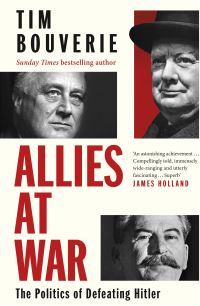
After the fall of France in June 1940, only Britain stood between Hitler and total victory. Desperate for allies, Winston Churchill did everything he could to bring the United States into the conflict, drive the Soviet Union and Nazi Germany apart and persuade neutral countries to resist German domination. By 1942, after the German invasion of Russia and the Japanese attack on Pearl Harbor, the British-Soviet-American alliance was in place. Yet it was an improbable and incongruous coalition, divided by ideology and politics and riven with mistrust and deceit. Churchill, Roosevelt and Stalin were partners in the fight to defeat Hitler, yet they were also rivals who disagreed on strategy, imperialism and the future of liberated Europe. Only by looking at their points of conflict, as well as of co-operation, are we able to understand the course of the war and world that developed in its aftermath.
-
£22.00
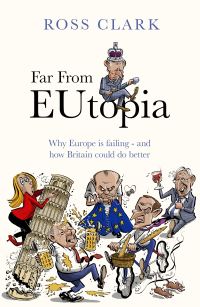
In 2020, after three and a half years of bitter negotiations, Britain left the European Union. For some it was a day of freedom, for others a tragedy which would leave Britain isolated and poorer. Vote Brexit, the Remain campaign warned us, and it would be an act of self-harm. The economy would collapse, sending prices and unemployment soaring. Meanwhile, in contrast to xenophobic, inward-looking Britain, the EU would soar ahead without us. But is that really what has happened? Ross Clark reveals just how badly the EU is doing – and how in many ways Britain is doing better. Since Brexit, for example, the UK economy has grown faster than Germany’s. In spite of inflation which followed the pandemic and the invasion of Ukraine, Britain has the lowest food prices in Europe. The air is cleaner than in many countries.
-
£10.99
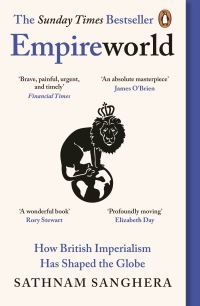
In ‘Empireworld’, award-winning author and journalist, Sathnam Sanghera extends his examination of British imperial legacies beyond Britain. Travelling the globe to trace its international legacies – from Barbados and Mauritius to India and Nigeria and beyond – Sanghera demonstrates just how deeply British imperialism is baked into our world. And why it’s time Britain was finally honest with itself about empire.
-
£25.00
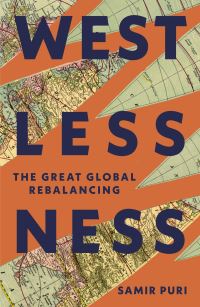
The receding of Western power is speeding up, shaking the ground under our feet. In ‘Westlessness’, Dr Puri vividly demonstrates how in demographic, economic, military and cultural terms, we are hurtling into a far more diverse global future. Many of our certainties about the present, built on centuries of massive Western global impact, are increasingly fragile. Nothing is linear and nothing is predictable. Untold wealth is moving from the West to the East, as nations like India and Indonesia are set to reach new heights of growth and confidence. China continues its ascent to the peak of the economic mountain – but are cracks appearing? BUT will the Western world, (under the aegis of US global military, economic, technological and cultural power) give up its privileged position willingly? Are we ready, professionally and personally, to adapt to a much more diverse global future?
-
£25.00
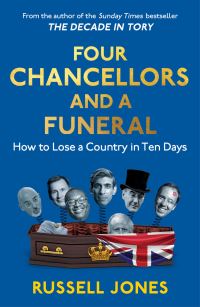
The sequel nobody wants. After a decade of the Tories, could it get any worse? Spoiler – it does. Towards the end of 2021, Britain had been frogmarched into an escalating series of surreal calamities. Brexit was a disaster, the NHS was in crisis, the government was bathed head-to-toe in impropriety, senior Tories were still acting as though the public purse was their personal feed-trough, and the air crackled with anger about PartyGate. ‘Four Chancellors and a Funeral’ delivers more of Russell Jones’s signature scathing wit, combining a detailed historical record of 2021 and 2022, with acerbic commentary, all of it leavened by jokes at the seemingly endless maelstrom of failures, nincompoops, and hypocrisies.
-
£12.99
Many of us assume Western civilisation derives from a cultural inheritance that stretches back to classical antiquity, a golden thread that binds us from Plato to NATO. But what if all this is wrong? What if the Western world does not have its ultimate origins in a single cultural bloodline but rather a messy bramble of ancestors and influences? What if ‘the West’ is just an idea that has been invented, co-opted, and mythologised to serve different purposes through history? As battles over privilege, identity and prejudice rock the cultural wars, it’s never been more important to understand how the concept of ‘the West’ came to be. This book tells a bold, empowering new story of how the idea of ‘the West’ was created, how it has been used to justify imperialism and racism, and also why it’s still a powerful ideological tool to understand our world.
-
£9.99
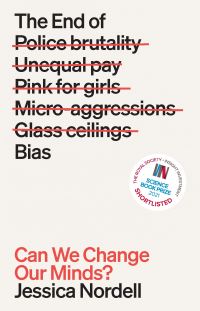
Drawing on ten years of immersion in the topic, Nordell digs into the cognitive science and social psychology that underpin efforts to eliminate bias, meets the people working to end it, and reveals what really works, and what doesn’t.
-
£16.99
A vigorous and timely defense of the state as a force for good
-
£25.00
This book offers a nuanced and detailed examination of two of the most important current debates about contemporary Russia’s international activity: is Moscow acting strategically or opportunistically, and should this be understood in regional or global terms?
-
£20.00
Unconscious bias affects us all on a daily basis, but it can be overcome. The author sets out to meet the people who are finding solutions to the bias that can rob organizations of talent, science of breakthroughs, art of wisdom and politics of insight.