Showing 1–16 of 24 resultsSorted by latest
-
£14.99
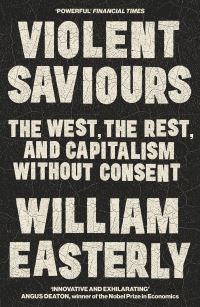
For centuries, the developed Western world has exploited the less-developed ‘Rest’ in the name of progress, conquering the Americas, driving the Atlantic slave trade, and colonizing Africa and Asia. Throughout, the West has justified this global conquest by the alleged material gains it brought to the conquered. But they overlooked the demand for self-determination – and not just relief from poverty. Economist and author of ‘The White Man’s Burden’, William Easterly examines how the demand for agency has always been at the heart of debates on development. Spanning four centuries of global history, Easterly argues that commerce, rather than conquest, provide equal rights as well as prosperity. Tracing the economic ideas underpinning the long debate between conquest and commerce, Easterly shows how it is the surge in global trade that has given agency to billions of people.
-
£25.00
This work combines forensic new research with vivid and compelling narrative to provide an entirely new history of Britain that for the first time clarifies the true significance of the transatlantic trade in enslaved Africans to Britain’s development as a modern nation. Between the birth of the trade in the 16th century and its abolition in 1807, Britain derived vast wealth from the traffic in Africans from West Africa to the Americas – but until now the people who conceived, designed and engineered that trade have been largely unknown to us. As a result, it has been impossible to trace where the wealth derived from slavery went, what purposes it was put to, who it empowered and what it enabled.
-
£30.00
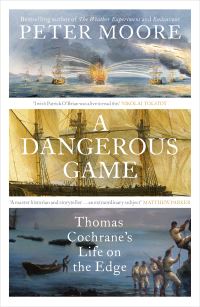
Cochrane’s life was even more remarkable than the fiction it inspired. A hero of the Napoleonic Wars, known for destroying the French Atlantic fleet in one explosive attack, he was an equally aggressive force in British politics as the Radical MP for Westminster. Cochrane’s fortunes turned in 1814 when he was convicted of a fraud on the Stock Exchange. Escaping from prison, he later reinvented himself as a revolutionary admiral, helping the Chileans, Peruvians, Brazilians and Greeks in their struggles for independence. In ‘A Dangerous Game’, historian Peter Moore draws on newly uncovered materials to bring Cochrane vividly to life. Bold, rebellious and uncompromising, he saw the world as a contest to be won – at sea, in politics, even in scandal – and played it more dangerously than any man of his age.
-
£14.99
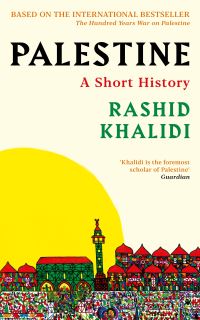
‘Come for a walk with me, if you would, along the streets of Jerusalem. My family has walked these streets for more than a thousand years.’ With this invitation, this book offers a powerful introduction to Palestinian history through a century of conflict and resistance. Blending incisive research with his own family memories, celebrated scholar Rashid Khalidi traces Palestine’s story from the British occupation to Israel’s ongoing colonial war. Powerfully explaining the history behind the world’s most urgent – and misunderstood – conflict, Khalidi explores why Israel has long fought against Palestine.
-
£25.00
World War II transformed ideas about politics, and led political leaders worldwide to agree to the partition of the people, territory, and economies of the world into nation states. The first truly global account of the origins of the nation state, Out of Chaos shows how the conditions of its emergence has shaped world politics to today.
-
£11.99
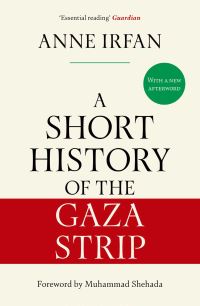
From a leading scholar of Palestine-Israel, a brief, essential history of the besieged strip of land, revealing the roots of the current crisis.
-
£12.99
Veteran journalist Chris Horton delivers a gripping, urgent and approachable account of Taiwan’s rich history and precarious present. Based on a decade of on-the-ground reporting, he reveals how this vibrant democracy and tech colossus emerged against all odds.
-
£12.99
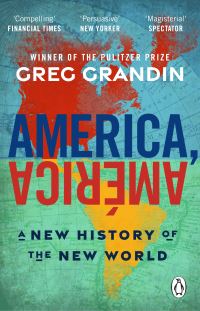
From a Pulitzer Prize-winning historian comes a definitive history of the Western hemisphere, a sweeping five-century narrative of North and South America that redefines our understanding of both continents. The story of the United States’ unique sense of itself was forged facing south – no less than Latin America’s was indelibly stamped by the looming colossus to the north. In this reinterpretation of the New World, Greg Grandin reveals how the Americas emerged from constant, turbulent engagement with each other, shedding new light on well-known historical figures like Bartolomé de las Casas, Simón Bolívar and Woodrow Wilson, as well as lesser-known actors such as the Venezuelan Francisco de Miranda, who almost lost his head in the French Revolution and conspired with Alexander Hamilton to free America from Spain.
-
£12.99
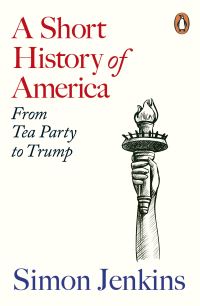
The global powerhouse that is the United States of America is younger even than the British Museum, Guinness and the flushing toilet. In 2026 it celebrates its 250th birthday. How did this vast land, long inhabited by diverse indigenous cultures, come to be dominated by English speakers? How has it grappled with the stark contradictions between its ideals of liberty and the grim reality of genocide and slavery? This extraordinary collection of fifty distinct states has weathered immense – and recent – challenges, including a Civil War that was still raging as the first London Underground station opened. How did this melting pot of peoples and ideas not only endure but rise to dominate global politics, commerce, culture and warfare? What insights does this rich history offer about an increasingly divided nation – and the world that moves to its rhythm?
-
£25.00
Written while the organisation he directs, Forensic Architecture, works to produce evidence for the International Court of Justice’s genocide case against Israel, Weizman explores the larger geographical and historical context, from the displacement of the Nakba in 1948 to the present day. He shows how architectural and territorial analysis is key to understanding the relationship between the coloniser and the colonised. The book is an extraordinary and eye-opening journey through the ‘deep cartography’ of the area extending from Gaza’s subterranean tunnels through to its militarised topography, settlements and barriers. Territory is never a neutral backdrop nor the location within which a colonisation takes place. Instead, it is a mechanism by which colonisation is undertaken and key to understanding how Israel’s attack on Gaza in the wake of 7 October has escalated into violence so extreme as to, Weizman argues, meet the definition of
-
£12.99
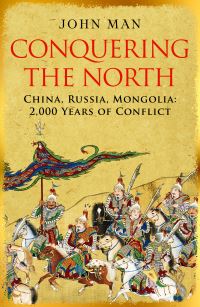
A panoramic history of the roots of China and Mongolia’s historic rivalry… and why it matters now.
-
£25.00
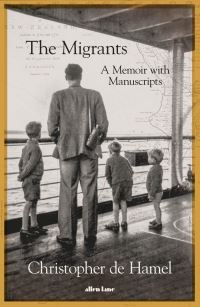
Christopher de Hamel is one of the world’s best-known scholars and writers on illuminated manuscripts. He was mostly brought up in the south of New Zealand, where his family moved when he was four. This book magically evokes a childhood at vast distance from Europe, recalling his thrill and wonder in first encountering medieval manuscripts in libraries there and the realization that they too are migrants far from home. ‘The Migrants’ explores the immense journeys of books and people. It is a tale of colonization and the migration of culture, of motives and idealism, triumphs and disasters, bringing us face-to-face with history.
-
£24.99
A new, concise history of buildings erected all over Britain and its colonial empire during the long nineteenth century. Thematically arranged, the book covers all major typologies, from civic buildings and religious structures, to correctional facilities, museums, and exhibition spaces, including transport and industrial infrastructures.
-
£22.00
From the master storyteller behind 2023’s critically acclaimed KILLING THATCHER
-
£25.00
Roger Dooley wasn’t looking for the San Jose. But an accidental discovery in the dusty stacks of a Spanish archive in the 1980s led him to the story of a lifetime – the journey of a ship that had gathered a mountain of riches from the New World for a long-awaited delivery to the King of Spain nearly three centuries earlier. But that ship, the galleon San Jose, never reached its destination. Instead, the Spanish treasure fleet was drawn into a pitched battle with British ships of war off the coast of Cartagena. When the smoke cleared, the San Jose had disappeared into the ocean. Though a diver at heart, Dooley was an unlikely candidate to find the San Jose. Dooley had little in the way of serious credentials, yet his tenacity and single-minded devotion to finding the San Jose led him to breakthroughs once thought impossible.
-
£40.00
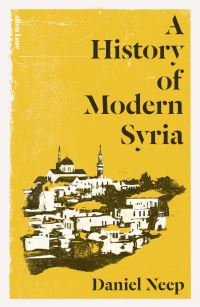
Few countries have had as vexed a political history as Syria. Carved out of the Ottoman empire at the end of the First World War, Syria was brutally ruled as a French colony, cut off by a series of new borders with equally newly created neighbours that pulled apart families, trade networks and political assumptions that had already been ravaged by the war. Syria’s subsequent history has been a series of attempts to make sense of its borders, including a failed attempt in the late 1950s to unite with Egypt and several humiliations at the hands of Israel’s armed forces. It has been a satellite of France, an ally of the USSR and, most recently, torn apart by a civil war that has now been in turn subverted by the rise of the Islamic State, an entity that refuse to acknowledge any of Syria’s existing borders.