Showing 1–12 of 91 resultsSorted by latest
-
£22.00
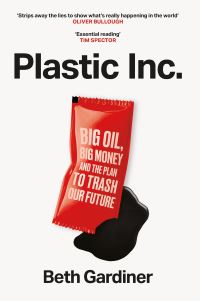
Plastic is everywhere in our daily lives. But the companies making it – oil and petrochemical giants like ExxonMobil and INEOS – are hiding in plain sight. Because for all the vivid coverage of where plastic ends up, there is remarkably little discussion of where it comes from. In a shocking investigative deep dive, packed with character-driven storytelling, award-winning journalist Beth Gardiner exposes the truth of the vast, rapacious industry flooding our world with plastic – and now preparing to make more than ever.
-
£22.00
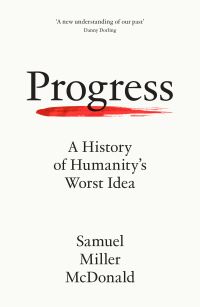
‘A spirited skewering of the idea that things can only get better’ The Guardian
‘A new understanding of our past’ Danny Dorling, author of Inequality and the 1%
________________________________
-
£16.99
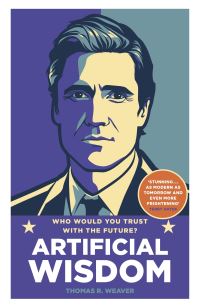
It’s 2050, a decade after a heatwave that killed four hundred million across the Persian Gulf, including journalist Marcus Tully’s wife. Now he must uncover the truth: was the disaster natural? Or is the weather now a weapon of genocide? A whistleblower pulls Tully into a murder investigation at the centre of an election battle for a global dictator, with a mandate to prevent a climate apocalypse. A former US President campaigns against the first AI politician for the position, but someone is trying to sway the outcome. Tully must convince the world to face the truth and make hard choices about the future of the species. But will humanity ultimately choose salvation over freedom, whatever the cost?
-
£16.99
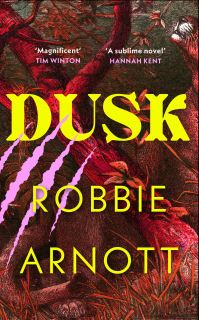
In the distant highlands, a puma named Dusk is killing shepherds. Down in the lowlands, twins Iris and Floyd are out of work, money and friends. When the twins hear that a bounty has been placed on Dusk, they reluctantly decide they have to join the dangerous hunt, for a chance to win. But as they journey up into this wild, haunted place, they discover there’s far more to the land and people of the highlands than they imagined. As they close in on their prey, Iris and Floyd are forced to reckon with conflicts both ancient and deeply personal.
-
£25.00
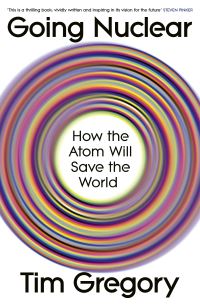
What if climate change isn’t an environmental challenge, but an energy challenge? In this visionary book, Dr Tim Gregory urges us to rethink the path to net zero. He argues that the solution to climate change lies not simply in replacing fossil fuels with renewables, but in fully embracing another energy source that emits zero carbon dioxide: nuclear power. Gregory dismantles the conventional wisdom that renewables are completely ‘green’ and ‘sustainable’, and exposes the limitations of wind and solar power, highlighting their unreliability and hidden fossil fuel dependency. He debunks myths surrounding nuclear waste and radiation, demonstrating that nuclear power is not only efficient, safe, and potent, but the most environmentally responsible way to harvest energy.
-
£22.00
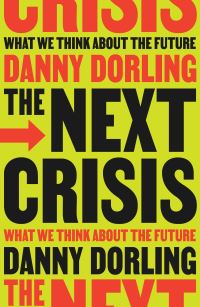
WHAT THE FUTURE LOOKS LIKE TO MOST PEOPLE. AND WHAT WE CAN DO ABOUT IT.
-
£22.00
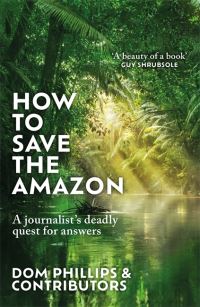
On 5 June 2022, award-winning journalist Dom Phillips was working on this book, alongside the indigenous expert Bruno Pereira, when they were both shot. They are believed to have been assassinated by one of the criminal networks whose ecological exploitation they were working to expose. As the world becomes more aware of the significance of the Amazon, home to nearly 400 billion trees, working in this vast region has become ever more dangerous for activists and journalists. Fires, land grabs, and the invasion of reserves have all spiked over recent decades, pushing the world’s biggest forest ever closer to a point of no return. A group of expert writers took up his partially completed manuscript, committed to his mission of uncovering the truth about deforestation and searching for solutions.
-
£16.99
Highways tend to be built across the easy routes and flat places, or the landscape is cleared away – logged, graded, levelled, tunnelled through – or the roadway lifted above it to streamline the journey. But to stick to these roads is to miss what else is out there. In her writing and activism, Rebecca Solnit has sought the back roads and the pathless places in order to celebrate indirect and unpredictable consequences, which, she argues are key to understanding power and the possibilities of change. Picking up where ‘Hope in the Dark’ left off, collected together here are Solnit’s best recent essays about the climate crisis, as well as her broader reflections on women’s rights, the fight for democracy, the trends in masculinity, and the rise of the far right in the West.
-
£25.00
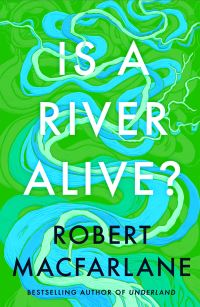
At the heart of ‘Is a River Alive?’ is a single, transformative idea: that rivers are not mere matter for human use, but living beings, who should be recognised as such in both imagination and law. Macfarlane takes the reader on a mind-expanding global journey into the history, futures, people and places of the ancient, urgent concept. Around the world, rivers are dying from pollution, drought and damming. But a powerful movement is also underway to recognize the lives and the rights of rivers, and to re-animate our relationships with these vast, mysterious presences whose landscapes we share. The young ‘rights of nature’ movement has lit up activists, artists, law-makers and politicians across six continents – and become the focus for revolutionary thinking about rivers in particular.
-
£22.00
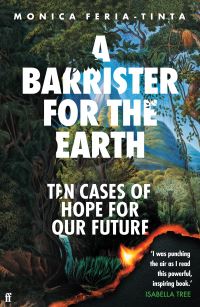
‘Can a planet have legal rights? Could it be defended in a court of law?’ A revolution is taking place. Around the world, ordinary people are turning to courts seeking justice for environmental damage. At the forefront of this movement, pioneering barrister Monica Feria-Tinta advocates not only for the people fighting for their homes and livelihoods, but also for those who have no voice: for rivers, forests and endangered species. In ‘A Barrister for the Earth’, Monica takes us behind the scenes of ten real cases – as she argues against the destruction of cloud forests in the world’s first Rights of Nature case, to holding Sovereign states to account for inaction in addressing climate change in a landmark win for the Torres Straight Islanders.
-
£18.99
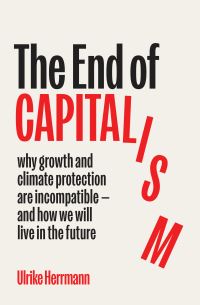
Capitalism has brought about many positive things. At the same time, however, it is ruining the climate and the environment, so that humanity’s very existence is now at risk. ‘Green growth’ is supposed to be the saviour, but economics expert and author Ulrike Herrmann disagrees. In this book, she explains in a clear and razor-sharp manner why we need ‘green shrinkage’ instead. Greenhouse gases are increasing dramatically and unchecked. This failure is no coincidence, because the climate crisis goes to the heart of capitalism. Prosperity and growth are only possible if technology is used and energy is utilised. Unfortunately, however, green energy from the sun and wind will never be enough to fuel global growth. The industrialised countries must therefore bid farewell to capitalism and strive for a circular economy in which only what can be recycled is consumed.
-
£20.00
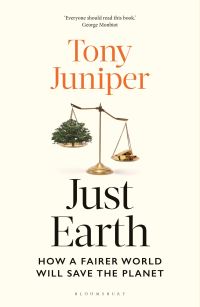
Environmentalist Tony Juniper CBE reveals in this eye-opening book that green technologies won’t work until we defeat the main obstacle blocking climate action – inequality.