Showing 1–12 of 20 resultsSorted by latest
-
£22.00
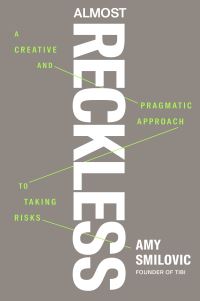
Amy Smilovic’s cult fashion brand, Tibi, was a thriving $70 million dollar business when she realized she was working towards someone else’s idea of success. So she threw out the rulebook of how things should be done and went with her gut instead. Today Tibi is more successful than ever, and all on Smilovic’s groundbreaking entrepreneurial terms. In ‘Almost Reckless’, she invites you to get comfortable with embracing smart risks in pursuit of your own vision. Sharing her story and drawing on her years of helping others identify their values and principles, Smilovic teaches you to hone your gut, and your trust in it.
-
£14.99
Two roads diverged in a wood, and I-
I took the one less travelled by,
And that has made all the difference.
-Robert Frost
-
£22.00
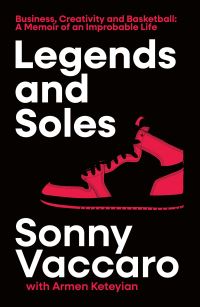
The brilliant autobiography from the ‘saviour of Nike’
-
£16.99
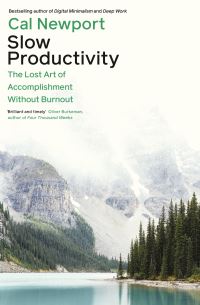
Hustle culture. Burnout. Quiet quitting. Today we’re either sacrificing ourselves on the altar of success or we’re rejecting the idea of ambition entirely. But it doesn’t have to be all or nothing. There is a way to create meaningful work as part of a balanced life, and it’s called ‘slow productivity’. Coined by Cal Newport, slow productivity is a revolutionary philosophy based on three simple principles: Do fewer things; Work at a natural pace; Obsess over quality. Examining the stories and habits of ancient and modern scientists, philosophers, artists and scholars who worked in this way, Newport reveals just how transformative the slow productivity approach can be to producing a meaningful body of work.
-
£14.99
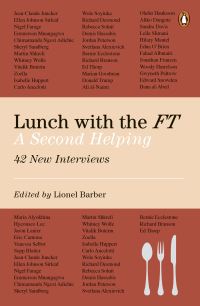
‘Lunch with the Financial Times’ has been a permanent fixture in the Financial Times for almost 25 years, featuring presidents, film stars, musical icons and business leaders from around the world. The column is now as well-established institution which has reinvigorated the art of conversation in the convivial, intimate environment of a long boozy lunch. On its 25th anniversary, this book showcases the most entertaining, incisive and fascinating interviews from the past five years including those with Edward Snowden, Bernie Ecclestone, Hilary Mantel, Sheryl Sandberg, Richard Branson, Rebecca Solnit, Emmerson Mnangagwa, Jordan Peterson, Nigel Farage, Woody Harrelson, Sepp Blatter, (pre-election) Donald Trump and Zoella, illustrated in full colour with James Ferguson’s famous portraits.
-
£10.99
Dale Vince never intended to start a business. Driven by a passion for sustainability, he left school aged 15 and became a New Age traveller, living for free in a wind-powered double decker bus. But after building his first wind turbine, he realised that to change the world he needed to be on the grid, not off it. In 1996 he founded green energy company Ecotricity and changed the landscape of UK energy forever. In this book, he shares his single-minded and uniquely purpose-orientated approach to business.
-
£9.99
Between the theories of business school and the real world of business, there is still a gap – one that can only be filled by experience, helped by the knowledge of someone who has already done it. Over a lifetime as one of the world’s most influential business leaders, Mark McCormack gathered more insights than could ever fit in one book: here he has distilled the strategies, techniques and wisdom that everyone needs to get organised, get ahead and gain and keep the competitive edge.
-
£9.99
What prevented a Russian general from launching a nuclear counterattack? How did a janitor best a Google supercomputer? Why do we never forget how to ride a bike? In this fascinating new book, business anthropologist Dr Simon Roberts breaks down the revolutionary idea of embodied knowledge: the information that is unconsciously picked up by our body for use in almost every area of our lives. Drawing on his own experience working with some of the world’s leading industry experts and looking at an incredible range of real-life examples and cutting-edge science, Roberts explains the various ways in which our body acquires, retains and employs information – and shows why we should trust the instincts that inform the most crucial decisions and actions in our life.
-
£9.99
As technology and artificial intelligence advances, are humans at risk of becoming obsolete? No. Humans have a unique ability to think around any problem and find fresh ways to frame it in different ways. This crucial skill is an overlooked aspect of what has made humans so successful as a species, but it’s one we must learn to do better to manage a complex future. Frames are mental models of the world that we use to understand problems, and come up with new or refined solutions. From Copernicus to the Wright Brothers to the discovery of biomarkers for PTSD, ‘Framers’ builds upon surprising and fascinating examples to show how we can choose the best frames and switch between them as the situation demands.
-
£10.99
A revelatory method that explains how we buy, sell, work and live. For over a century, anthropologists have immersed themselves in unfamiliar cultures, uncovering the hidden rituals that govern how people act. Now, a new generation of anthropologists are using these methods in a new context – to illuminate the behaviour of businesses and consumers around the globe. In ‘Anthro-Vision’, Gillian Tett reveals how anthropology can help make sense of the corporate world.
-
£9.99
Long dismissed as a technology of the distant future, artificial intelligence was a project consigned to the fringes of the scientific community. Then two researchers changed everything. One was a 64-year old computer science professor and the other was a 36-year-old neuroscientist and chess prodigy. Though they took very different paths, together they helped catapult AI to the forefront of our daily lives and created a business worth billions. This is the story of a technological revolution and the arms race it has sparked among companies such as Google, Microsoft, Facebook, and Elon Musk’s OpenAI. It is also the story of the struggle between international powers, shareholder value, the pursuit of scientific knowledge, and the very human concerns about privacy, security, bias and prejudice that AI raises.