Showing 1–12 of 17 resultsSorted by latest
-
£18.99
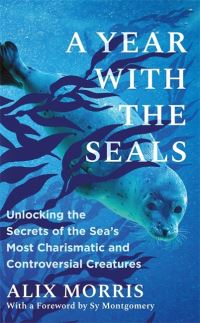
It might be their large, strangely human eyes or their dog-like playfulness, but seals have long captured people’s interest & affection, making them the perfect candidate for an environmental cause, as well as the subject of decades of study. Alix Morris spends a year with these magnetic creatures & brings them to life on the page, season by season, as she learns about their intelligence, their relationships with each other, their ecosystems, & the changing climate. Along with the enigmatic seals themselves, Morris gets to know all of the competing interests in the intense debate about the newly recovered seal populations in our coastal waters, from local fisherman whose catch is often diminished by savvy seals, to tribes who once relied on seal-hunting for food, clothing, & medicine, to seal rescue workers & biologists, to surfers & swimmers now encountering seal-hunting sharks in coastal waters.
-
£10.99
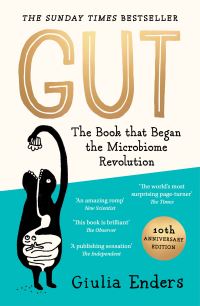
Our gut is as important as our brain or heart, yet we know very little about how it works and many of us are too embarrassed to ask questions. In this book, Giulia Enders breaks this taboo, revealing the latest science on how much our digestive system has to offer. From our miraculous gut bacteria – which can play a part in obesity, allergies, depression and even Alzheimer’s – to the best position to poo, this entertaining and informative health handbook shows that we can all benefit from getting to know the wondrous world of our inner workings.
-
£12.99
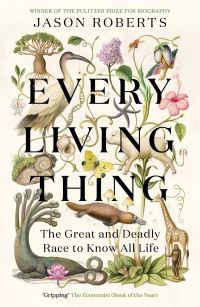
In the 18th century, two men dedicated their lives to the same daunting task: identifying and describing all life on Earth. Their approaches could not have been more different. Carl Linnaeus, a pious Swedish doctor with a huckster’s flair, believed that life belonged in tidy, static categories. Georges-Louis de Buffon, an aristocratic polymath and keeper of France’s royal garden, viewed life as a dynamic, ever-changing swirl of complexities. Both began believing their work to be difficult, but not impossible – how could the planet possibly hold more than a few thousand species? Stunned by life’s diversity, both fell far short of their goal. But in the process they articulated starkly divergent views on nature, on humanity’s role in shaping the fate of our planet, and on humanity itself. The rivalry between these two unique, driven individuals created reverberations that still echo today.
-
£30.00
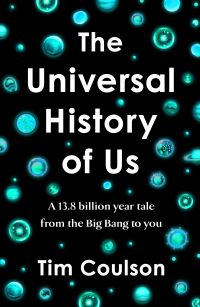
Do you ever find yourself wondering how we came to exist? Or how humans came to call planet Earth our home? In this simple and uncomplicated guide, Oxford Professor Tim Coulson uncovers the history of the entire universe from the Big Bang to human existence taking readers of all backgrounds on a journey that covers physics, chemistry, biology, the evolution of consciousness, through to the rise of humanity.
-
£10.99
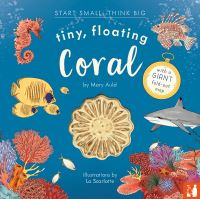
Start Small, Think Big is a primary-science picture book series that takes young readers from the small and familiar to new areas of knowledge where they need to think big! Tiny, Floating Coral is about the remarkable life of coral as it becomes a part of Australia’s Great Barrier Reef – the largest coral reef ecosystem on Earth. With a fold-out map.
-
£20.00
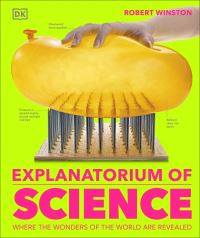
The only science encyclopedia for children you’ll ever need, with amazing photography that shows and explains how chemistry, physics, and biology work. Watch as mixtures merge and matter changes state. Discover how some chemical changes can be reversed, yet others can’t, and why some reactions go with a bang! See bacteria at work in the world around us, and even inside the human digestive system. Understand the tricks that light plays and unlock the secrets of electricity to find out how it powers the bulbs in your home. Whether it’s elements, evolution, or energy, the world of science is brought to life by stunning photographic explanations that answer the biggest and smallest questions about our Universe.
-
£22.00
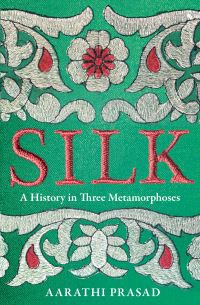
There is not just one story of silk.
In silk is science, history and mythology.
In silk is the future.
Aarathi Prasad’s Silk is a gorgeous new history weaving together the story of a unique material that has fascinated the world for millennia.
-
£12.99
Could you surf down an erupting volcano? Why don’t penguins’ feet freeze? Are you breathing the same air as Leonardo da Vinci? Are there any green mammals? If you’ve ever wondered why tigers have stripes and pineapples have spikes, how to escape quicksand, what would happen if the moon vanished, and why cats (nearly) always land on their feet – you’ve come to the right place.
-
£9.99
Slime is an ambiguous thing. It exists somewhere between a solid and liquid. It inspires revulsion even while it compels our fascination. It is a both a vehicle for pathogens and the strongest weapon in our immune system. Most of us know little about it and yet it is the substance on which our world turns. Slime exists at the interfaces of all things: between the different organs and layers in our bodies, and between the earth, water, and air in the environment. It is often produced in the fatal encounter between predator and prey, and it is a vital presence in the reproductive embrace between female and male. In this ground-breaking and fascinating book, Susanne Wedlich leads us on a scientific journey through the three billion year history of slime, from the part it played in the evolution of life on this planet to the way it might feature in the post-human future.
-
£10.99
Homo sapiens is the most successful, the most widespread and the most influential species ever to walk the Earth. In the blink of an evolutionary eye we have spread around the globe, taken control of Earth’s biological and mineral resources, transformed the environment, discovered the secrets of the universe and travelled into space. Yet just 7 million years ago, we were just another species of great ape making a quiet living in the forests of East Africa. So how did we get from there to here? ‘Human Origins’ recounts the most astonishing evolutionary tale ever told.
-
£12.99
‘The Musical Human’ takes us on an exhilarating journey across the ages – from Bach to BTS and back – to explore the vibrant relationship between music and the human species. With insights from a wealth of disciplines, world-leading musicologist Michael Spitzer renders a global history of music on the widest possible canvas, looking at music in our everyday lives; music in world history; and music in evolution, from insects to apes, humans to AI. Through this journey we begin to understand how music is central to the distinctly human experiences of cognition, feeling and even biology, both widening and closing the evolutionary gaps between ourselves and animals in surprising ways. The book boldly puts the case that music is the most important thing we ever did; it is a fundamental part of what makes us human.
-
£25.00
A cartography of fragrance that charts the botany and geography of perfume composition.