Showing 109–120 of 134 resultsSorted by latest
-
£12.99
Four great princes – Henry VIII of England, Francis I of France, Charles V of Spain and Suleiman the Magnificent – were born within a single decade. Each looms large in his country’s history and, in this book, John Julius Norwich broadens the scope and shows how, against the rich background of the Renaissance and destruction of the Reformation, their wary obsession with one another laid the foundations for modern Europe. Individually, each man could hardly have been more different – from the scandals of Henry’s six wives to Charles’s monasticism – but, together, they dominated the world stage.
-
£8.99
Diana, Princess of Wales electrified the world with her charm, beauty and humanitarian work. But there is much more to the People’s Princess than her coy smile and alluring eyes. Here, Tina Brown uncovers the glamour and mystery of Diana’s world as she reveals the Princess as you have never seen her before.
-
£25.00
Drawing on extensive access to the Royal Family’s inner circle, Sally Bedell Smith delivers unprecedented insights into Prince Charles, a man who possesses a fiercely independent spirit, and yet has spent his life in waiting for the ultimate role.
-
£8.99
As we celebrate her diamond jubilee, this biography of Queen Elizabeth II provides a look at one of the most fascinating, engimatic and admired women in the world. With exclusive access to the Queen’s personal letters, close friends and associates, this intimate biography is a treasure trove of fresh insights into the Queen’s life.
-
£12.99
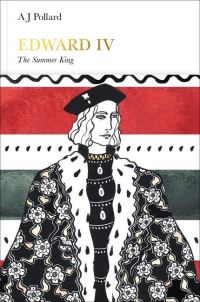
In 1461 Edward, Earl of March, a handsome 18-year old of massive charisma and ability, usurped the English throne from his vacant Lancastrian predecessor Henry VI. Ten years on, following outbreaks of civil conflict that culminated in him losing, then regaining the crown, he had finally secured his kingdom. The years that followed witnessed a period of rule that has been described as a golden age: a time of peace and economic and industrial expansion, which saw the establishment of a style of strong monarchy that the Tudors would make their own. Yet, argues A.J. Pollard, Edward, who squandered his undoubted talents in a frenzy of sexual and epicurean excess, was a man of limited vision, his reign remaining to the very end the narrow rule of a victorious faction in civil war.
-
£10.00
Biographer and novelist A.N. Wilson, whose most recent work on the life of Queen Victoria was an enormous critical and commercial success, turns his clear eye to our own Queen, Elizabeth II, as she turns 90. In this unusual and vibrant examination of the life and times of Britain’s most iconic living figure, Wilson considers the history of the monarchy, drawing a line between Victoria, the murder of the Romanovs, and the bloody history of Europe in the 20th century, examining how and why the Royal Family has survived. He paints a vivid portrait of ‘Lilibet’ the woman, and of her reign, throughout which she has remained stalwart, unmoving, a trait some regard as dullness, but which Wilson argues is the key to her survival.
-
£25.00
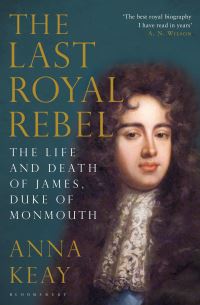
James, Duke of Monmouth, the adored illegitimate son of Charles II, was born in exile the very year that his grandfather was executed and the English monarchy abolished. Snatched from his mother on his father’s orders, James emerged from a childhood in the boarding houses of Rotterdam to command the ballrooms of London, the brothels of Covent Garden and the battlefields of Flanders. For 36 years he would light up the firmament. He inspired delight and disgust, adulation and abhorrence and, in time, love and loyalty almost beyond fathoming. Anna Keay brings to life the warm, courageous and handsome Duke of Monmouth, a man who by his own admission ‘lived a very dissolute and irregular life’, but who was prepared to risk everything for honour and justice.
-
£12.99
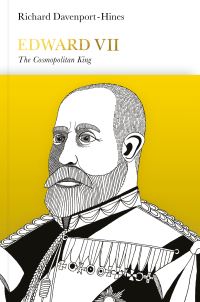
Like his mother Queen Victoria, Edward VII defined an era. Both reflected the personalties of their central figures: hers grand, imperial and pretty stiff; his no less grand, but much more relaxed and enjoyable. This book conveys Edward’s distinct personality and significant influences. To the despair of his parents, he rebelled as a young man, conducting many affairs and living a life of pleasure. But as king he made a distinct contribution to European diplomacy and – which is little known – to London, laying out the Mall and Admiralty Arch.
-
£30.00
Frederick the Great, King of Prussia, dominated the 18th century in the same way that Napoleon dominated the start of the 19th – a force of nature, a caustic, ruthless, brilliant military commander, a monarch of exceptional energy and talent, and a knowledgeable patron of artists, architects and writers, most famously Voltaire. From early in his reign he was already a legendary figure – fascinating even to those who hated him. Tim Blanning’s biography recreates a remarkable era, a world which would be swept away shortly after Frederick’s death by the French Revolution. Equally at home on the battlefield or in the music room at Frederick’s extraordinary miniature palace of Sanssouci, Blanning draws on a lifetime’s obsession with the 18th century to create a work that is in many ways the summation of all that he has learned in his own rich and various career.
-
£10.99
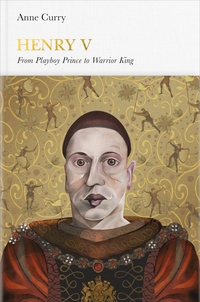
Anne Curry explores how Henry’s hyperactive efforts to expunge his past failures, and his experience of crisis – which threatened to ruin everything he had struggled to achieve – defined his kingship, and how his astonishing success at Agincourt transformed his standing in the eyes of his contemporaries, and of all generations to come.
-
£10.99
Just as this book is being published, Elizabeth II will become the longest serving monarch who ever sat on the English or British throne. Yet her personality and influence remain elusive. This book, by a senior politician who has spent significant periods of time in her company, and is also a distinguished historian, portrays her more credibly than any other yet published.
-
£10.99
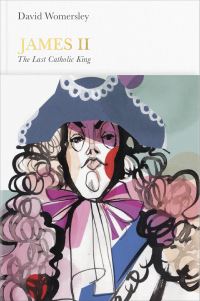
The short, action-packed reign of James II (1685-88) is generally seen as one of the most catastrophic in British history. James managed, despite having access to tremendous reserves of good will and deference, to so alienate his supporters that he had to flee for his life. And yet, most of that life was spent not as king but first as heir to Charles II, as Duke of York (after whom New York is named) and then in the last part of his life as the first Jacobite ‘pretender’, starting a problem that would haunt Britain’s rulers for generations.