Paths of Death and Glory
£9.99Charles Whiting was a prolific British novelist and military historian. He wrote under his own name and a variety of pseudonyms including Duncan Harding, Leo Kessler and K.N. Kostov.

Showing 25–36 of 38 resultsSorted by latest
Charles Whiting was a prolific British novelist and military historian. He wrote under his own name and a variety of pseudonyms including Duncan Harding, Leo Kessler and K.N. Kostov.
From his earliest days Winston Churchill was an extreme risk taker and he carried this into adulthood. Today, he is widely hailed as Britain’s greatest wartime leader and politician. Deep down though, he was foremost a warlord. Just like his ally Stalin, and his arch enemies Hitler and Mussolini, Churchill could not help himself and insisted on personally directing the strategic conduct of World War II. In this fascinating book, historian Anthony Tucker-Jones explores Churchill as a military commander, assessing how the military experiences of his formative years shaped him for the difficult military decisions he took in office.
The Spartan hoplite enjoys unquestioned currency as history’s greatest fighting man. The last stand at Thermopylae made the Spartans legends in their own time, famous for their ability to endure hardship, control their emotions, and to never surrender – even in the face of impossible odds, even when it meant certain death. Was this reputation earned? Or was it simply the success of a propaganda machine that began turning at Thermopylae in 480 BC? Covering Sparta’s full classical history from the polis’ (city-state) foundation to its final subsumption by Rome in the first century BC, this book examines the myth of Spartan warrior supremacy, painting a very different picture of Spartan warfare – punctuated by frequent and heavy losses.
Bomber Command is Max Hasting’s in-depth account of the RAF’s bombing offensive, one the most controversial struggles of the Second World War.
In this visual history book, purpose-made maps reveal the full story of the Second World War. From the rise of the Axis powers to the aftermath of the atomic bomb attack on Hiroshima, this book shows how each step of the action took place. Each map is full of detail, charting the progress of the key events of World War II on land, sea, and air, including the Dunkirk evacuation, the attack on Pearl Harbor, the D-Day landings, the siege of Stalingrad, and the war in the Pacific. As well as purpose-made maps, historical maps from both Allied and Axis countries give compelling insights into the course of the war.
This title tells the story of a handful of men who remember the time, more than 70 years ago when Germany swept through Europe. The veterans in this book saw action in the first battles on the front line, and fought in the last ditch defence of Dunkirk.
Combining fast-paced accounts of battles with rich cultural background and the latest scholarship, Frank McLynn brings vividly to life the strange world of the Mongols, describes Temujin’s rise from boyhood outcast to Genghis Khan, and provides the most accurate and absorbing account yet of one of the most powerful men ever to have lived.
‘The Spy with 29 Names’ is a gripping account of the exploits of Juan Pujol, the most extraordinary double agent of the Second World War, who was awarded both an Iron Cross by Germany and an MBE by Britain. After the Spanish Civil War, determined to fight the spread of totalitarianism, Pujol moved to Lisbon with his wife, persuading the German intelligence services to take him on. But in fact, he was determined all along to work for the British, whom he saw as the exemplar of democracy and freedom. Seeing the impact of the disinformation this Quixotic freelance agent was feeding to the Germans, MI5 brought him to London, where he created a bizarre fictional network of spies – 29 of them – that misled the entire German high command, including Hitler himself.
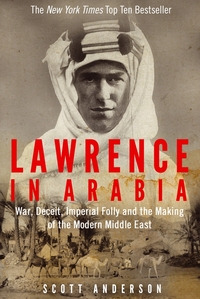
This is a thrilling and revelatory narrative of one of the most epic and consequential periods in 20th century history – the Arab Revolt, and the secret game to control the Middle East.
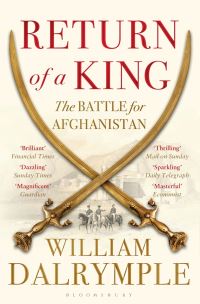
In the spring of 1839 British forces invaded Afghanistan for the first time, re-establishing Shah Shuja on the throne and ushering in a period of conflict over the territory still unresolved today. ‘The Return of a King’ is the definitive analysis of the first Afghan war.
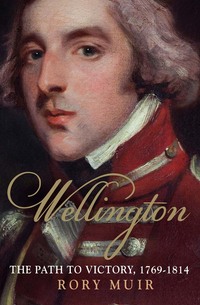
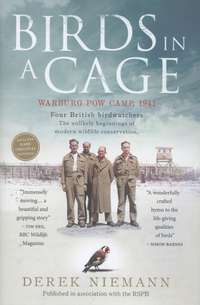
This is the inspiring story of how a passion for birds enabled four young men to escape the horror of internment in a German PoW camp – and brought about an extraordinary moment of cooperation and mutual understanding between them and their captors.
No products in the basket.
Notifications