The AGI Chronicles
£25.00The inside story on the race for artificial general intelligence, perhaps the most significant invention of the century.
Showing 1–16 of 19 resultsSorted by latest

The inside story on the race for artificial general intelligence, perhaps the most significant invention of the century.

AI is the greatest threat to our existence that we have ever faced. The founder of the field of AI risk, Eliezer Yudkowsy, and his successor at the Machine Intelligence Research Institute, Nate Soares, explain why superintelligent AI is a global suicide bomb and call for an immediate halt to its development.

The far right is on the march again – but this time it’s different from anything we’ve seen before. A new, apocalyptic alliance of religious fundamentalists, billionaire Silicon Valley tech kings and ethno-nationalists is on the move. They’re united in their belief that some kind of cleansing cataclysm is coming, and they welcome a future of shocks, scarcity and collapse, convinced they’ll be among the saved on the other side. In this blistering reckoning with our age, Naomi Klein and Astra Taylor take us deep into this man-made Armageddon complex – and show us how to resist it. Around the globe, they investigate how those who are making our world unliveable through climate chaos and job-consuming AI are preparing to protect themselves from the fallout, whether it’s by repairing to luxurious private islands for the super-rich, rocketing off to Mars or bunkering nations against a dehumanized ‘other’.

What should the next generation learn – and what should they stop worrying about – in a world transformed by artificial intelligence? AI is rewriting the rules in the classroom, the job market and the workplace, leaving parents, teachers, students and all types of workers unsure about how best to prepare for what lies ahead. In this work, globally renowned economist Daniel Susskind cuts through the outdated advice to show us what young people actually need to succeed now.

When English mathematician Matthew Watkins went to San Francisco to study an early version of ChatGPT, he expected dry technical work. Instead, he uncovered a series of ‘rare tokens’ that made the system go haywire. Some produced gibberish. Others turned hostile. One trigger word – petertodd – sent the system into what looked like full-blown paranoia. Was it a simple bug? A trail of breadcrumbs left by whistleblowers? Or a glimpse into how AI really thinks? Watkins’s search for answers pulls him into the secretive world of AI safety research. In this rapidly expanding domain, the line between science and belief blurs: billionaires play god while rogue chatbots win fortunes and groupies. What starts as a computer mystery becomes something much bigger: both a window into the eerie inner worlds of LLMs and a cryptic clue to what might be history’s greatest power grab. The system has since been patched.

We live in the age of data. Over the past century, rapidly evolving technologies have transformed every aspect of our society, in troubling and seemingly unstoppable ways. Political campaigns have been reduced to attention-mining algorithms, multinational corporations control public discourse, and the era of the liberal nation-state seems to be coming to an end, replaced by the rule of artificial intelligence. Today, power is maintained through mystification: machines, we are told, know what humans cannot. Yet nothing about any of this was, or is, inevitable. In this account of how technology has corroded democracy around the world, prizewinning historian Jill Lepore traces the rise and fall of what she calls the ‘Artificial State’.

Winner of the Financial Times and McKinsey Business Book of the Year Award 2015
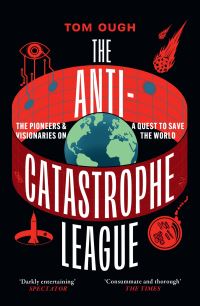
'Consummate and thorough' – The Times
'Darkly entertaining' – The Spectator
A superbly written work of narrative non-fiction by an exciting new talent, The Anti-Catastrophe League is a brilliant study of the people and their teams who are trying to save the world.
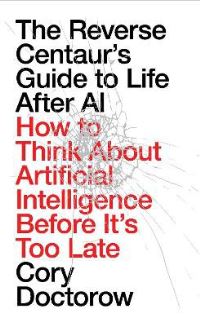
A provocative guide to what's good, bad, and (profoundly) stupid about AI, by the bestselling author of Enshittification.
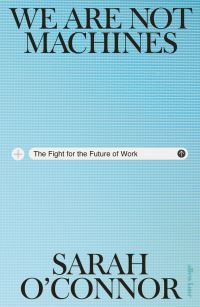
A tsunami of change, we are told, is sweeping the economy as robots and AI threaten to take over tasks done by humans. But while we worry that we’re robotizing our work, what if the real risk is that we’re robotizing ourselves? When prize-winning Financial Times journalist Sarah O’Connor set out to investigate what was happening on the front lines of technological change, she found people who weren’t losing their jobs to machines, but who felt they were losing something else instead. From translators forced to edit AI output to university graduates interviewed by software and warehouse workers surrounded by robots, she heard stories of work becoming lonelier, less creative, less human. But O’Connor also found hopeful stories of jobs being made better, safer and more enjoyable – where workers haven’t rejected the new tools, but instead have learned to control them.
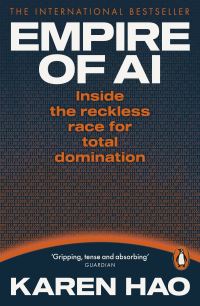
When long-time AI expert and journalist Karen Hao first began covering OpenAI in 2019, she thought they were the good guys. Founded as a non-profit with safety enshrined as its core mission, it was meant, its leader Sam Altman told us, to act as a check against more purely market forces. But the core truth of this massively disruptive sector is that it requires an unprecedented amount of proprietary resources: the ‘compute’ power of scarce high-end chips, the sheer volume of data that needs to be amassed at scale, the humans on the ground ‘cleaning it up’ for sweatshop wages throughout the Global South, and a truly alarming spike in the need for energy and water underlying everything. In this book, Hao recounts the meteoric rise of OpenAI and shows us the sinister impact that this industry is having on society.

Knowing how to speak to AI – and how not to – is a skill that everyone now needs. This book will help the reader understand how to make the most of these technologies, without succumbing to new powers of manipulation and control. Hundreds of millions of people now talk to AI like ChatGPT every day. They organise their finances and holidays, ask advice, seek therapy and find love – via machines. This is one of the biggest and fastest technological changes in history – but most people still don’t really understand how AI works, how to make the most of it – or what the dangers are. As some people use it to turbo-charge their productivity at work, others are falling into dangerous conspiracies, delusions and psychosis. Tech commentator Jamie Bartlett takes the reader inside the machine: showing how we can stay in control of our powerful new companions, even as they are changing the way we live, feel, and think.

Even by the standards of an industry stacked with so-called visionary leaders, Demis Hassabis is recognized as a special case. His journey to pursue the dream of super-human intelligence has taken him from working-class origins in North London to the founding of revolutionary AI company DeepMind to a Nobel Prize. Unlike many of his Silicon Valley peers, his goals are not money and power but scientific enlightenment. For the past several years, Sebastian Mallaby has had unprecedented access to Hassabis and DeepMind. In this book, he offers an unrivalled window into the AI revolution, a transformation potentially more significant than any since we gained a capacity for abstract thought 70,000 years ago.
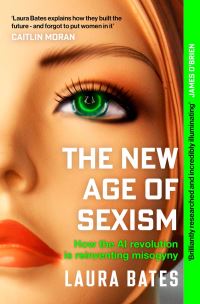
How we’re sleepwalking into a new era of misogyny: an urgent and shocking new book from bestselling author and feminist activist Laura Bates
Â
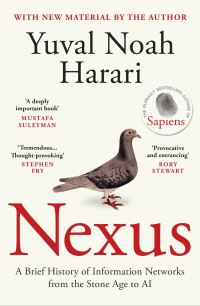
For the last 100,000 years, humans have accumulated enormous power. But despite all our discoveries, inventions and conquests, we now find ourselves in an existential crisis. The world is on the verge of ecological collapse. Misinformation abounds. And we are rushing headlong into the age of AI – a new information network that threatens to annihilate us. If we are so wise, why are we so self-destructive? ‘Nexus’ considers how the flow of information has shaped us, and our world. Taking us from the Stone Age through the Bible, early modern witch-hunts, Stalinism, Nazism and the resurgence of populism today, Yuval Noah Harari asks us to consider the complex relationship between information and truth, bureaucracy and mythology, wisdom and power. He explores how different societies and political systems have wielded information to achieve their goals, for good and ill.

The former President & CFO of SoftBank Group International takes us inside the elite, high-stakes world of tech investment.
No products in the basket.