Showing 1–12 of 16 resultsSorted by latest
-
£10.99
Humans did not make history – we played host. This humbling and revelatory book shows how infectious disease has shaped humanity at every stage, from the first success of Homo sapiens over the equally intelligent Neanderthals to the fall of Rome and the rise of Islam.
-
£20.00
What do we really know about our cousins, the Neanderthals? For over a century we saw Neanderthals as inferior to Homo Sapiens. More recently, the pendulum swung the other way and they are generally seen as our relatives – not quite human, but similar enough, and still not equal. Now, thanks to an ongoing revolution in palaeoanthropology in which he has played a key part, Ludovic Slimak shows us that they are something altogether different – and they should be understood on their own terms rather than by comparing them to ourselves. As he reveals in this book, the Neanderthals had their own history, their own rituals, their own customs. Their own intelligence, very different from ours. Slimak has travelled around the world for the past thirty years to uncover who the Neanderthals really were.
-
£12.99
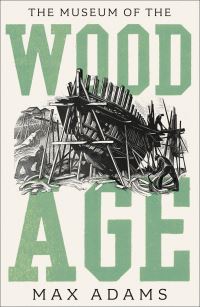
As a material, wood has no equal in strength, resilience, adaptability and availability. It has been our partner in the cultural evolution from woodland foragers to engineers of our own destiny. Tracing that partnership through tools, devices, construction and artistic expression, Max Adams casts light on our own history as an imaginative, curious, resourceful species. He begins with the material properties of various species of wood, and the influence of six basic devices – wedge, inclined plane, screw, lever, wheel, axle and pulley – before investigating the myriad ways in which wood has been worked across the millennia of human history.
-
£10.99
Sarah Chaney takes us on an eye-opening and surprising journey into the history of science, revisiting the studies, landmark experiments and tests that proliferated from the early 19th century to find answers to the question: what’s normal? These include a census of hallucinations – and even a UK beauty map (which claimed the women in Aberdeen were ‘the most repellent’). On the way she exposes many of the hangovers that are still with us from these dubious endeavours, from IQ tests to the BMI. Interrogating how the notion and science of standardisation has shaped us all, as individuals and as a society, this book challenges why we ever thought that normal might be a desirable thing to be.
-
£22.00
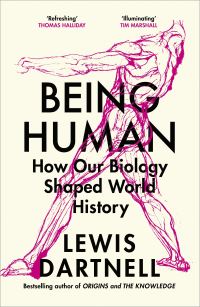
Powerful yet dextrous, instinctive yet thoughtful, we are expert communicators and innovators. Our exceptional abilities have created the civilisation we know today. But we’re also deeply flawed. Our bodies break, choke and fail, whether we’re kings or peasants. Diseases thwart our boldest plans. Our psychological biases have been at the root of terrible decisions in both war and peacetime. This extraordinary contradiction is the essence of what it means to be human – the sum total of our frailties and our faculties. And history has played out in the balance between them. Now, Lewis Dartnell tells our story through the lens of this unique, capricious and fragile nature. He explores how our biology has shaped our relationships, our societies, our economies and our wars, and how it continues to challenge and define our progress.
-
£10.99
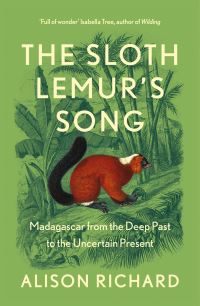
‘Full of wonder and forensic intelligence’ Isabella Tree, author of Wilding
A moving account of Madagascar told by a researcher who has spent over fifty years investigating the mysteries of this remarkable island.
-
£27.99
From tools and devices to construction and artistic expression, Max Adams explores wood – the material that shaped human history.
-
£10.99
A journey through the evolution of Britain’s prehistoric landscape, and an insight into the lives of its inhabitants, in fifteen scenes.
-
£12.99
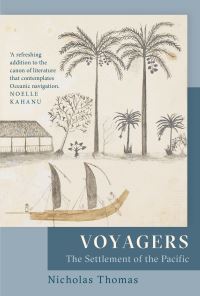
The extraordinary sixty-thousand-year history of how the Pacific islands were settled.
-
£12.99
‘The Musical Human’ takes us on an exhilarating journey across the ages – from Bach to BTS and back – to explore the vibrant relationship between music and the human species. With insights from a wealth of disciplines, world-leading musicologist Michael Spitzer renders a global history of music on the widest possible canvas, looking at music in our everyday lives; music in world history; and music in evolution, from insects to apes, humans to AI. Through this journey we begin to understand how music is central to the distinctly human experiences of cognition, feeling and even biology, both widening and closing the evolutionary gaps between ourselves and animals in surprising ways. The book boldly puts the case that music is the most important thing we ever did; it is a fundamental part of what makes us human.
-
£18.99
Twelve thousand years ago, we humans fell into a trap. This volume tells the story of how wheat took over the world; how an unlikely marriage between a god and a bureaucrat created the first empires; and how war, famine, disease, and inequality became a part of the human condition.
-
£4.99
This is his haunting account of visiting the mysterious stone statues of Easter Island, showing how a remote civilization destroyed itself by exploiting its own natural resources – and why we must heed this warning.