The Lumumba plot
£30.00A spellbinding work of history that reads like a Cold War spy thriller-about the U.S.-sanctioned plot to assassinate the democratically elected leader of the newly independent Congo
We recently launched our new website and are facing a few teething issues. If you see any problems please contact us.
We recently launched our new website and are facing a few teething issues. If you see any problems please contact us.

Showing 13–24 of 26 resultsSorted by latest
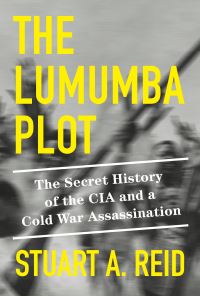
A spellbinding work of history that reads like a Cold War spy thriller-about the U.S.-sanctioned plot to assassinate the democratically elected leader of the newly independent Congo
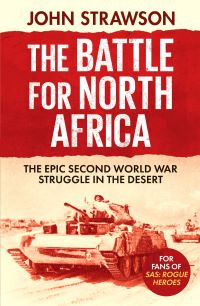
In showing how the nature and conduct of battles developed during this three-year desert campaign, John Strawson brings together the strategic considerations, the changing tactics and the impressions of those who did the actual fighting. The soldiers of many nations give their impressions.
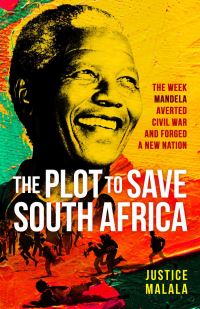
The compelling story of nine days that saved South Africa from civil war
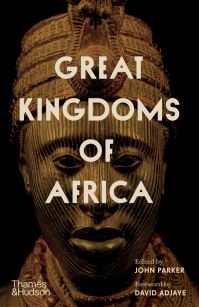
Here is an essential overview of great kingdoms in African history and their legacies, written by world-leading experts. From the ancient Nile Valley to the savannas of medieval West Africa, the highlands of Ethiopia and on to the forests, lakes and grasslands to the south, African civilizations have given rise to some of the world’s most impressive kingdoms. Yet Africa’s history is often little known beyond the devastation wrought by the slave trade and European colonial rule. In this book, nine leading historians of Africa take a fresh look at these great kingdoms and empires over five thousand years of recorded history.
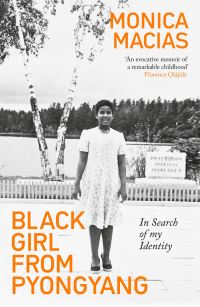
The extraordinary true story of a West African girl’s upbringing in North Korea under the protection of President Kim Il Sung
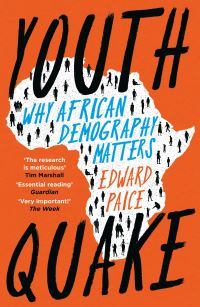
A study of Africa’s demographics – its youth and growth – and what they mean for the continent, today and into the future.
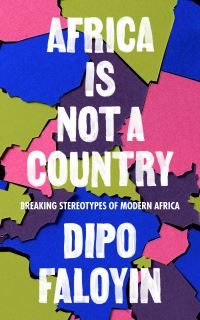
‘Africa Is Not A Country’ is a kaleidoscopic portrait of modern Africa, that pushes back against harmful stereotypes to tell a more comprehensive story. So often Africa is depicted simplistically as an arid red landscape of famines and safaris, uniquely plagued by poverty and strife. In this funny and insightful book, Dipo Faloyin offers a much-needed corrective, creating a fresh and multifaceted view of this vast continent. To unspool this inaccurate narrative, ‘Africa Is Not A Country’ looks to a wide range of subjects, from chronicling urban life in Lagos and the lively West African rivalry over who makes the best Jollof rice, to the story of democracy in seven dictatorships and the dangers of white saviourism and harmful stereotypes in popular culture. It examines how each African country was formed.
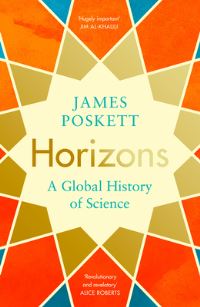
We are told that modern science was invented in Europe, the product of great minds like Nicolaus Copernicus, Isaac Newton, Charles Darwin and Albert Einstein. But this is wrong. Science is not, and has never been, a uniquely European endeavour. Copernicus relied on mathematical techniques borrowed from Arabic and Persian texts. When Newton set out the laws of motion, he relied on astronomical observations made in Asia and Africa. When Darwin was writing On the Origin of Species, he consulted a sixteenth-century Chinese encyclopaedia. And when Einstein was studying quantum mechanics, he was inspired by the Bengali physicist, Satyendra Nath Bose. ‘Horizons’ pushes beyond Europe, exploring the ways in which scientists from Africa, America, Asia and the Pacific fit into the history of science, and arguing that it is best understood as a story of global cultural exchange.
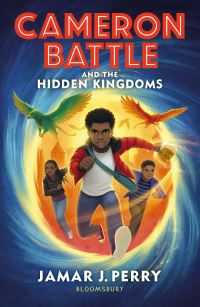
Cameron Battle grew up reading The Book of Chidani, cherishing stories about the fabled kingdom that cut itself off from the world to save the Igbo people from danger. Passed down over generations, the Book is Cameron’s only connection to his parents, who disappeared one fateful night two years ago. Ever since, his grandmother has kept the Book locked away, but it calls to Cameron. When he and his best friends, Zion and Aliyah, decide to open it again, they are magically transported to Chidani. Instead of a land of beauty and wonder, they find a kingdom in extreme danger, as the queen’s sister seeks to destroy the barrier between worlds. The people of Chidani have been waiting for the last Descendant to return and save them. Is Cameron ready to be the hero they need?
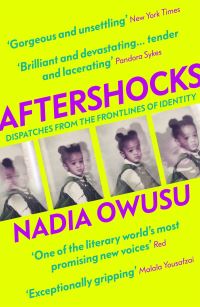
When Nadia Owusu was two years old her mother abandoned her and her baby sister and fled from Tanzania back to the US. When she was thirteen her beloved Ghanaian father died of cancer. She and her sister were left alone, with a stepmother they didn’t like, adrift. Nadia Owusu is a woman of many languages, homelands, and identities. She grew up in Rome, Dar-es-Salaam, Addis Ababa, Kumasi, Kampala, and London. And for every new place there was a new language, a new identity and a new home. At times she has felt stateless, motherless, and identity-less. At others, she has had multiple identities at war within her. It’s no wonder she started to feel fault lines in her sense of self. It’s no wonder that those fault lines eventually ruptured. ‘Aftershocks’ is the account of how she hauled herself out of the wreckage.
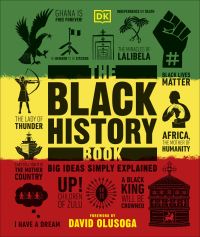
Discover the rich and complex history of the peoples of Africa, and the struggles and triumphs of Black communities worldwide. With profiles of key people, movements, and events, ‘The Black History Book’ brings together accounts of the most significant ideas and milestones in Black history and culture. This vital and thought-provoking book presents a bold and accessible overview of the history of Africa and the African diaspora – from the earliest human migrations to modern Black communities.
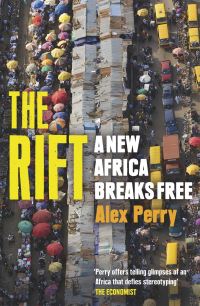
Taking the Great Rift Valley – the geological fault that will eventually tear Africa in two – as his central metaphor, Alex Perry explores the split between a resurgent Africa and a world at odds with its rise. Africa has long been misunderstood – and abused – by outsiders. Perry travelled the continent for most of a decade, meeting with entrepreneurs and warlords, professors and cocaine smugglers, presidents and jihadis, among many others. Opening with a devastating investigation into a largely unreported war crime in Somalia in 2011, he finds Africa at a moment of furious self-assertion.
No products in the basket.
Notifications