Showing 37–48 of 229 resultsSorted by latest
-
£7.99
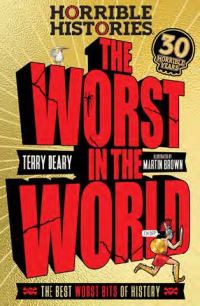
The Worst in the World is packed full of the foulest gold, silver and bronze medal winning entries in horrible categories such as diseases, battles, emperors, punishments, schools and more. Read all about the most horrible top threes across history (in one man’s opinion), they’re the absolute worst!
-
£25.00
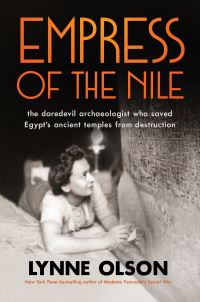
The riveting story of a true-life female Indiana Jones: an archaeologist who survived the Nazis and then saved Egypt’s ancient temples. In the 1960s, the world’s attention was focused on a nail-biting race against time: fifty countries had contributed nearly a billion dollars to save a dozen ancient Egyptian temples from drowning in the floodwaters of the gigantic new Aswan High Dam. It was a project of unimaginable size and complexity that required the fragile sandstone temples to be dismantled, stone by stone, and rebuilt on higher ground. But the massive press coverage of this unprecedented rescue effort completely overlooked the gutsy French archaeologist who made it all happen. Without the intervention of Christiane Desroches-Noblecourt, the temples would now be at the bottom of a gigantic reservoir.
-
£20.00
‘A Terribly Serious Adventure’ traces the friendships and the rivalries, the shared preoccupations and the passionate disagreements of Oxford’s most brilliant thinkers. Far from being stuck in a world of tweed, pipes and public schools, the Oxford philosophers drew on their wartime lives as soldiers and spies, conscientious objectors and prisoners of war in creating their greatest works, works that are original in both thought and style, true masterpieces of British modernism. Nikhil Krishnan brings his knowledge and understanding of philosophy to bear on the lives and intellectual achievements of a large and lively cast of characters. Together, they stood for a compelling moral vision of philosophy that is still with us today.
-
£18.99
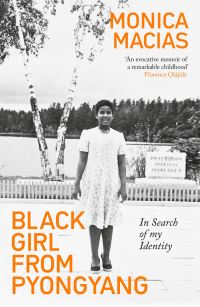
The extraordinary true story of a West African girl’s upbringing in North Korea under the protection of President Kim Il Sung
-
£20.00
Across the whole of Nazi-ruled Europe the experience of occupation was sharply varied. Some countries – such as Denmark – were allowed to run themselves within tight limits. Others – such as France – were constrained not only by military occupation but by open collaboration. In a historical moment when Nazi victory seemed permanent and irreversible, the question ‘why resist?’ was therefore augmented by ‘who was the enemy?’. ‘Resistance’ is an extraordinarily powerful, humane and haunting account of how and why all across Nazi-occupied Europe some people decided to resist the Third Reich.
-
£12.99
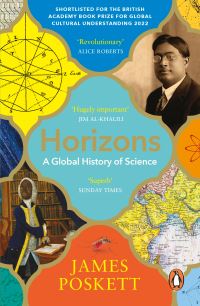
We are told that modern science was invented in Europe, the product of great minds like Nicolaus Copernicus, Isaac Newton, Charles Darwin and Albert Einstein. But this is wrong. Science is not, and has never been, a uniquely European endeavour. Copernicus relied on mathematical techniques borrowed from Arabic and Persian texts. When Newton set out the laws of motion, he relied on astronomical observations made in Asia and Africa. When Darwin was writing On the Origin of Species, he consulted a sixteenth-century Chinese encyclopaedia. And when Einstein was studying quantum mechanics, he was inspired by the Bengali physicist, Satyendra Nath Bose. ‘Horizons’ pushes beyond Europe, exploring the ways in which scientists from Africa, America, Asia and the Pacific fit into the history of science, and arguing that it is best understood as a story of global cultural exchange.
-
£25.00
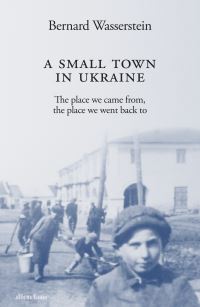
Decades ago, the historian Bernard Wasserstein set out to uncover the hidden past of the town 40 miles west of Lviv where his family originated: Krakowiec (Krah-KOV-yets). In this work he recounts its dramatic and traumatic history. ‘I want to observe and understand how some of the great forces that determined the shape of our times affected ordinary people.’ The result is an exceptional, often moving book. Wasserstein traces the arc of history across centuries of religious and political conflict, as armies of Cossacks, Turks, Swedes and Muscovites rampaged through the region.
-
£25.00
The story of how the nations of Europe spied on Hitler’s Third Reich in the tense years of appeasement leading up to the Second World War.
-
£18.99
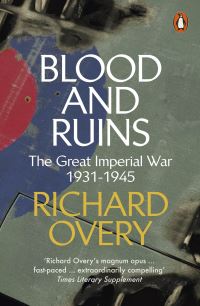
Richard Overy sets out to recast the way in which we view the Second World War and its origins and aftermath. He argues that this was the ‘great imperial war’, a violent end to almost a century of global imperial expansion which reached its peak in the ambitions of Italy, Germany and Japan in the 1930s and early 1940s, before descending into the largest and costliest war in human history and the end, after 1945, of all territorial empires. How war on a huge scale was fought, supplied, paid for, supported by mass mobilization and morally justified forms the heart of this account. Above all, Overy explains the bitter cost for those involved in fighting, and the exceptional level of crime and atrocity that marked these imperial projects, the war and its aftermath. This war was as deadly for civilians as it was for the military, a war to the death over the future of the global order.
-
£30.00
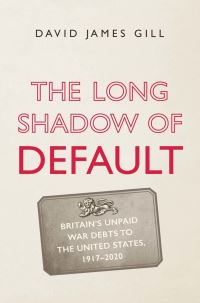
Rethinking the causes and consequences of Britain’s default on its First World War debts to the United States of America
-
£9.99
An ex-soldier and recovering alcoholic living quietly in Somerset, Stephen Rose has just begun to form a bond with the daughter he barely knows when he receives a summons – to an inquiry into an incident during the Troubles in Northern Ireland. It is the return of what Stephen hoped he had outdistanced. Above all, to testify would jeopardise the fragile relationship with his daughter. And if he loses her, he loses everything. Instead, he decides to write her an account of his life; a confession, a defence, a love letter. Also a means of buying time. But time is running out, and the day comes when he must face again what happened in that faraway summer of 1982.
-
£20.00
A thoroughly researched assessment of how China’s economic success continues to be shaped by the communist ideology of Chairman Mao