Showing 25–36 of 229 resultsSorted by latest
-
£25.00
The year is 1933. Hannah Arendt escapes Berlin, seeking refuge among the stateless gathering in Paris. Simone de Beauvoir reimagines the dance between consciousness and the world outside in a Rouen café. Ayn Rand labours in Hollywood exile on the novel she believes destined to reignite the flame of liberty in her adoptive nation. Simone Weil, disenchanted with the revolution’s course in Russia, devotes her entire being to the plight of the oppressed. ‘The Visionaries’ follows in its protagonists’ footsteps from Leningrad to New York, Spain at civil war to France under occupation, as each is uprooted by totalitarianism’s ascendence.
-
£22.00
Lawrence James’ magisterial history analyses the relationship between Britain and China between the beginning of the Opium Wars in 1839 and the transfer of power in Hong Kong in 1997. ‘The Lion and the Dragon’ reveals the part that Britain played in the awakening of China, then covers relations between the two countries during the period when an aroused China did indeed shake the world.
-
£35.00
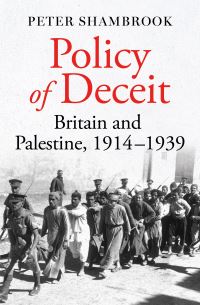
The untold story of Britain’s role in the Israel-Palestine conflict
-
£18.99
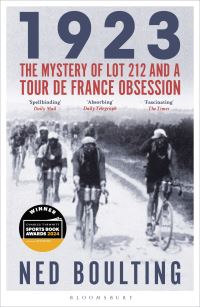
When cycling commentator Ned Boulting bought a length of Path̩ news film featuring a stage of the Tour de France from 1923 he set about learning everything he could about it Рtaking him on an intriguing journey that encompasses travelogue, history and detective story. In the autumn of 2020 Ned Boulting (ITV head cycling commentator and Tour de France obsessive) bought a length of Path̩ news film from a London auction house. All he knew was it was film from the Tour de France, a long time ago. Once restored it became clear it was a short sequence of shots from stage 4 of the 1923 Tour de France. No longer than 2.5 minutes long, it featured half a dozen sequences, including a lone rider crossing a bridge. Ned set about learning everything he could about the sequence Рstudying each frame, face and building Рuntil he had squeezed the meaning from it.
-
£10.99
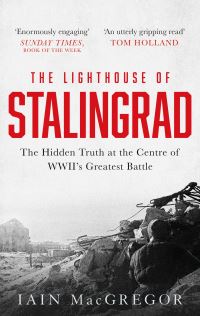
The sacrifices that enabled the Soviet Union to defeat Nazi Germany in the Great Patriotic War 1941-45 are sacrosanct. The foundation of their eventual victory was laid during the battle for the city of Stalingrad, resting on the banks of the river Volga. For Germany, the catastrophic defeat was the beginning of their eventual demise that would see the Red Army two years later flying their flag of victory above the Reichstag. Stalingrad is seen as the pivotal battle of WWII, with over two million civilians and combatants either killed, wounded or captured during the bitter winter of September 1942. Both sides endured terrible conditions in brutal house-to-house fighting reminiscent of the Great War. Within this life-and-death struggle for the heart of the city and situated on the frontline was a key strategic building, codenamed: ‘The Lighthouse’.
-
£12.99
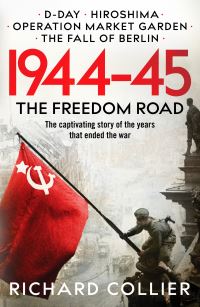
Going into 1944, the Allies knew the tide was turning in their favour. But they still faced a monumental task to get to victory. From the beaches of Normandy on D-Day to those of the Pacific stormed by American marines, from the air drops at Arnhem and the Battle of the Bulge, to the final dropping of the atomic bomb on Hiroshima and Nagasaki, from the sacking of Berlin to the delicate peace that followed, this is a gripping and impeccably researched account of two years that forever changed the world.
-
£25.00
THE INSTANT SUNDAY TIMES BESTSELLER
‘Epic, moving and important’ ROBERT HARRIS
‘A modern classic’ OBSERVER
‘An unforgettable epic of a book’DAILY MAIL
-
£12.99
The Ukranian city of Lviv’s many names (Lviv, Lvov, Lwow, Lemberg, Leopolis) bear witness to its conflicted past – it has, at one time or another, belonged to the Austro-Hungarian Empire, Poland, Russia and Germany, and has brought forth numerous famous artists and intellectuals. ‘My Lwow,’ Jozef Wittlin’s short 1946 treatise on the city he left in 1922, is a wistful and lyrical study of an electrifying cosmopolis, told from the other side of the catastrophe of the Second World War. Philippe Sand’s essay provides a parallel account of the city as it is today: the cultural capital of Ukraine, its citizens played a key roled during the Orange Revolution, and its executive committee declared itself independent of the rule of President Viktor Yanukovych in February 2014. ‘City of Lions’ includes both old black-and-white photographs showing Lviv during the first half of the 20th century, and new photos.
-
£20.00
Here are some of the best of Churchill’s letters, many of a more personal and intimate nature, presented in chronological order, with a preface to each letter explaining the context. The recipients include a vast range of people, including his schoolmaster, his American grandmother and former President Eisenhower. They are taken from within the Churchill Archive in Cambridge, where there is a mass of Churchill’s correspondence. Several of the letters included have never appeared in book form before. Winston Churchill has become an iconic figure greatly loved the world over, but maybe especially these days in the USA. Churchill understood the power of words and he used his writing to sustain and complement his political career, publishing over 40 books and receiving the Nobel Prize for Literature in 1953. This volume concentrates on his more intimate words.
-
£12.99
This work takes the reader the length and breadth of Britain and Ireland to lesser-known places associated with Churchill’s life. Some are familiar – Blenheim Palace, Chartwell, the Cabinet War Rooms – but we also see his schools, far-flung parliamentary constituencies in Dundee and Epping, the sites of famous speeches, the place he started to paint, the shop he bought his cigars, and the final resting places of his family and close friends. We read about these places in his own words alongside Clark’s insightful analysis and, by visiting sites that made important but less-celebrated contributions to the story of Churchill’s life, we come closer to a full picture. Clark takes us from the site of his father’s marriage proposal to his American future wife on the Isle of Wight to his grave in a country churchyard in Oxfordshire. Each of the eight regions of the United Kingdom is introduced with a map.
-
£8.99
An almighty storm hit Berlin in the last days of April 1945. Enveloped by the unstoppable force of East and West, explosive shells pounded buildings while the inhabitants of a once glorious city sheltered in dark cellars – just like their Fuhrer in his bunker. The Battle of Berlin was a key moment in history; marking the end of a deathly regime, the defeated city was ripped in two by the competing superpowers of the Cold War. In this book, historian Sinclair McKay draws on never-before-seen first-person accounts to paint a picture of a city ravaged by ideology, war and grief. Yet to fully grasp the fall of Berlin, it is crucial to also explore in detail the years beforehand and to trace the city being rebuilt, as two cities, in the aftermath.
-
£22.00
In 1835, Lord Brougham founded Cannes, introducing bathing and the manicured lawn to the wilds of the Mediterranean coast. Today, much of that shore has become a concrete mass from which escape is an exclusive dream. In the 185 years between, the stretch of seaboard from the red mountains of the Esterel to the Italian border hosted a cultural phenomenon well in excess of its tiny size. A mere handful of towns and resorts created by foreign visitors – notably English, Russian and American – attracted the talented, rich and famous as well as those who wanted to be. For nearly two centuries of creativity, luxury, excess, scandal, war and corruption, the dark and sparkling world of the Riviera was a temptation for everybody who was anybody. Jonathan Miles presents the remarkable story of the small strip of French coast that lured the world to its shores.