Showing 13–24 of 229 resultsSorted by latest
-
£12.99
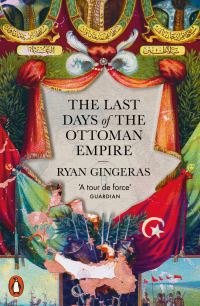
The Ottoman Empire had been one of the major facts in European history since the Middle Ages. By 1914 it had been much reduced, but still remained after Russia the largest European state. Stretching from the Adriatic to the Indian Ocean, the Empire was both a great political entity and a religious one, with the Sultan ruling over the Holy Sites and, as Caliph, the successor to Mohammed. Yet the Empire’s fateful decision to support Germany and Austria-Hungary in 1914, despite its successfully defending itself for much of the war, doomed it to disaster, breaking it up into a series of European colonies and what emerged as an independent Saudi Arabia. Ryan Gingeras explains how these epochal events came about and shows how much we still live in the shadow of decisions taken so long ago.
-
£18.99
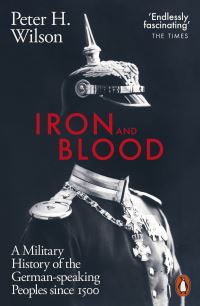
For most of its existence German-speaking Europe has been splintered into innumerable states – some substantial (such as Austria and Prussia) and some consisting of just a few Alpine meadows. Its military experience has also been extraordinarily varied: threatened and threatening; a mere buffer-zone, and a global threat. ‘Iron and Blood’ is a startlingly ambitious and absorbing book. It encompasses five centuries of political, military, technological and economic change to tell the story of the German-speaking lands, from the Rhine to the Balkan frontier, from Switzerland to the North Sea. Wilson’s narrative considers everything from weapons development to recruitment to battlefield strategy.
-
£11.99
Charles de Gaulle, saviour of France’s honour in 1940 and founder of the Fifth Republic, was a man and leader of deep contradictions. A conservative and a Catholic from a monarchist family, he restored democracy on his return to France in 1944, bringing the Communists into his government. An imperialist, he oversaw the final stages of France’s withdrawal from its last colonies in the 1960s. As a soldier, he spent much of his career in opposition to France’s military establishment. Yet, as Julian Jackson shows, it was precisely because of these contradictons that De Gaulle was able to reconcile so many of the conflicting strands in French politics. In 1958, and in response to a coup by the French military in Algeria, De Gaulle introduced a new political systemm the Fifth Republic, ushering in a period of stability that has held to the present day.
-
£25.00
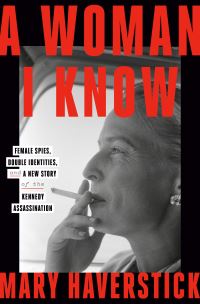
Independent filmmaker Mary Haverstick thought she’d stumbled onto the project of a lifetime – a biopic of a little-known aviation legend whose story seemed to embody the hopeful spirit of the dawn of the space age. But after she received a mysterious warning from a government agent, Haverstick began to suspect that all was not as it seemed. What she found as she dug deeper was a darker story – a story of double identities and female spies, a tangle of intrigue that stretched from the fields of the Congo to the shores of Cuba, from the streets of Mexico City to the dark heart of the Kennedy assassination in Dallas. As Haverstick attempted to learn the truth directly from her subject in a cat-and-mouse game that stretched across a decade, she plunged deep into the CIA files of the 1950s and 60s. ‘A Woman I Know’ brings vividly to life the duplicities of the Cold War intelligence game.
-
£12.99
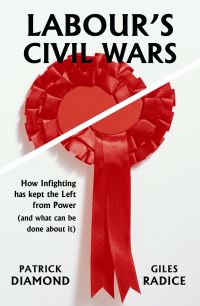
When a party is riven with division people do not know what it stands for. Though both major parties have been subject to internal conflict over the years, it is the Labour Party which has been more given to damaging splits. The divide exposed by the Corbyn insurgency is only the most recent example in a century of destructive infighting. Indeed, it has often seemed as though Labour has been more adept at fighting itself than in defeating the Tory party. This book examines the history of Labour’s civil wars and the underlying causes of the party’s schisms, from the first split of 1931, engineered by Ramsay MacDonald, to the ongoing battle for the future between the incumbent, Keir Starmer, and those who fundamentally altered the party’s course under his predecessor, Jeremy Corbyn.
-
£25.00
The forgotten story of Britain’s own Hindenburg disaster.
-
£10.99
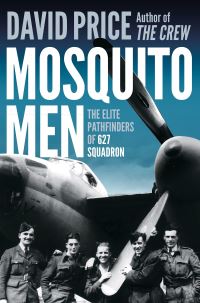
In November 1940, a remarkable prototype aircraft made its maiden flight from an airstrip north of London. Novel in construction and exceptionally fast, the new plane was soon outpacing the Spitfire, and went on to contribute to the RAF’s offensive against Nazi Germany as bomber, pathfinder and night fighter. The men who flew it nicknamed this most flexible of aircraft ‘the wooden wonder’ for its composite wooden frame and superb performance. Its more familiar name was the de Havilland Mosquito, and it used lightning speed and agility to inflict mayhem on the German war machine. From the summer of 1943, as Bomber Command intensified its saturation bombing of German cities, Mosquitos were used by the Pathfinder Force, which marked targets for night-time bombing, to devastating effect. This book traces the contrasting careers of the young men of 627 Squadron.
-
£20.00
The new Cabinet in January 1924 consisted, as governments had for generations, of 20 white, middle-aged men. But that is where the similarities with previous governments ended, for the election of Britain’s first Labour administration witnessed a radical departure from government by the ruling class. Replacing Stanley Baldwin’s Conservatives were Ramsay MacDonald’s Labour, the majority of whom had left school by the age of 15. Five of them had started work by the time they were 12 years old. Three were working down the mines before they entered their teens. Two were illegitimate, one was a foundling, three were of Irish immigrant descent. For the first time in Britain’s history the Cabinet could truly be said to represent all of Britain’s social classes. This unheralded revolution in representation is the subject of Peter Clark’s fascinating new book, ‘The Men of 1924’. Who were these men?
-
£14.99
The modern era saw the emergence of individuals who had command over a terrifying array of instruments of control, persuasion and death. Whole societies were re-shaped and wars fought, often with a merciless contempt for the most basic norms. At the summit of these societies were leaders whose personalities had somehow given them the ability to do whatever they wished. Ian Kershaw’s book is a compelling, lucid and challenging attempt to understand these rulers, whether operating on the widest stage (Lenin, Stalin, Hitler, Mussolini) or with a more national impact (Tito, Franco). What was it about these leaders and the times they lived in that allowed them such untrammelled and murderous power? And what brought that era to an end?
-
£12.99
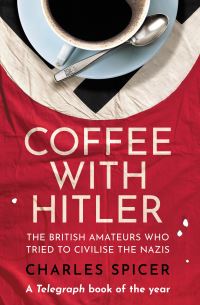
The untold tale of the Brits who infiltrated the Nazi hierarchy
-
£12.99
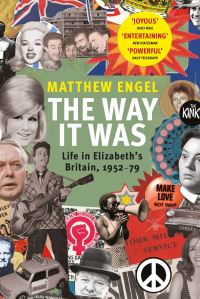
When Queen Elizabeth II came to the throne in 1952, Britain had a far-flung empire, Winston Churchill was prime minister, sweets were rationed, mums stayed at home and kids played on bombsites. In the years that followed everything changed utterly. Through original research, interviews with people who were there and his own memories of the time, Matthew Engel traces this transformation of British society as never before. Beginning with the death of King George VI and ending on the eve of Margaret Thatcher’s election, Engel not only covers all the major historical events but also explores everyday life – from the food we ate and where we shopped, to what we watched on television and the newspapers we read. In doing so, he brings these three decades to life with his own light touch and a wealth of fascinating, forgotten, often funny detail. This book was previously published as ‘The Reign’.
-
£25.00
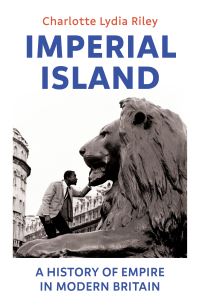
After World War II, Britain’s overseas empire disintegrated. But over the next seventy years, empire came to define Britain as never before. From immigration and race riots, to the Suez Crisis and the Falklands War, from the simplistic moral equation of Band Aid to the invasion of Iraq, the imperial mindset has dominated Britain’s relationship with itself and the world. The ghosts of empire are there, too, in the tragedy of Stephen Lawrence and in the response to radical Islam, in the opening ceremony of the 2012 Olympics and in scandal of the Windrush deportations – and of course in Brexit. Drawing on a mass of original research into the thoughts and feelings of the British people, pop culture, sport and media, this book tells a story of people on the move and of people trapped in the past, of the end of empire and the birth of multiculturalism, a chronicle of violence and a testament to togetherness.