Showing 157–168 of 229 resultsSorted by latest
-
£8.99
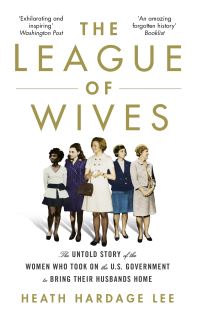
On 12th February, 1973, 116 men who, just six years earlier, had been high flying Navy and Air Force pilots, shuffled, limped, or were carried off a huge military transport plane at Clark Air Base in the Philippines. These American servicemen had endured years of brutal torture, kept shackled and starving in solitary confinement, in rat-infested, mosquito-laden prisons. Months later, the first Vietnam POWs to return home would learn that their rescuers were their wives. These women, who formed The National League of Families, had become the POW and MIAs most fervent advocates, going to extraordinary lengths to facilitate their husbands’ freedom – and to account for missing military men – by relentlessly lobbying government leaders, conducting a savvy media campaign, conducting covert meetings with antiwar activists, and helping to code secret letters to their imprisoned husbands. This is their story.
-
£12.99
After visiting Japan in 1902 and 1907 and discovering two magnificent cherry trees in the garden of his family home in Kent in 1919, Collingwood Ingram fell in love with cherry blossoms, and dedicated much of his life to their cultivation and preservation. On a 1926 trip to Japan to search for new specimens, Ingram was shocked to see the loss of local cherry diversity, driven by modernisation, neglect and a dangerous and creeping ideology. The most striking absence from the Japanese cherry scene, for Ingram, was that of Taihaku, a brilliant ‘great white’ cherry tree. Multiple attempts to send Taihaku scions back to Japan ended in failure. Over decades, Ingram became one of the world’s leading cherry experts and shared the joy of sakura both nationally and internationally. This book presents a portrait of this little-known Englishman.
-
£9.99
On a wet afternoon in September 1938, Neville Chamberlain stepped off an aeroplane and announced that his visit to Hitler had averted the greatest crisis in recent memory. It was, he later assured the crowd in Downing Street, ‘peace for our time’. Within a year of the British prime minister’s return from Munich, Germany invaded Poland and the Second World War began. That moment of theatre was the culmination of over five years of drama. Beginning with the advent of Hitler in 1933, Tim Bouverie takes us on a fascinating journey from the early days of the Third Reich to the beaches of Dunkirk. We enter the 10 Downing Street of Stanley Baldwin and Chamberlain, and the backrooms of Parliament where an unusual coalition of MPs – including the indomitable Winston Churchill – were among the few to realise that the only real choice was between ‘war now or war later’.
-
£9.99
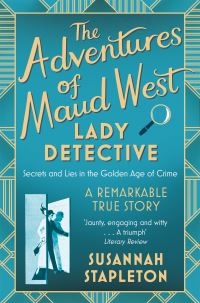
The enthralling true story of the curious life and career of Maud West, one of Britain’s first and best-known female detectives.
-
£9.99
The extraordinary stories of six women who defied the spirit of their age
-
£20.00
In London during the interwar years, five women’s lives intertwined around one address. Mecklenburgh Square, on the radical fringes of Bloomsbury, was home to activists, experimenters and revolutionaries; among them were the modernist poet H. D., detective novelist Dorothy L. Sayers, classicist Jane Harrison, economic historian Eileen Power, and author and publisher Virginia Woolf. In an era when women’s freedoms were fast expanding, they each sought a space where they could live, love and – above all – work independently. From the square, these trailblazing women pushed the boundaries of scholarship, literary form and social norms. Taking us into the emotional texture of their lives, Francesca Wade’s luminous group biography reveals five unforgettable characters who forged careers that would have been impossible without these rooms of their own.
-
£12.00
The 3rd Viscount Halifax was a church-going, fox-hunting aristocrat, but it was his political guile that earned him the nickname ‘the Holy Fox’. Roberts presents Lord Halifax as an enigmatic, influential and much maligned politician.
-
£16.99
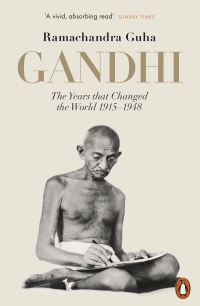
Gandhi lived one of the great 20th-century lives. He inspired and enraged, challenged and galvanised many millions of men and women around the world. He lived almost entirely in the shadow of the British Raj, which for much of his life seemed a permanent fact, but which he did more than anyone else to destroy, using revolutionary tactics. In a world defined by violence on a scale never imagined before and by ferocious Fascist and Communist dictatorship, he was armed with nothing more than his arguments and example. This title tells the story of Gandhi’s life, from his departure from South Africa to his assassination in 1948. measure.
-
£25.00
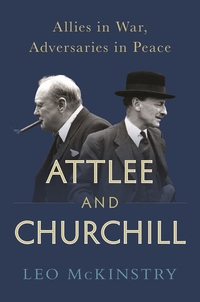
A groundbreaking and revealing portrait of two of the greatest British political leaders by a prize-winning historian.
-
£8.99
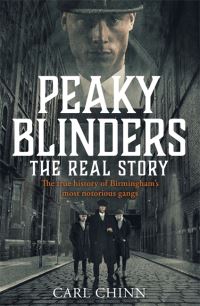
Well-known social historian, broadcaster and author, Carl Chinn, has spent decades searching the Peaky Blinders out. Here, he reveals the true story of the notorious gang members, one of whom was his own great grandfather, an illegal bookmaker in back-street Birmingham. In this social history, Chinn shines a light on the rarely reported struggles of the working class in one of the great cities of the British Empire before the First World War.
-
£9.99
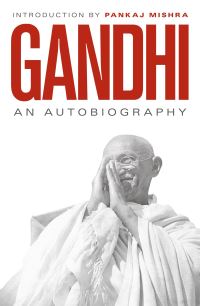
Mohandas Karamchand Gandhi was born in western India in 1869. He was educated in London and later travelled to South Africa, where he experienced racism and took up the rights of Indians, instituting his first campaign of passive resistance. In 1915 he returned to British-controlled India, bringing to a country in the throes of independence his commitment to non-violent change, and his belief always in the power of truth. Under Gandhi’s lead, millions of protesters would engage in mass campaigns of civil disobedience, seeking change through moral conversion of the colonizers. For Gandhi, the long path towards Indian independence would lead to imprisonment and hardship, yet he never once forgot the principles of truth and non-violence so dear to him. Written in the 1920s, Gandhi’s autobiography tells not only of his struggles and inspirations but also speaks frankly of his failures.
-
£30.00
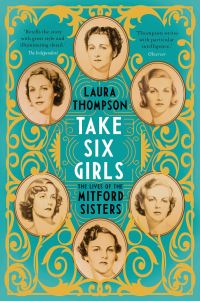
The contrasting lives of the Mitford sisters – stylish, scandalous and tragic by turns – hold up a mirror to upper-class life before and after the Second World War.