Land
£9.99From the bestselling author Simon Winchester, a human history of land around the world: who mapped it, owned it, stole it, cared for it, fought for it and gave it back.
We recently launched our new website and are facing a few teething issues. If you see any problems please contact us.
We recently launched our new website and are facing a few teething issues. If you see any problems please contact us.

Showing 109–120 of 229 resultsSorted by latest
From the bestselling author Simon Winchester, a human history of land around the world: who mapped it, owned it, stole it, cared for it, fought for it and gave it back.
The magisterial life of the woman whose family’s personal intrigues, romances and political rivalries have shaped much of post-war British history.
Highly readable and compelling account of British colonial policy in Palestine and its role in the creation of Israel.
For years, one country has acted as the greatest offshore haven in the world, attracting hundreds of billions of dollars in illicit finance tied directly to corrupt regimes, extremist networks, and the worst the world has to offer. But it hasn’t been the sand-splattered Caribbean islands, or even traditional financial secrecy havens like Switzerland or Panama that have come to dominate the offshoring world. Instead, the country profiting the most also happens to be the one that still claims to be the moral leader of the free world, and the one that claims to be leading the fight against the crooked and the corrupt: the United States of America. This book examines just how the United States’ implosion into a centre of global offshoring took place.
In the Midst of Civilized Europe is an extensively researched account of a forgotten history.
In 1941 and 1942 the British and Indian Armies were brutally defeated and Japan reigned supreme in its newly conquered territories throughout Asia. But change was coming. New commanders were appointed, significant training together with restructuring took place, and new tactics were developed. This book expertly retells these coordinated efforts and describes how a new volunteer Indian Army, rising from the ashes of defeat, would ferociously fight to turn the tide of war. But victory did not come immediately. It wasn’t until March 1944, when the Japanese staged their famed ‘March on Delhi’, that the years of rebuilding reaped their reward and after bitter fighting, the Japanese were finally defeated at Kohima and Imphal. This was followed by a series of extraordinary victories culminating in Mandalay in May 1945 and the collapse of all Japanese forces in Burma.
London hosts a dozen major railway stations, more than any comparable city. King’s Cross, St Pancras, Euston, Marylebone, Paddington, Victoria, Charing Cross, Cannon Street, Waterloo, London Bridge, Liverpool Street and Fenchurch Street – these great termini are the hub of London’s transport system and their complex history, of growth, decline and epic renewal has determined much of the city’s character today. Christian Wolmar tells the dramatic and compelling story of how these great cathedrals of steam were built by competing private railway companies between 1836 and 1900, reveals their immediate impact on the capital and explores the evolution of the stations and the city up to the present day.
This work dramatises the extraordinarily compressed and terrifying period between the surprise Japanese attack on Pearl Harbor and Hitler’s declaration of war on the United States. These five days transformed much of the world and have shaped our own experience ever since. Simms and Laderman’s aim in the book is to show how this agonising period had no inevitability about it and that innumerable outcomes were possible. Key leaders around the world were taking decisions with often poor and confused information, under overwhelming pressure and knowing that they could be facing personal and national disaster. And yet, there were also long-standing assumptions that shaped these decisions, both consciously and unconsciously.
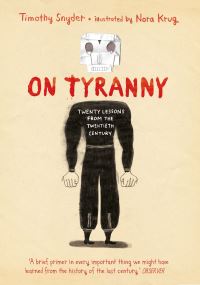
History does not repeat, but it does instruct. In the 20th century, European democracies collapsed into fascism, Nazism and communism. These were movements in which a leader or a party claimed to give voice to the people, promised to protect them from global existential threats, and established rule by an elite with a monopoly on truth. European history shows us that societies can break, democracies can fall, ethics can collapse, and ordinary people can find themselves in unimaginable circumstances. History can familiarise, and it can warn. Today, we are no wiser than the Europeans who saw democracy yield to totalitarianism in the 20th century. But when the political order seems imperilled, our advantage is that we can learn from their experience to resist the advance of tyranny. Now is a good time to do so.
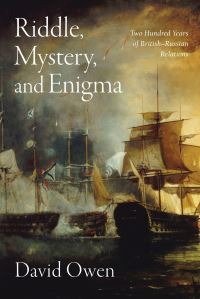
Britain’s relationship with the giant on the edge of the continent, Russia, are surprisingly under explored. With Owen’s characteristic insight and expertise, ‘Riddle, Mystery, Enigma’ depicts a relationship as often governed by principle as by suspicion, expediency, and outright necessity.
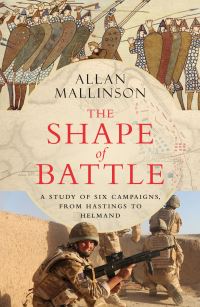
Every battle is different. Each takes place in a different context – the war, the campaign, the weapons. However, battles across the centuries, whether fought with sticks and stones or advanced technology, have much in common. Fighting is, after all, an intensely human affair; human nature doesn’t change. So why were battles fought as they were? What gave them their shape? Why did they go as they did: victory for one side, defeat for the other? In exploring six significant feats of arms – the war and campaign in which they each occurred, and the factors that determined their precise form and course – ‘The Shape of Battle’ answers these fundamental questions about the waging of war.
No products in the basket.
Notifications