 Cat In The Hat
 Man’s Search For Meaning
In ‘Man’s Search for Meaning’, Dr. Frankl offers an account of his life amid the horrors of the Nazi death camps, chronicling the harrowing experience that led to the discovery of his theory of logotherapy.

Showing 8305–8316 of 8356 resultsSorted by latest

In ‘Man’s Search for Meaning’, Dr. Frankl offers an account of his life amid the horrors of the Nazi death camps, chronicling the harrowing experience that led to the discovery of his theory of logotherapy.

This is an anthology of some of the world’s greatests diarists, including 170 wide-ranging, international contributions. It pays tribute to a fascinating genre that is at once the most intimate and public of all literary forms.
In this text, Norman Lewis describes how, after Mussolini came close to destroying the Mafia, the U.S. army returned them to power in 1944.

Based on a study of the letters, diaries and account books of over 100 women from commercial, professional and gentry families, mainly in provincial England, this book provides an account of the lives of genteel women in Georgian times.
Mitch Albom writes for the Detroit Free Press and has been voted America’s number one sports columnist ten times. In this book, Mitch describes how he rediscovered his mentor, his former college professor Morrie Schwartz.

A candid and revealing memoir from Elizabeth Jane Howard, the bestselling and lauded author of the Cazalet Chronicles and one of twentieth century Britain’s greatest storytellers.
Packed with adventure and incidents, Winston Churchill’s first 25 years were spent working as a soldier and a war correspondent in India, South Africa and Cuba. Churchill evokes a so-called golden age before 1914 in his autobiography.

Includes ‘The Freedom of the Press’, intended as the preface to ‘Animal Farm’ but undiscovered until 1972. Considered by Noam Chomsky to be Orwell’s most important essay. These essays demonstsrate the life and work of one of the most individual writers of the last century.
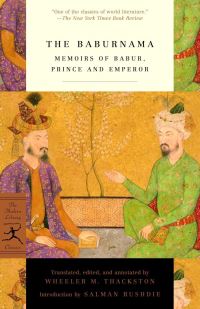
The first autobiography in Islamic literature, the memoirs of the emperor Babur (1483-1530) offer a detailed picture of life in Afghanistan, Pakistan, Persia, Transoxiana, and India during the late fifteenth and early sixteenth centuries.
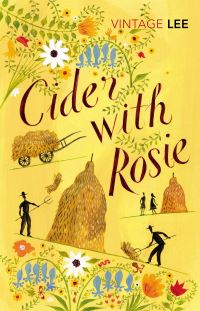
This is a vivid memoir of childhood in a remote Cotswold village, a village before electricity or cars, a timeless place on the verge of change. Growing up amongst the fields and woods and characters of the place, Laurie Lee depicts a world that is both immediate and real and belonging to a now distant past.
Notifications