These Mortal Bodies
£9.99Dark academia about a working class student’s transformative first year at a prestigious university, surrounded by gothic architecture, secret societies and witchcraft.Â

Showing 469–480 of 841 resultsSorted by latest
Dark academia about a working class student’s transformative first year at a prestigious university, surrounded by gothic architecture, secret societies and witchcraft.Â
Move over idealised BFFs, glossy gal pals and indestructible work wives. Meet the bad friends. The dangerously romantic school girls of the 1900s. The office gossips of the 1930s. The mum cliques of the 1950s. The angry activists of the 1970s. The coven – women who choose to live together in old age – of the present day. These ‘bad’ friends broke the rules about femininity they didn’t write. Their relationships were controlled, patrolled and judged too intimate, too consuming and in some cases, too powerful. In this history of women’s friendship, celebrated cultural historian Tiffany Watt Smith reckons with the ways we understand this complex and vital connection. She takes us from Japan to the Ivory Coast, The Mindy Project to Zadie Smith’s Swing Time, from prisons to film sets to hospital wards and elder communities, untangling the assumptions about good and bad friends we live by.
Aged 15, Lorna was living on the streets of Soho, trying to avoid abuse and rape whilst battling an addiction to heroin. She worked as an escort and a stripper, lost custody of her daughter, and relapsed multiple times. But, somehow, and unlike most of the people imprisoned by the streets, Lorna didn’t just survive but she flew. ‘I’ve dodged through these streets for a lifetime. I realise I have never stopped running since the day that I left the streets, never sat still, never found peace. But the process of unpicking my life means that, for the first time ever, I am actually facing what I have to do. It’s time to tell my story.’ On any given night, tens of thousands of families and individuals across the UK are experiencing homelessness. One in three people sleeping rough have experienced violence and are nine times more likely to take their own life.
Offers a startling new vision of motherhood: wild, intimate, diverse; as contested and extraordinary as the world in which we live and the animals with which we share it.
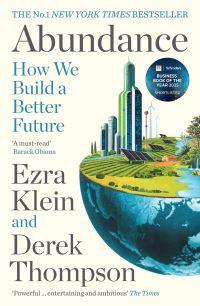
In the last few decades, our capacity to see problems has sharpened while our ability to solve them has diminished. Progress requires the ability to see promise rather than just peril in the creation of new ideas and projects, and an instinct to design systems and institutions that make building possible. In a book exploring how we can move from a liberalism that not only protects and preserves but also builds, Klein and Thompson trace the political, economic, and cultural barriers to progress and how we can adopt a mindset directed toward abundance, and not scarcity, to overcome them.

The Hotel Lutetia is a Paris institution, the only ‘grand’ hotel on the city’s bohemian Left Bank. Ever since it opened, it has served as a meeting place for artists, musicians and politicians. Andre Gide took his lunch here, James Joyce lived in one of its rooms, Picasso and Matisse were regular guests. It has a darker history, too. During one short period, it became a focus for some of the most dramatic and terrible events in recent history. In the 1930s the Hotel Lutetia attracted intellectuals and political activists, forced to flee their homes when Hitler came to power, who met here with the hope of forming an alternative government. But when war came, Paris was occupied, and the hotel became the headquarters of the German military intelligence service – and the centre of their operation to root out enemies of the Reich.
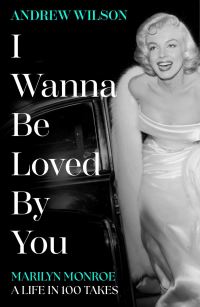
An illuminating biography of the Hollywood icon Marilyn Monroe, written by award-winning biographer Andrew Wilson.Â
How does it feel to be you with your own personal feelings, thoughts and experiences? Every one of us is intimately familiar with consciousness, but no one knows how – or why – it came to be that three pounds of grey matter can generate a subjective point of view. The early 1990s marked the birth of a new science of consciousness, based on the assumption that the phenomenon could be explained in terms of brain activity, but that effort is faltering, and wilder ideas, such as panpsychism, are now getting a hearing. Indeed, there is now reason to doubt that ‘objective science’ as we have known it since Galileo has the right tools to plumb first-person experience. This title takes Michael Pollan from the laboratories where scientists are searching for the neural correlates of consciousness to encounters with philosophers and novelists and Buddhist monks, whom he finds have just as much to teach us about consciousness, if not more.
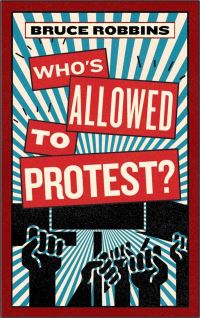
Why do charges of ‘privilege’ haunt every new protest wave? In this electrifying blend of short history and manifesto, Columbia University professor Bruce Robbins picks apart the insult that demonstrators are merely elite status-seekers – and shows why the same complaints surfaced against Vietnam-era marchers, Iraq War protesters, and, most recently, the Gaza encampments that shook US campuses nationwide. Robbins spars with contemporary critics, like David Brooks and Musa al-Gharbi, who insist that campus activists are secretly angling for elite credentials. Along the way, he recounts his own run-ins with university discipline boards and offers a reckoning with what it really costs – financially, socially, and personally – to stand against abuses of power.

Maggie Aderin’s destiny was always written in the stars. From the age of three, inspired by The Clangers, her dream was to go into space. Throughout a chaotic childhood, ricocheting between divorced parents and acrimonious custody battles, she attended thirteen schools in fourteen years – but while her environment regularly changed, her fascination with the Universe did not. It became enmeshed in her desire to succeed as a scientist even when her school careers advice was to become a nurse. ‘Starchild’ is Maggie’s emotionally honest and revealing memoir, telling a story of education and prejudice, adversity and ambition, motherhood and the moon – all recounted in her characteristically warm and relatable style.
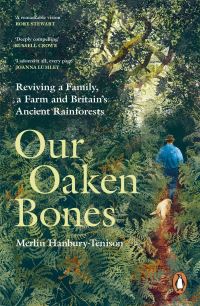
Reeling from the pain of devastating miscarriages and suffering from PTSD after military adventures in Afghanistan, Merlin and his wife Lizzie decide to leave the bustle of London and return to Merlin’s childhood home, a Cornish hill farm called Cabilla in the heart of Bodmin Moor. There, they are met by unexpected challenges: a farm slipping ever further into debt, the discovery that the overgrazed and damaged woods running throughout the valley are in fact one of the UK’s last remaining fragments of Atlantic temperate rainforest, and the sudden and near catastrophic strickening by Covid of Merlin’s father, the explorer Robin. As they fall more in love with the rainforest that Merlin had adventured in as a child, so begins a fight to save not only themselves and their farm, but also one of the world’s most endangered habitats.
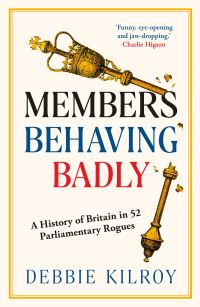
Members Behaving Badly: A History of Britain in 52 Parliamentary RoguesÂ
No products in the basket.
Notifications