The Trials of Life
£14.99The third and final updated edition of David Attenborough’s classic Life trilogy. Life on Earth covered evolution, Living Planet , ecology, and now The Trials of Life tackles ethology, the study of how animals behave.

Showing 205–216 of 841 resultsSorted by latest

The third and final updated edition of David Attenborough’s classic Life trilogy. Life on Earth covered evolution, Living Planet , ecology, and now The Trials of Life tackles ethology, the study of how animals behave.
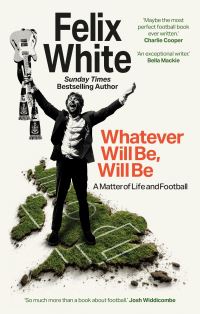
This title provides a footballing road trip through the 2024/25 FA Cup season, travelling across the vast and varied landscape of English football – from Leamington to Liverpool, from Maidenhead United to Manchester City. Each chapter chronicles a new match as Felix faithfully follows the winning team to the next round, carrying him across the country through the changing seasons and the breadth of England, until the pinnacle of the FA Cup final.

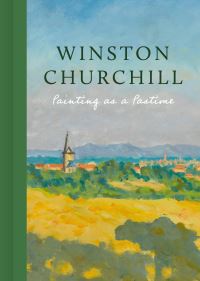
Originally published in 1932, Painting as a Pastime is Winston Churchill’s essay about his love of painting. This is the newest edition of this timeless work is introduced by expert Paul Rafferty and complete with some examples of Churchill’s paintings.

Within this book are a series of Open When style letters from Dr Julie to help navigate the moments of overwhelm, confusion or self-doubt that we all face when life gets messy. Offering calm, clarity and a laser focus on the best way forward, each personal letter is followed by real-time tools that will help you re-frame the situation and decide on your next move. Every chapter covers a new scenario; universal problems that each of us will likely face at some point. So, whether you are experiencing stress, pressure to perform, dealing with difficult people, trying to fit in, making big decisions, arguments with your partner, or big emotions are that causing anxiety, this book brings the words you need to hear to get back on the front foot, feeling ready to take on everything life throws your way.

Weimar looms large in German history: a crucible of democracy and dictatorship. This ancient town nestled in the heart of the country was home to some of Europe’s greatest thinkers, Goethe and Schiller, Liszt and Nietzsche among them. It gave its name to the ambitious Weimar Republic crafted in the aftermath of the First World War. But it was also where fascism took hold. Where Bauhaus architects first experimented with new ways of living, Buchenwald was dug out of a beech forest. This book shows us a town and its people on the edge of catastrophe. Drawing on a wealth of new archival research, historian Katja Hoyer takes us from 1919 to 1939 as she tells the stories of the men and women who lived through the new republic and Hitler’s regime. We encounter a vividly drawn cast of characters, from bookbinder Carl Weirich and hotel owners Rosa and Arthur Schmidt, to Friedrich Nietzsche’s sister Elisabeth.
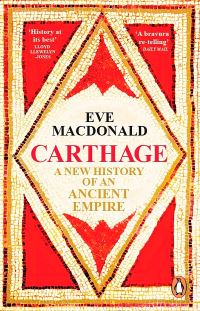
Carthage was a power that dominated the western Mediterranean for almost six centuries before its fall to Rome. The history of the realm and its Carthaginians was subsumed by their conquerors and, along the way, the story of the real Carthage was lost. In this landmark new history, Eve MacDonald tells the essential story of the lost culture of Carthage and of its forgotten people, using archaeological analysis to uncover the history behind the legend. A journey that takes us the Phoenician Levant of the early Iron Age to the Atlantic and all along the coast of Africa, the book puts the city and the story of North Africa once again at the centre of Mediterranean history. Reclaimed from the Romans, this is the Carthaginian version of the tale, revealing to us that, without Carthage, there would be no Rome.

Whether you are a keen player, a lifelong supporter, or an armchair football manager, this book illustrates every aspect of the most popular sport in the world. ‘The Football Book’ reveals the story behind the game – from the history of the sport to the build-up to the 2026 Men’s World Cup. Step-by-step artworks and jargon-free text profile the roles of players, equipment, team formations, strategies, and individual skills, while maps, quotes, and statistics give you all of the key facts on national teams, famous club sides, and iconic players, as well as the greatest competitions around the world.
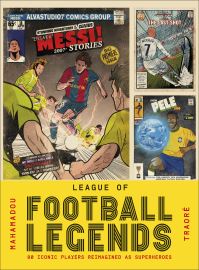
Just in time for the World Cup, illustrator and graphic designer Mahamadou Traoré offers us an immersive, image-rich dive into the league of football legends. From young prodigies to cunning strategists, intrepid attackers, ‘bad boys’, or goalkeepers with ‘iron gloves’, rediscover more than 80 football legends, imagined in their superhero guises.

Written while the organisation he directs, Forensic Architecture, works to produce evidence for the International Court of Justice’s genocide case against Israel, Weizman explores the larger geographical and historical context, from the displacement of the Nakba in 1948 to the present day. He shows how architectural and territorial analysis is key to understanding the relationship between the coloniser and the colonised. The book is an extraordinary and eye-opening journey through the ‘deep cartography’ of the area extending from Gaza’s subterranean tunnels through to its militarised topography, settlements and barriers. Territory is never a neutral backdrop nor the location within which a colonisation takes place. Instead, it is a mechanism by which colonisation is undertaken and key to understanding how Israel’s attack on Gaza in the wake of 7 October has escalated into violence so extreme as to, Weizman argues, meet the definition of

As indigenous scientist and author of ‘Braiding Sweetgrass’ Robin Wall Kimmerer harvests serviceberries alongside the birds, she considers the ethic of reciprocity that lies at the heart of the gift economy. How, she asks, can we learn from indigenous wisdom and the plant world to reimagine what we value most? Our economy is rooted in scarcity, competition, and the hoarding of resources, and we have surrendered our values to a system that actively harms what we love. Meanwhile, the serviceberry’s relationship with the natural world is an embodiment of reciprocity, interconnectedness, and gratitude. The tree distributes its wealth – its abundance of sweet, juicy berries – to meet the needs of its natural community. ‘The Serviceberry’ is an antidote to the broken relationships and misguided goals of our times, and a reminder that ‘hoarding won’t save us, all flourishing is mutual.’
No products in the basket.
Notifications