-
You cannot add that amount of "China and Russia" to the basket because there is not enough stock (0 remaining).
Showing 1–12 of 220 resultsSorted by latest
-
£30.00
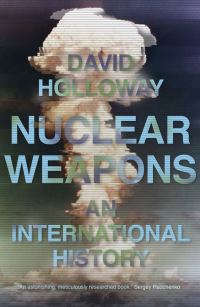
How should we deal with nuclear weapons? The discovery of nuclear fission fundamentally changed the world order. Its power was harnessed, nuclear bombs invented, and the cities of Hiroshima and Nagasaki were destroyed. In recurring international crises and calls for arms control, the threat of nuclear war has hung over humanity ever since. David Holloway traces how these weapons shaped the last century, from the US-Soviet arms race to the rivalry between India and Pakistan. Deterrence and intimidation, alliances and war plans, international treaties and organizations have all played their role. At the centre were political leaders – among them Truman, Kennedy, and Reagan, as well as Stalin, Khrushchev, and Gorbachev – who all had their fingers on the nuclear button.
-
£25.00
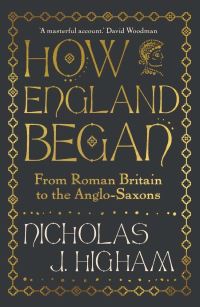
In 410 CE, Roman rule of Britain collapsed, bringing a centuries-long occupation to an end. A century later, Britain was dividing into two areas with contrasting cultures, an expansive ‘Anglo-Saxon’ south and east, and a shrinking Celtic west and north. How did this transition happen? And why did the customs of the Germanic incomers prevail in England, unlike elsewhere in Europe? In this deeply researched account, Nicholas J. Higham addresses these difficult questions head on. Higham draws on archaeological evidence and contemporary literature, including the writings of Gildas, to reconsider the accepted narrative.
-
£12.99
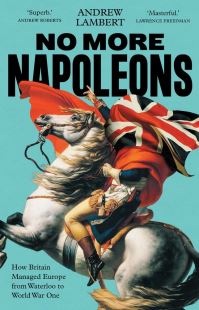
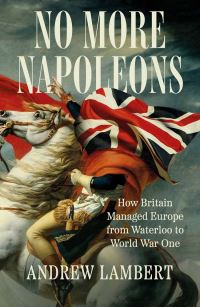
Lambert argues for a dynamic new understanding of the 19th century, showing how British policymakers shaped a stable European system that it could balance from offshore. Through judicious deployment of naval power against continental forces, and the defence strategy of statesmen such as the Duke of Wellington, Britain ensured that no single European state could rise to pose a threat, rebuilt its economy, and established naval and trade dominance across the globe. This is the remarkable story of how Britain kept a whole continent in check – until the final collapse of this delicately balanced order at the outset of World War One.
-
£12.99
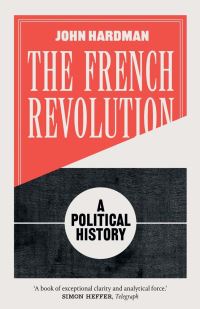
In 1786, France’s ancien régime was functioning as usual. Its alliance with the victorious American colonies had restored its diplomatic prestige, the economy seemed to be flourishing, and internal politics seemed quiet. But just a few short years later, the dynasty which had ruled France for over 800 years was swept away. What happened to cause such devastating change to the long-established political structure? John Hardman traces the political history of the French Revolution, from its origins to its aftermath. Hardman argues that the nature of ancien régime politics, the mismanagement of the fiscal crisis, and a new generation of young, overly confident politicians brought the Bourbon monarchy’s apparatus crashing down.
-
£25.00
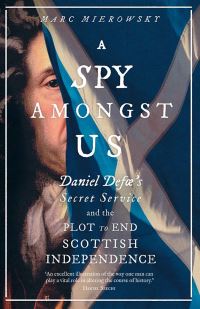
The true story of Daniel Defoe and the dirty tricks which helped bring Scotland into union with England In 1706, Edinburgh was on the brink of a popular uprising. Men and women took to the streets to protest the planned union with England, fearing the end of Scottish sovereignty. But unbeknownst to the mob, a spy was in their midst?the English writer Daniel Defoe, now bankrupt and thrice pilloried, had turned a government agent. Marc Mierowsky tells the dramatic story of Defoe and his fellow spies as they sabotaged the Scottish independence movement from the inside. Together they disseminated propaganda and built a network of operatives from London to the upper Highlands, providing the English government with up-to-the-minute intelligence and monitoring its adversaries’ every move. Through the lives of Defoe and his ring, their handlers, and opponents, Mierowsky guides us through this shadowy underworld of espionage and pro
-
£11.99
A spirited and essential companion to Orwell and his works, covering all the novels and major essays.
-
£25.00
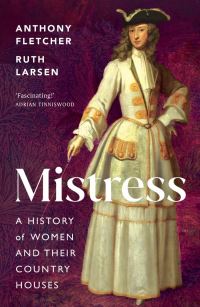
An insightful, hugely engaging new history of elite women and the country house from the sixteenth to the twentieth century Grand houses can be found across the countryside of England and Wales. From the Stuart and Georgian periods to the Edwardian and Victorian, these buildings were once home to the aristocratic families of the nation. But what was life like for the mistresses of these great houses? How much power and influence did they really have? Anthony Fletcher and Ruth M. Larsen explore the lives of country house mistresses. Focusing on eighteen women, and spanning five centuries, they look at the ways in which elite women not only shaped the house, household, and family, but also had an impact on society, culture, and politics within their estates and beyond.
-
£12.99
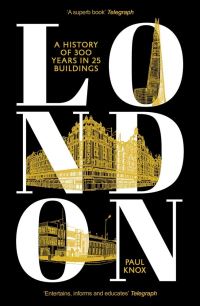
A walk along any London street takes you past a wealth of seemingly ordinary buildings: an Edwardian church, modernist postwar council housing, stuccoed Italianate terraces, a Bauhaus-inspired library. But these buildings are not just functional. They are evidence of London’s rich and diverse history and have shaped people’s experiences, identities, and relationships. In this study, Paul L. Knox traces the history of London from the Georgian era to the present day through twenty-five surviving buildings. Knox explores where people lived and worked, from grand Regency squares to Victorian workshops, and highlights the impact of migration, gentrification, and inequality.
-
£25.00
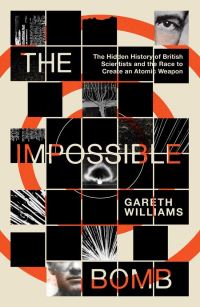
In this work, Gareth Williams tells the remarkable story of the forgotten British scientists who enabled the Manhattan Project to create the atomic bomb.
-
£25.00
Lambert argues for a dynamic new understanding of the 19th century, showing how British policymakers shaped a stable European system that it could balance from offshore. Through judicious deployment of naval power against continental forces, and the defence strategy of statesmen such as the Duke of Wellington, Britain ensured that no single European state could rise to pose a threat, rebuilt its economy, and established naval and trade dominance across the globe. This is the remarkable story of how Britain kept a whole continent in check – until the final collapse of this delicately balanced order at the outset of World War One.
-
£12.99
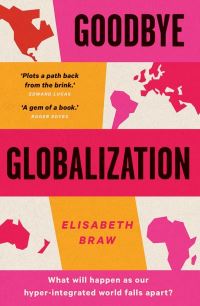
After the Cold War, globalization accelerated at breakneck speed. Manufacturing, transport, and consumption defied national borders, companies made more money, and consumers had access to an ever-increasing range of goods. But in recent years, a profound shift has begun to take place. Business executives and politicians alike are realising that globalization is no longer working. Supply chains are imperilled, Russia has been expelled from the global economy after its invasion of Ukraine, and China is using these fissures to leverage a strategic advantage. Given these pressures, what will the future of our world economy look like? In this groundbreaking account, Elisabeth Braw explores the collapse of globalization and the profound challenges it will bring to the West.
-
£11.99
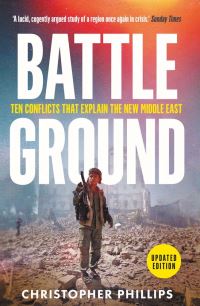
The Middle East is in crisis. The shocking events of the war in Gaza have rocked the entire region. More than a decade ago, the Arab Spring had raised hopes of a new beginning but instead ushered in a series of civil wars, coups, and even harsher autocracies. Tensions were exacerbated by the meddling of outsiders, as regional and global powers sought to further their interests. The United States, for so long the dominant actor, had stepped back, leaving a vacuum behind it to be fought over. Christopher Phillips explores geopolitical rivalries in the region, and the major external powers vying for influence: Russia, China, the EU, and the US. Moving through ten key flashpoints, from Syria to Palestine, Phillips argues that the United States’ overextension after the Cold War, and retreat in the 2010s, has imbalanced the region.

 Leo
Leo  Grief Works
  21 Lessons For The 21st Century
  Goodnight Moon