Showing 1–16 of 26 resultsSorted by latest
-
£25.00
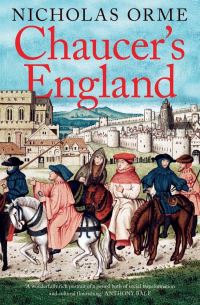
Who were Chaucer’s thirty-three pilgrims, and why were they heading to Canterbury? What do they and their tales tell us about medieval England as a place, and about the daily lives of its people? Leading historian Nicholas Orme brings literature and history together to answer this question, using the ‘Canterbury Tales’ and the other great writings of Chaucer’s day. In ten chapters, he explains what people thought: about time and space, religion and the social system. He shows their wide degree of literacy and how they spent their leisure. He takes us through the politics of the day, the crusades, and the lifestyles of the nobility, clergy, townsfolk and country dwellers, along with the landscapes they lived in. This is an intimate and intriguing guide to the world which produced some of the greatest poetry in the English language, re-creating Chaucer’s England in all its richness and variety.
-
£14.99
A bold new account of Europe’s plight as it faces political fracture, economic stagnation and external challenges from the U.S., China and Russia. Drawing on unpublished archives and interviews with over 150 leading figures, David Marsh investigates Europe’s present crisis, from the march of populism, Franco-German malaise, and the breakdown of relations with Putin’s Russia. Fault lines are emerging in the monetary union, while the fight against climate change has impacted growth. Facing its gravest test since WWII, Europe must find fresh reserves of resilience – and seek out renewed international partnerships to ensure success.
-
£25.00
For the last 20 years, Putin’s Russia has weaponised its vast resources of oil and gas, trying to use them to dominate Ukraine and, later, with growing audacity, challenge NATO itself. But this is far from the first time this tactic has been used. Over the last 150 years, access to oil and gas has repeatedly been used as a tool to gain an advantage. Looking at the global picture, including Vietnam, India, and Egypt, Guy Laron charts the connection between oil, gas, and political power from the First World War through the Cold War to the crises of today. He shows how political actors leveraged their power through key chokepoints: production sites, pipelines, and even refineries. Whilst at the same time, companies lobbied states to block rivals and eliminate competition. This has been a high-stakes game over the controlling heights of the world economy that continues until this very day.
-
£30.00
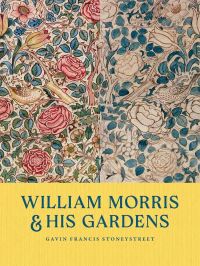
Exploring the gardens of William Morris-Red House, Kelmscott Manor, Kelmscott House, and his factory garden at Merton Abbey-and the central role they played in his life, his patterns, and work
-
£25.00
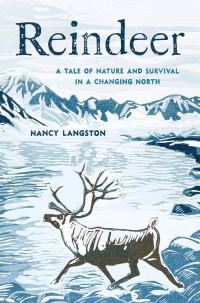
Across the Arctic and the boreal north, reindeer populations are dwindling as our ever developing planet grows warmer. Reindeer range is roughly half what it was in the 19th century, and populations have dropped by more than half in the past ten years alone. However, we have a conservation tool at hand for this crisis: wildlife translocation, or moving animals to more suitable habitats. In this book, Nancy Langston interweaves historical research with accounts of her fieldwork in northern Scandinavia, Iceland, North America, Mongolia, and elsewhere. She details the history of struggles faced by communities that have relied on reindeer hunting and herding and engages with the scientific debates about the need to move northern wildlife to viable habitats because of human activities. She also addresses the challenges – logistical, ethical, and societal – of moving large animals in a world with complex geopolitical boundaries.
-
£11.99
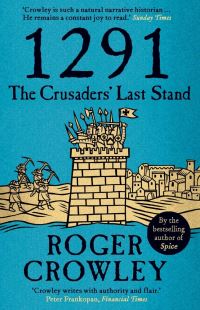
A thrilling history of the bloody climax to two centuries of crusading in the Holy Land
-
£25.00
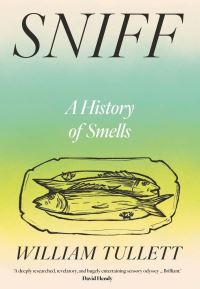
A remarkable account of the weird and wonderful history of smellAcross vast periods of time and around the globe, smell has been central to human life. From the incense burned in medieval religious rituals to the use of modern sniffer dogs, smells have been central to our sense of identity, our ability to build communities, and, perhaps less positively, to mark those deemed unwelcome within them. Our sense of smell brings us the pleasure of good food, wine, and perfume, but it also warns us of dangerous fire, gas, and rot.What did the past smell like? Why does our own world smell the way it does?Moving through key locations, from libraries to forests, churches to hospitals, Will Tullett explores the peculiar history of smell. We smell witchcraft and murder, fin de siècle Parisian theatres, and cinemas in 1960s New York. What emerges is not just a history of smells, but biographies of the many noses that have sniffed them.
-
£20.00
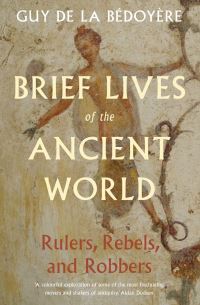
A fascinating window into the history of the ancient world, told through thirty-five fascinating figures
-
£11.99
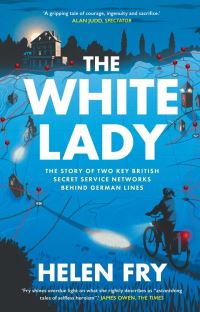
A major new history of the two most important British secret service networks in the First and Second World Wars. Drawing on recently declassified information, Fry examines who the agents were, how they were recruited, and how the intelligence they gathered directly impacted the outcome of both wars. Operators in the field sent over 800 radio messages to London and delivered more than 1000 reports, including groundbreaking information on Hitler’s secret weapon the V-1. This is a compelling account of the agents who risked their lives and found ingenious ways to smuggle intelligence out of occupied Belgium.
-
£11.99
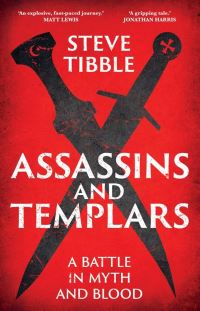
The story of the medieval world’s most extraordinary organisations, the Assassins and the Templars. In this engaging account, Steve Tibble traces the history of these two groups from their origins to their ultimate destruction. He shows how, outnumbered and surrounded, they survived only by perfecting ‘the promise of death’, either in the form of a Templar charge or an Assassin’s dagger. Death, for themselves or their enemies, was at the core of these extraordinary organisations. Their fanaticism changed the medieval world – and, even up to the present day, in video games and countless conspiracy theories, they have become endlessly conjoined in myth and memory.
-
£12.99
A major new history of Saudi Arabia, from its eighteenth-century origins to the present day Saudi Arabia is one of the wealthiest countries in the world, a major player on the international stage and the site of Islam’s two holiest cities. It is also one of the world’s only absolute monarchies. How did Saudi Arabia get to where it is today? In this comprehensive account, David Commins narrates the full history of Saudi Arabia from oasis emirate to present-day attempts to leap to a post-petroleum economy. Moving through the ages, Commins traces how the Saud dynasty’s reliance on sectarianism, foreign expertise, and petroleum to stabilize power has unintentionally spawned secular and religious movements seeking accountability and justice. He incorporates the experiences of activists, women, religious minorities, Bedouin, and expatriate workers as the country transformed from subsistence agrarian life to urban consumer society. This
-
£25.00
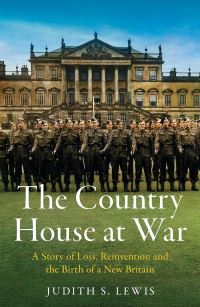
The story of how English country houses were repurposed during the Second World War, told through the lives of those who lived and worked in themIn the Second World War, country houses across England were requisitioned by the government for the war effort. These homes opened their doors to evacuated children, were transformed into hospitals, and played host to training camps for the armed forces. The care of the estates was often left to young women and the elderly, who had to completely change the running of their homes to accommodate essential wartime activities.In this fascinating history, Judith S. Lewis explores the lives of country houses during the Second World War. Some homes were requisitioned for intelligence operations, like Audley End, which was used as the headquarters of the Polish Section of SOE, whereas others, like West Wycombe, were used to house artefacts of national importance. Examining the long legacy of the war, L
-
£25.00
An authoritative life of Harold II, the king who died at the Battle of Hastings in 1066Harold Godwinson is renowned as the king who lost England to the invading William the Conqueror in 1066. Infamous legends, invented by the Victorians, surround his life, corrupting our idea of him. But who was the real Harold II?In this major new biography, Tom Licence reveals the truth behind the nineteenth-century myths. Moving from Harold’s childhood and his adventures as an earl in Edward the Confessor’s court, to his nine-month reign and the bloody battles at its end, Licence rewrites the story of his life at every turn. We see Harold’s rupture with his family, his cultivation of alliances, and his political interventions at home and overseas. He seized the throne as a skilled political leader who was the prime candidate to unite a realm divided by rebellion. And, when war came to English shores, Harold managed the conflict as well as any command
-
£25.00
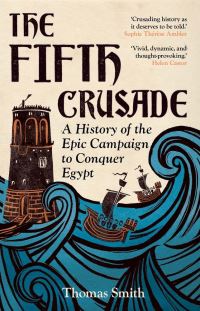
In 1217, the crusader states were in a highly fragile condition. The Fourth Crusade had failed, and Jerusalem had not been recovered. The crusaders now set their sights on Egypt. If the breadbasket of the Mediterranean could be conquered, long-term Christian control of the Holy Land could be ensured. Led by the rulers of Hungary and Austria, and backed by the Knights Templar and Hospitaller, the Fifth Crusade was launched. Thomas Smith tells the gripping story of the crusade for Egypt. Looking at a wide range of Christian and Muslim sources, Smith sheds new light on the brutal reality of medieval combat on land and water.
-
£10.99
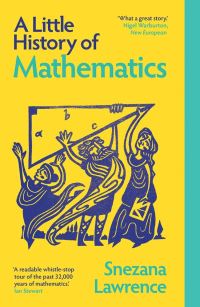
Mathematics is fundamental to our daily lives. Science, computing, economics – all aspects of modern life rely on some kind of maths. But how did our ancestors think about numbers? How did they use mathematics to explain and understand the world around them? Where do numbers even come from? In this book, Snezana Lawrence traces the fascinating history of mathematics, from the Egyptians and Babylonians to Renaissance masters and enigma codebreakers.
-
£12.99
A leading economist explores the global rise of the U.S. dollar and shows why its future stability is far from assured.