Technofeudalism
£10.99Drawing on stories from Greek Myth and pop culture, from Homer to Mad Men, world-famous economist Yanis Varoufakis explains this game-changing transformation and how it holds the key to understanding our times.

Showing 37–48 of 385 resultsSorted by latest
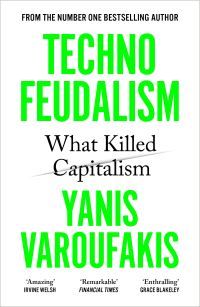
Drawing on stories from Greek Myth and pop culture, from Homer to Mad Men, world-famous economist Yanis Varoufakis explains this game-changing transformation and how it holds the key to understanding our times.

Over the course of a decade from 2010, Rory Stewart went from being a political outsider to standing for prime minister – before being sacked from a Conservative Party that he had come to barely recognise. Tackling ministerial briefs on flood response and prison violence, engaging with conflict and poverty abroad as a foreign minister, and Brexit as a Cabinet minister, Stewart learned first-hand how profoundly hollow and inadequate our democracy and government had become. Cronyism, ignorance and sheer incompetence ran rampant. Around him, individual politicians laid the foundations for the political and economic chaos of today. Stewart emerged battered but with a profound affection for his constituency of Penrith and the Border, and a deep direct insight into the era of populism and global conflict. This book invites us into the mind of one of the most interesting actors on the British political stage.
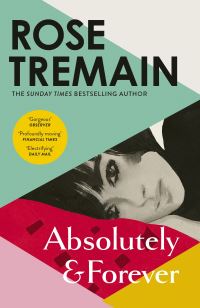
Marianne Clifford, teenage daughter of a peppery army colonel and his vain wife, Lal, falls helplessly and absolutely for Simon Hurst, 18, whose cleverness and physical beauty suggest that he will go forward into a successful and monied future, helped on by doting parents. But fate intervenes. Simon’s plans are blown off course, and Marianne is forced to bury her dreams of a future together. Narrating her own story, characterising herself as ignorant and unworthy, Marianne’s telling use of irony and smart thinking gradually suggest to us that she has underestimated her own worth. We begin to believe that – in the end, supported by her courageous Scottish friend, Petronella – she will find the life she never stops craving. But what we can’t envisage is that beneath his blithe exterior, Simon Hurst has been nursing a secret which will alter everything.
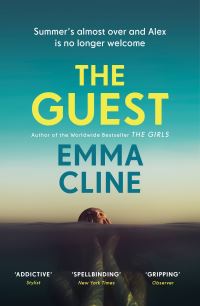
Summer is coming to a close on Long Island, and Alex is no longer welcome. One misstep at a dinner party and the older man she’s been staying with dismisses her with a ride to the train station and a ticket back to the city. With few resources, but a gift for navigating the desires of others, Alex stays on the island. She drifts like a ghost through the gated driveways and sun-blasted dunes of a rarefied world, trailing destruction in her wake.
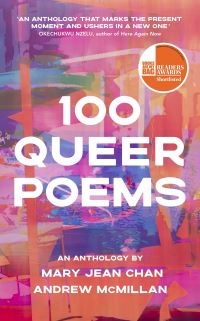
Andrew McMillan and Mary Jean Chan’s luminous anthology is a celebration of thrilling contemporary voices and visionary poets of the past. Encompassing both the flowering of queer poetry over the past few decades and the poets who came before and broke new ground, ‘100 Queer Poems’ presents an electrifying range of writing from the twentieth century to the present day.
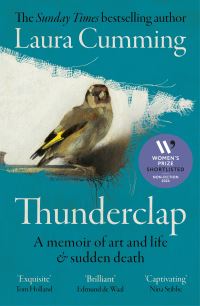
On the morning of 12th October 1654, in the Dutch city of Delft, a sudden explosion was followed by a thunderclap that could be heard more than seventy miles away. Carel Fabritius – now known across the world for his exquisite painting, The Goldfinch – had been at work in his studio. He, along with many others, would not survive the day. In ‘Thunderclap’, Laura Cumming reveals her passion for the art of the Dutch Golden Age and her determination to lift up the reputation of Fabritius. She reveals the Netherlands, where – wandering the narrow streets of Amsterdam, driving across the flatlands, or pausing at a quiet waterfront – she encounters the rich reality behind the shining beauty of Vermeer and Rembrandt, Hals and de Hooch. This is a book about what a picture may come to mean: how it can enter your life and change your thinking in a thunderclap, a sudden clarity of sight.

In the shared and private spaces of Iowa City, a social circle of lovers and friends navigate tangled webs of connection as they try to figure out what they want, and who they are. At the centre of the group are three dancers: Ivan, tall and stoic, who is leaving ballet for a career in finance; Fatima, whose work ethic earns her both admiration and enmity; and Noah, who ‘didn’t seek sex out so much as it came up to him like an anxious dog in need of affection’. As they test their own desires in a series of relationships – and in other, clandestine ways – they are buffeted by other volatile figures in town, from an unruly, vulnerable young poet to a local landlord nursing a lifetime of resentment. Finally, after a series of violent encounters, the group heads to a cabin to bid goodbye to their former lives, and waves of long-buried heartache resolve into moments of unexpected tenderness.
Nell – funny, brave and so much loved – is a young woman with adventure on her mind. As she sets out into the world, she finds her family history hard to escape. For her mother, Carmel, Nell’s leaving home opens a space in her heart, where the turmoil of a lifetime begins to churn. And across the generations falls the long shadow of Carmel’s famous father, an Irish poet of beautiful words and brutal actions. This is a meditation on love: spiritual, romantic, darkly sexual or genetic. A generational saga that traces the inheritance not just of trauma but also of wonder, it is a testament to the glorious resilience of women in the face of promises false and true. Above all, it is an exploration of the love between mother and daughter – sometimes fierce, often painful, but always transcendent.

Picture a mantis raising up its blades. It looks fearsome, but it’s still just a tiny insect. The mantis actually thinks it can win. Even though it’s tiny, it’s still ready to fight to the death. Kabuto is an ordinary guy; stressed with work, hassled by his wife and disrespected by his son. No wonder he visits his doctor so often. Except ‘the Doctor’ is actually his handler, and Kabuto is a hired assassin. The ‘prescriptions’ the Doctor hands over are his unlucky targets. Because although Kabuto may seem like a small man at home, he’s really good at killing people. Kabuto is worn out with the business of murder. He’s trying to pay his way out of the Doctor’s employment with a few last jobs. But the most lucrative contracts involve taking out other professional assassins and his final assignment puts both him and his family in danger.
Jamie O’Neill loves the colour red. He also loves tall trees, patterns, rain that comes with wind, the curvature of many objects, books with dust jackets, cats, rivers and Edgar Allan Poe. At age 13 there are two things he especially wants in life: to build a Perpetual Motion Machine, and to connect with his mother Noelle, who died when he was born. In his mind these things are intimately linked. And at his new school, where all else is disorientating and overwhelming, he finds two people who might just be able to help him. ‘How to Build a Boat’ is the story of how one boy and his mission transforms the lives of his teachers, Tess and Tadhg, and brings together a community.

It’s 1990 in London and Tom Hargreaves has it all – a burgeoning career as a reporter, fierce ambition and a brisk disregard for the ‘peasants’ – ordinary people, his readers, easy tabloid fodder. His star looks set to rise when he stumbles across a scoop – a dead child on a London estate, grieving parents loved across the neighbourhood, and the finger of suspicion pointing at one reclusive family of Irish immigrants and ‘bad apples’ – the Greens. At their heart sits Carmel – beautiful, otherworldly, broken, and once destined for a future beyond her circumstances until life – and love – got in her way. Crushed by failure and surrounded by disappointment, there’s no chance of escape. Now, with the police closing in on a suspect and the tabloids hunting their monster, she must confront the secrets and silences that have trapped her family for so many generations.

When the men of Oxford University Press leave for the Western Front, Peggy, her twin sister Maude and their friends in the bookbindery must shoulder the burden at home. As Peggy moves between her narrowboat full of memories and the demands of the Press, her dreams of studying feel ever more remote. She must know her place, fold her pages and never stop to savour the precious words in front of her. From volunteer nurses to refugees fleeing the horrors of occupation, the war brings women together from all walks of life, and with them some difficult choices for Peggy. New friends and lovers offer new opportunities, but they also make new demands – and Peggy must write her own story.
No products in the basket.
Notifications