The Snowman
£7.99The first snowfall in Oslo brings a series of gruesome murders, and Harry Hole is pitted against a brutal killer who will drive him to the edge.

Showing 229–240 of 385 resultsSorted by latest
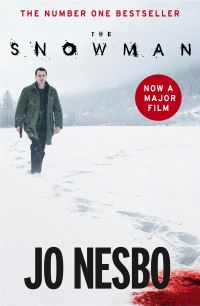
The first snowfall in Oslo brings a series of gruesome murders, and Harry Hole is pitted against a brutal killer who will drive him to the edge.
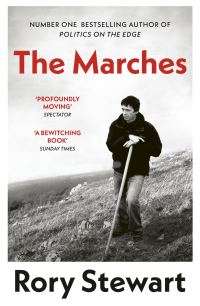
His father Brian taught Rory Stewart how to walk, and walked with him on journeys from Iran to Malaysia. Now they have chosen to do their final walk together along ‘the Marches’ – the frontier that divides their two countries, Scotland and England. Brian, a 90-year-old former colonial official and intelligence officer, arrives in Newcastle from Scotland dressed in tartan and carrying a draft of his new book ‘You Know More Chinese Than You Think’. Rory comes from his home in the Lake District, carrying a Punjabi fighting stick which he used when walking across Afghanistan. On their 600-mile, 30-day journey – with Rory on foot, and his father ‘ambushing’ him by car – the pair relive Scottish dances, reflect on Burmese honey-bears, and on the loss of human presence in the British landscape.
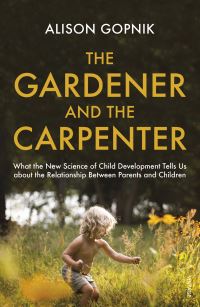
Caring deeply about our children is part of what makes us human. Yet the thing we call ‘parenting’ is a surprisingly new invention. In the past thirty years, the concept of parenting and the multibillion-dollar industry surrounding it have transformed child care into obsessive, controlling, and goal-orientated labour intended to create a particular kind of child and therefore a particular kind of adult. Drawing on the study of human evolution and her own cutting-edge scientific research into how children learn, Gopnik shows that although caring for children is profoundly important, it is not a matter of shaping them to turn out a particular way.
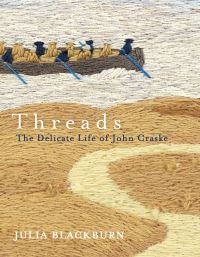
John Craske was born in 1881 and in 1917, when he had just turned 36, he fell seriously ill. For the rest of his life he kept moving in and out of what was described as ‘a stuporous state’. In 1923 he started making paintings of the sea and boats and the coastline seen from the sea, and later, when he was too ill to stand and paint, he turned to embroidery, which he could do lying in bed. His embroideries were also of the sea, including his masterpiece, a huge embroidery of the evacuation of Dunkirk. Very few facts about Craske are known, and only a few scattered photographs have survived, together with accounts by the writer Sylvia Townsend Warner and her lover Valentine Ackland, who discovered Craske in 1937. So Julia Blackburn’s account of his life is far from a conventional biography.
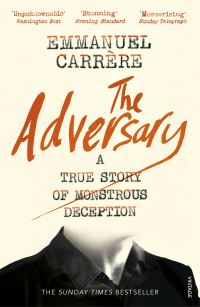
The shocking true story of a respectable doctor, 18 years of lies, and five murders that took place in France during the early 1990s. ‘The Adversary’ reveals the extremes to which ordinary people can go.
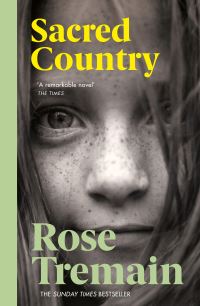
1952. Standing in a cold Suffolk field with her family, 6-year-old Mary Ward has a revelation: I am not Mary. That is a mistake. I am not a girl. I’m a boy. So begins Mary’s heroic struggle to change gender. Moving from the claustrophobic rural community of the 1950s to London in the swinging 60s and beyond to the glitter of Nashville, Tennessee, capital of country music, this book is the story of a journey to find a place of safety and fulfilment in a savage and confusing world.
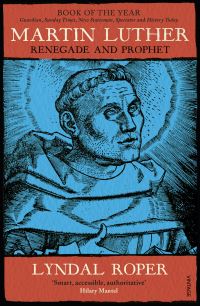
When on 31st October, 1517 an unknown monk nailed a theological pamphlet to the church door in a small German university town, he set in motion a process that ushered in the modern age. His attempts to reform Christianity would split the Western Church, divide Europe and polarise people’s beliefs, leading to religious persecution, social unrest and war; in the long run his ideas would help break the grip of religion on every sphere of life. Yet Luther was a deeply flawed human being: a fervent believer tormented by spiritual doubts; a prolific writer whose translation of the Bible would shape the German language; a married ex-monk who liberated human sexuality from the stigma of sin; a religious fundamentalist, Jew-hater, and political reactionary. Here, Roper reveals the often contradictory psychological forces that drove Luther forward and the dynamics they unleashed.
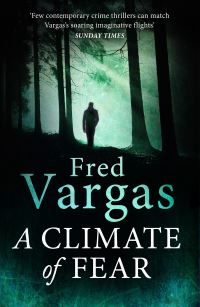
A woman is found murdered in her bathtub, and the murder made to look like a suicide. But a strange symbol found at the crime scene leads the local police to call Commissaire Adamsberg and his team. When the symbol is found near the body of a second disguised suicide, a pattern begins to emerge: both victims were part of a disastrous expedition to Iceland over 10 years ago. A group of tourists found themselves trapped on a deserted island for two weeks, surrounded by a thick, impenetrable fog rumoured to be summoned by an ancient local demon, and two of them didn’t make it back alive. But how are the deaths linked to the secretive Association for the Study of the Writings of Maximilien Robespierre? And what does the mysterious symbol signify?
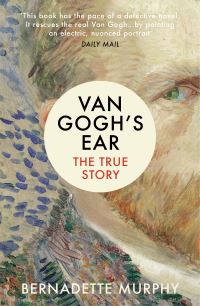
On a dark night in Provence in December 1888 Vincent van Gogh cut off his ear. It is an act that has come to define him. Yet for more than a century biographers and historians seeking definitive facts about what happened that night have been left with more questions than answers. Bernadette Murphy sets out to discover exactly what happened that night in Arles. Why would an artist at the height of his powers commit such a brutal act? Who was the mysterious ‘Rachel’ to whom he presented his macabre gift? Was it just his lobe, or did Van Gogh really cut off his entire ear? Her investigation takes us from major museums to the dusty contents of forgotten archives, vividly reconstructing the world in which Van Gogh moved.
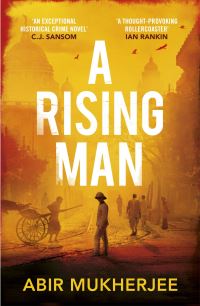
India, 1919. Captain Sam Wyndham, former Scotland Yard detective, is a new arrival to Calcutta. Desperately seeking a fresh start after his experiences during the Great War, Wyndham has been recruited to head up a new post in the police force. But with barely a moment to acclimatise to his new life or to deal with the ghosts which still haunt him, Wyndham is caught up in a murder investigation that will take him into the dark underbelly of the British Raj. A senior official has been murdered, and a note left in his mouth warns the British to quit India – or else.
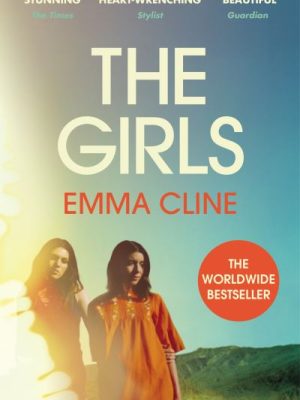
California. The summer of 1969. In the dying days of a floundering counter-culture a young girl is unwittingly caught up in unthinkable violence, and a decision made at this moment, on the cusp of adulthood, will shape her life. Evie Boyd is desperate to be noticed. In the summer of 1969, empty days stretch out under the California sun. The smell of honeysuckle thickens the air and the sidewalks radiate heat. Until she sees them. The snatch of cold laughter. Hair, long and uncombed. Dirty dresses skimming the tops of thighs. Cheap rings like a second set of knuckles. The girls. And at the centre, Russell. Russell and the ranch, down a long dirt track and deep in the hills. Incense and clumsily strummed chords. Rumours of sex, frenzied gatherings, teen runaways. Was there a warning, a sign of things to come? Or is Evie already too enthralled by the girls to see that her life is about to be changed forever?
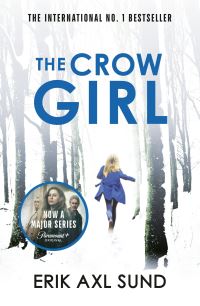
It starts with just one body – tortured, mummified and then discarded. Its discovery reveals a nightmare world of hidden lives. Of lost identities, secret rituals and brutal exploitation, where nobody can be trusted. This is the darkest, most complex case the police have ever seen. This is the world of the crow girl.
No products in the basket.
Notifications