Showing 1–12 of 13 resultsSorted by latest
-
£12.99
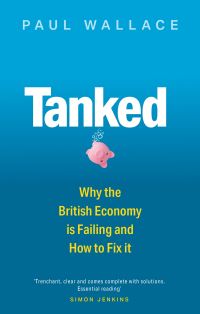
In the autumn of 2023, Liz Truss took Britain on a journey into economic la-la land and comprehensively tanked the economy. The result? Higher mortgages and rents, high inflation, debt at an eye- watering oe2.7 trillion and a sluggish economy rapidly falling behind our (ex-)European partners. As economic journalist Paul Wallace argues in this incisive, expert and accessible book, this was low point of a once supercharged economy that has over the last 15 years not recovered from the financial crash of 2008. Written over ten chapters tackling the most important issues (Brexit, debt, the City, immigration, manufacturing, levelling up, public services) Wallace asks in clear, jargon-free prose what the problems are, and what we can do to solve them. He offers a ten-point plan to get our economy back and track, building on its most resilient aspects.
-
£12.99
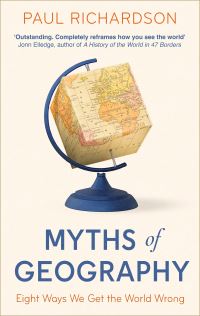
Is geography really destiny? Our maps may no longer be stalked by dragons and monsters, but our perceptions of the world are still shaped by geographic myths. Myths like Europe being the centre of the world. Or that border walls are the solution to migration. Or that Russia is predestined to threaten its neighbours. In his punchy and authoritative book, Paul Richardson challenges recent popular accounts of geographical determinism and shows that how we see the world represented often isn’t how it really is – that the map is not the territory.
-
£16.99
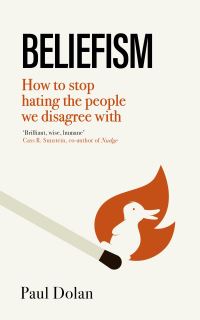
Do you avoid people who are strongly against immigration? Or strongly for trans rights? Against abortion? For drug legalisation? We might like to think that we’re tolerant, but many of us struggle to engage with people whose opinions differ strongly from our own – even if they might have something useful to contribute to the debate. That means we’re falling victim to what behavioural scientist Professor Paul Dolan defines as Beliefism – discrimination against those with different beliefs to us. Drawing on the evidence from across the social sciences, Dolan shows how easy it is for us to divide ourselves into opposing camps – and how harmful that can be. Using the central metaphor of the duck-rabbit illusion – where the same image can be viewed as one animal or the other – the book shows that looking at an issue from only one perspective can lead to bad decisions and unnecessary conflict.
-
£25.00
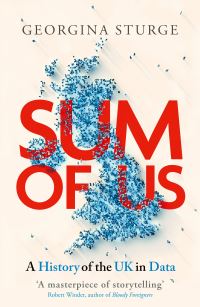
What has data ever done for us? In this book, House of Commons Library statistician Georgina Sturge explores the rich history of the moments when we have counted and measured ourselves in different ways, and the shocks and fundamental changes which have come as a result. ‘Sum of Us’ showcases how the process of deciding who and what we count can be disruptive and intrusive – and at other times it can be emancipatory. From unravelling a deadly public health crisis to exposing the tensions at the heart of what it means to describe ourselves as ‘British’, and from being the seed of the NHS to a spotlight on equal rights, data is a force which can turn the wheel of progress forwards as well as, sometimes, backwards. Along the way, Sturge also tells the story of how governments and politicians came to use and rely on data for policy making, and what that means for us now, in an age more awash than ever with information.
-
£25.00
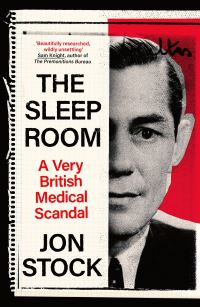
The Royal Waterloo Hospital, London in the 1960s. Six young women lie asleep on low beds. Day and night no longer exist, extinguished by a potent cocktail of antipsychotic, sedative and anti-depressant drugs. The women are taken from their beds by the nurses and given electroconvulsive therapy before being put to sleep again. All under the predatory eye of Dr William Sargant. ‘The Sleep Room’ is a chilling exposé of Sargant’s bizarre psychiatric treatments that were inflicted on hundreds of women with mental illness – among them the actor Celia Imrie. At the story’s centre is a sinister and charismatic doctor, who was a hugely influential figure in post-war British society. When Sargant died in 1988, the obituaries were glowing. But since then, women treated without their consent and with often horrific side-effects lasting decades have been campaigning to tell the truth about Sargant.
-
£25.00
With extraordinary behind-the-scenes access, it follows every turn of Donald Trump’s third presidential campaign. In disgrace after the January 6 attack on the Capitol and sent into exile, Trump immediately sputters back to life. To the shock of the Republican Party leadership, the Trump base has not abandoned him. Hardly a year on, he is as strong as any challenger has ever been. The American establishment is stunned by his comeback and determined to stop it and hold him accountable for his abuses of law and power. Equally, he has vowed retribution on anyone who tries to stand in his way. The 2024 presidential race is elemental: the system breaks Donald Trump or Donald Trump breaks the system. Michael Wolff tells this story from inside the Trump campaign.
-
£25.00
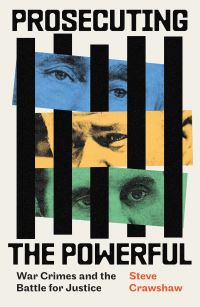
Could we ever see Vladimir Putin in the dock for his crimes? What about a Western ally like Benjamin Netanyahu? Putting a country’s leader on trial once seemed unimaginable. But as Steve Crawshaw describes in ‘Prosecuting the Powerful’ – a blend of powerful eyewitness reporting and gripping history – the possibilities of justice have been transformed. Crawshaw includes recent stories from the front lines of justice in Ukraine, Israel/Palestine and at The Hague, as well as his earlier encounters with war criminals like Slobodan Milosevic.
-
£22.00
Is geography really destiny? Our maps may no longer be stalked by dragons and monsters, but our perceptions of the world are still shaped by geographic myths. Myths like Europe being the centre of the world. Or that border walls are the solution to migration. Or that Russia is predestined to threaten its neighbours. In his punchy and authoritative book, Paul Richardson challenges recent popular accounts of geographical determinism and shows that how we see the world represented often isn’t how it really is – that the map is not the territory.
-
£10.99
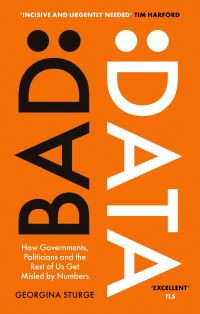
Our politicians make vital decisions and declarations every day that rely on official data. But should all statistics be trusted? In ‘Bad Data’, House of Commons Library statistician Georgina Sturge draws back the curtain on how governments of the past and present have been led astray by figures littered with inconsistency, guesswork and uncertainty.
-
£25.00
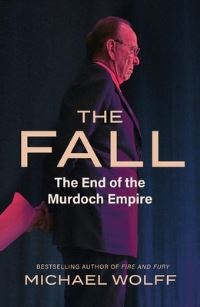
Meet the Murdochs and the disastrously dysfunctional family of Fox News. Until recently, they formed the most powerful media and political force in America. Now their empire is cracking up and crashing down. Drawing on years of unprecedented access to the Murdoch family and key players, Michael Wolff plunges us behind the scenes of an empire of influence, and the result is astonishing and unforgettable. Here is Rupert Murdoch, the ninety-two-year-old billionaire – concerned about his legacy, but more concerned about profits. Here are his contentious children, jockeying to take over when the old man is gone. Here is star anchor Tucker Carlson considering a run for the presidency while his bosses have other plans for him. Sean Hannity, the richest man in television, has his own plans: to put Trump back in office.
-
£20.00
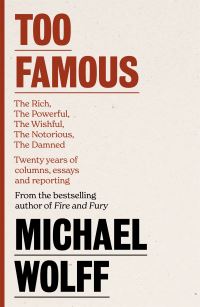
‘Too Famous’ collects pieces Michael Wolff has written as a columnist for New York, Vanity Fair, The Guardian, GQ and The Hollywood Reporter, and adds several new ones. Written over a 20-year period, the book spans that moment in popular culture when personal attention became one of the world’s most valuable commodities, and ending with Donald Trump, fame’s most hyperbolic exponent. Some of these pieces exist in the amber of a particular news moment, some as character portraits – as colourful now as when they were written – and some as lasting observations about human nature and folly. The common ground all of these thrilling stories share is that everyone in this book is a creature of, or creation of, the media. They don’t exist as who we see them as, and who they want to be, without the media.
-
£20.00
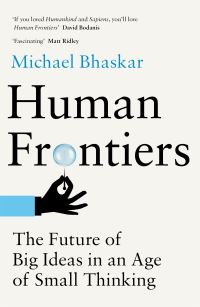
It’s easy to assume that the story of modern society is one of consistent, radical progress, but this is no longer true: more academics are researching than ever before but their work leads to fewer breakthroughs; innovation is incremental, limited to the digital sphere; the much-vaunted cure for cancer remains elusive; space travel has stalled since the heady era of the moonshot; politics is stuck in a rut, and the creative industries seem trapped in an ongoing cycle of rehashing genres and classics. The most ambitious ideas now struggle. Our great-great-great grandparents saw a series of transformative ideas revolutionise almost everything in just a few decades. Today, in contrast, short termism, risk aversion, and fractious decision making leaves the landscape timid and unimaginative. In this book, Michael Bhaskar draws a vividly entertaining and expansive portrait of humanity’s relationship with big ideas.