Showing 37–48 of 56 resultsSorted by latest
-
£20.00
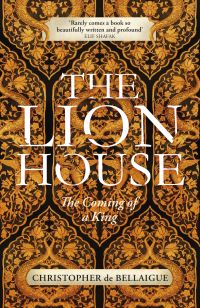
Set in Venice, 1522, this is ‘eye-witness history’ telling the story of Suleyman’s rise to power in the 16th century. Sensitive intelligence arrives from the east confirming the European powers’ greatest fear: the vastly rich Ottoman Sultan has amassed all he needs to wage total war – and his sights are set on Rome. With Christendom divided, Suleyman the Magnificent has his hand on their entrails.
-
£30.00
Britain and Germany were at war for almost six long years. For prolonged periods of time – from September 1940 to May 1941, and again from December 1943 to March 1945 – London was under sustained, sometimes unrelenting, aerial bombardment by night and by day. Throughout the war, London was the nation’s front line, and the capital and its people bore the brunt of the nation’s suffering. Yet if the bombing defined the era for those who lived through it, the months of terror were outnumbered by those spent knitting together the skein of daily life at work, in the home, on the allotment, in the cinema or theatre and, not least, standing in those interminable queues for daily necessities that were such a feature of London’s war. Jerry White has unearthed what actually happened during those years, getting close up to the daily lives of ordinary people, telling the story through their own voices.
-
£25.00
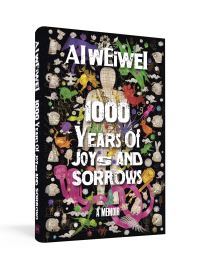
In his widely anticipated memoir, Ai Weiwei – one of the world’s most famous artists and activists – tells a century-long epic tale of China through the story of his own extraordinary life and the legacy of his father, Ai Qing, the nation’s most celebrated poet.
-
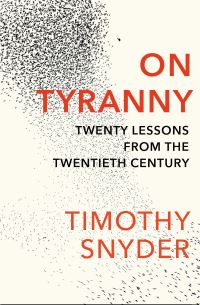
£16.99
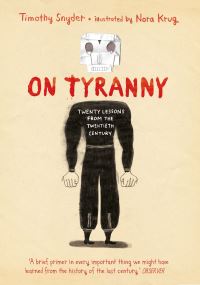
History does not repeat, but it does instruct. In the 20th century, European democracies collapsed into fascism, Nazism and communism. These were movements in which a leader or a party claimed to give voice to the people, promised to protect them from global existential threats, and established rule by an elite with a monopoly on truth. European history shows us that societies can break, democracies can fall, ethics can collapse, and ordinary people can find themselves in unimaginable circumstances. History can familiarise, and it can warn. Today, we are no wiser than the Europeans who saw democracy yield to totalitarianism in the 20th century. But when the political order seems imperilled, our advantage is that we can learn from their experience to resist the advance of tyranny. Now is a good time to do so.
-
£20.00
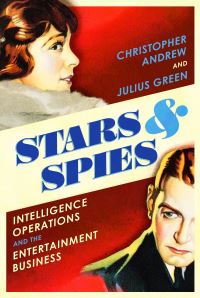
Here is a hugely entertaining and original history of the interplay between spying and showbiz, featuring Marlowe and Shakespeare, but focusing mostly on the twentieth century, the golden era of the Cold War and up to the present day.
-
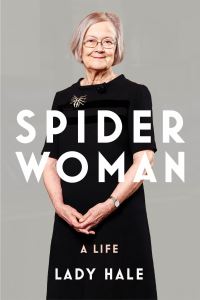
£20.00
Lady Hale is an inspirational figure admired for her historic achievements and for the causes she has championed. ‘Spider Woman’ is her story. As ‘a little girl from a little school in a little village in North Yorkshire’, she only went into the law because her headteacher told her she wasn’t clever enough to study history. She became the most senior judge in the country but it was an unconventional path to the top. How does a self-professed ‘girly swot’ get ahead in a profession dominated by men? Was it a surprise that the perspectives of women and other disadvantaged groups had been overlooked, or that children’s interests were marginalised?
-
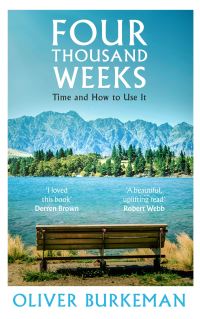
£16.99
The average human lifespan is absurdly, outrageously, insultingly brief: if you live to 80, you have about four thousand weeks on earth. How should we use them best? Of course, nobody needs telling that there isn’t enough time. We’re obsessed by our lengthening to-do lists, our overfilled inboxes, the struggle against distraction, and the sense that our attention spans are shrivelling. Yet we rarely make the conscious connection that these problems only trouble us in the first place thanks to the ultimate time-management problem: the challenge of how best to use our four thousand weeks. ‘Four Thousand Weeks’ is an uplifting, engrossing and deeply realistic exploration of this problem.
-
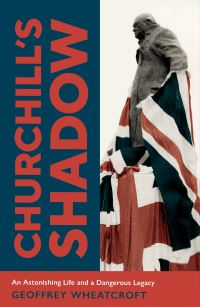
£25.00
Winston Churchill towered over his own age, when he was variously described as ‘the saviour of his country’, ‘the leader of humanity’, or ‘the man of the century’. More remarkably, he has towered over fifty years and more since his since his death in 1965. He overshadows both his country, whose recent history has been called ‘an extended footnote to Churchill’, and the United States, where a great cult of Churchill has burgeoned. This account of Churchill’s life and afterlife has been more than ten years in the making. It is not a conventional biography but an account of Churchill’s long life, the cult that arose almost immediately after his death, and his place in popular culture, up to the Oscar-winning film ‘Darkest Hour’ in 2017.
-
£30.00
In the summer of 1939 Hitler was at the zenith of his power. The Nazis had consolidated their authority over the German people, and in a series of foreign-policy coups, the Führer had restored Germany to the status of a major Continental power. He now embarked on realising his lifelong ambition: to provide the German people with the living space and the resources they needed to flourish and exterminate those who were standing in the way – the Bolsheviks and the Jews.
-
£20.00
Donald Maclean was a star diplomat, an establishment insider and a keeper of some of the West’s greatest secrets. He was also a Russian spy, driven by passionately held beliefs, whose betrayal and defection to Moscow reverberated for decades. Christened ‘Orphan’ by his Russian recruiter, Maclean was the perfect spy and Britain’s most gifted traitor. But as he leaked huge amounts of top-secret intelligence, an international code-breaking operation was rapidly closing in on him. Moments before he was unmasked, Maclean vanished. Drawing on a wealth of previously classified material, Roland Philipps now tells this story for the first time in full.
-
£9.99
History does not repeat, but it does instruct. In the 20th century, European democracies collapsed into fascism, Nazism and communism. These were movements in which a leader or a party claimed to give voice to the people, promised to protect them from global existential threats, and established rule by an elite with a monopoly on truth. European history shows us that societies can break, democracies can fall, ethics can collapse, and ordinary people can find themselves in unimaginable circumstances. History can familiarise, and it can warn. Today, we are no wiser than the Europeans who saw democracy yield to totalitarianism in the 20th century. But when the political order seems imperilled, our advantage is that we can learn from their experience to resist the advance of tyranny. Now is a good time to do so.
-
£14.99
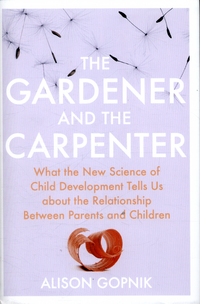
Caring deeply about our children is part of what makes us human. Yet the thing we call ‘parenting’ is a surprisingly new invention. In the past thirty years, the concept of parenting and the multibillion-dollar industry surrounding it have transformed child care into obsessive, controlling, and goal-orientated labour intended to create a particular kind of child and therefore a particular kind of adult. Drawing on the study of human evolution and her own cutting-edge scientific research into how children learn, Gopnik shows that although caring for children is profoundly important, it is not a matter of shaping them to turn out a particular way.