Technofeudalism
£22.00Drawing on stories from Greek Myth and pop culture, from Homer to Mad Men, world-famous economist Yanis Varoufakis explains this game-changing transformation and how it holds the key to understanding our times.
We recently launched our new website and are facing a few teething issues. If you see any problems please contact us.
We recently launched our new website and are facing a few teething issues. If you see any problems please contact us.

Showing 25–36 of 56 resultsSorted by latest
Drawing on stories from Greek Myth and pop culture, from Homer to Mad Men, world-famous economist Yanis Varoufakis explains this game-changing transformation and how it holds the key to understanding our times.
After World War II, Britain’s overseas empire disintegrated. But over the next seventy years, empire came to define Britain as never before. From immigration and race riots, to the Suez Crisis and the Falklands War, from the simplistic moral equation of Band Aid to the invasion of Iraq, the imperial mindset has dominated Britain’s relationship with itself and the world. The ghosts of empire are there, too, in the tragedy of Stephen Lawrence and in the response to radical Islam, in the opening ceremony of the 2012 Olympics and in scandal of the Windrush deportations – and of course in Brexit. Drawing on a mass of original research into the thoughts and feelings of the British people, pop culture, sport and media, this book tells a story of people on the move and of people trapped in the past, of the end of empire and the birth of multiculturalism, a chronicle of violence and a testament to togetherness.
Between 1940 and 1943, a group of Polish diplomats in Switzerland engaged in a wholly remarkable – and until now, completely unknown – humanitarian operation. In concert with Jewish activists, they masterminded a systematic programme of forging passports and identity documents for Latin American countries, which were then smuggled into German-occupied Europe to save the lives of thousands of Jews facing extermination in the Holocaust. ‘The Forgers’ tells this extraordinary story.
Powerful yet dextrous, instinctive yet thoughtful, we are expert communicators and innovators. Our exceptional abilities have created the civilisation we know today. But we’re also deeply flawed. Our bodies break, choke and fail, whether we’re kings or peasants. Diseases thwart our boldest plans. Our psychological biases have been at the root of terrible decisions in both war and peacetime. This extraordinary contradiction is the essence of what it means to be human – the sum total of our frailties and our faculties. And history has played out in the balance between them. Now, Lewis Dartnell tells our story through the lens of this unique, capricious and fragile nature. He explores how our biology has shaped our relationships, our societies, our economies and our wars, and how it continues to challenge and define our progress.
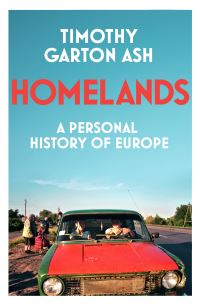
Drawing on half a century of travel and experience, ‘Homelands’ tells the story of Europe in the later twentieth and early twenty-first centuries – how, having emerged from its wartime hell in 1945, it slowly recovered and rebuilt, liberated and united to come close to the ideal of a Europe ‘whole, free and at peace.’ And then faltered. Humane, expert and deeply felt, ‘Homelands’ is full of encounters, conversations and anecdote.
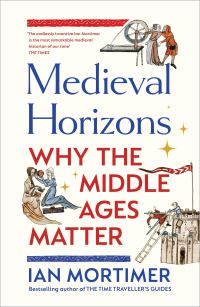
We tend to think about the Middle Ages as a dark, backward and unchanging time characterised by violence, ignorance and superstition. By contrast we believe progress is the consequence of science and technological innovation, and that it was the inventions of recent centuries which created the modern world. We couldn’t be more wrong. As Ian Mortimer shows in this fascinating introduction to the Middle Ages, people’s horizons – their knowledge, experience and understanding of the world – expanded dramatically. All aspects of life were utterly transformed between 1000 and 1600, marking the transition from a warrior-led society to that of Shakespeare.
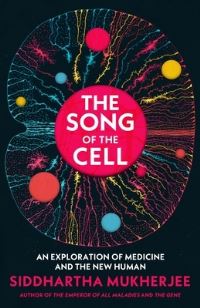
Rich with Mukherjee’s revelatory and exhilarating stories of scientists, doctors, and the patients whose lives may be saved by their work, ‘The Song of the Cell’ is the third book in this extraordinary writer’s exploration of what it means to be human.
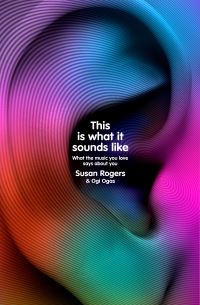
Despite being unable to play an instrument, Susan Rogers became an extraordinarily successful record producer – and certainly one of the most successful women record producers in history – because of her ability to listen. (She was an engineer on Prince’s ‘When Doves Cry’). ‘This is What It Sounds Like’ distils a lifetime’s expertise as a producer and an award-winning professor with a PhD in cognitive neuroscience, to present a new theory of listening for everyday music fans. Each person has a unique identity as a listener, she explains, determined by seven influential dimensions of musical listening: authenticity, realism, novelty, melody, lyrics, rhythm and timbre.
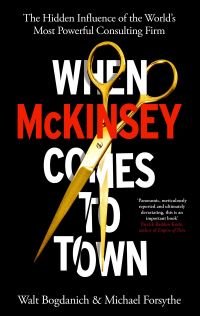
From two prize-winning New York Times investigative journalists, an explosive, deeply-reported expose of McKinsey & Co., the international consulting firm that advises corporations and governments around the world.
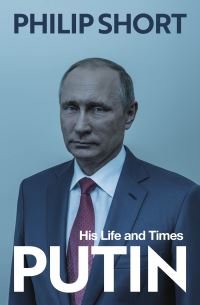
Vladimir Putin is a pariah to the West. Alone among world leaders, he has the power to reduce the United States and Europe to ashes in a nuclear firestorm and has threatened to do so. He invades his neighbours, most recently Ukraine, meddles in western elections and orders assassinations inside and outside Russia. The regime he heads is autocratic and corrupt. Yet many Russians continue to support him. Despite western sanctions, the majority have been living better than at any time in the past. By fair means or foul, under Putin’s leadership, Russia has once again become a force to be reckoned with. Philip Short’s magisterial biography explores in unprecedented depth the personality of its enigmatic and ruthless leader and demolishes many of our preconceptions about Putin’s Russia.
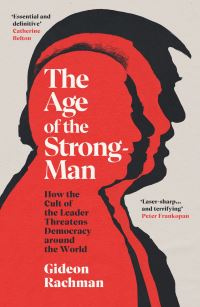
In ‘The Age of the Strongman,’ Gideon Rachman finds global coherence in the chaos of the new nationalism, leadership cults and hostility to liberal democracy. We are in a new era: authoritarian leaders have become a central feature of global politics. Since 2000, self-styled strongmen have risen to power in capitals as diverse as Moscow, Beijing, Delhi, Brasilia, Budapest, Ankara, Riyadh and Washington. These leaders are nationalists and social conservatives, with little tolerance for minorities, dissent or the interests of foreigners. At home, they claim to be standing up for ordinary people against globalist elites; abroad, they posture as the embodiments of their nations. And everywhere they go, they encourage a cult of personality. What’s more, these leaders are not just operating in authoritarian political systems but have begun to emerge in the heartlands of liberal democracy.

Sprawling across a quarter of the world’s land mass and claiming nearly 500 colonial subjects, Britain’s empire was the largest empire in human history. For many, it epitomised our nation’s cultural superiority, but what legacy have we delivered to the world? Spanning more than 200 years of history, Caroline Elkins reveals evolutionary and racialised doctrines that espoused an unrelenting deployment of violence to secure and preserve British imperial interests. She outlines how ideological foundations of violence were rooted in Victorian calls for punishing indigenous peoples who resisted subjugation, and how over time, this treatment became increasingly institutionalised.
No products in the basket.
Notifications